Quick answer: a seasonal garden checklist runs on your local frost dates and soil conditions, not on calendar months. Start seeds indoors in late winter, plant once the soil warms, divide and harvest in summer, then seed, plant and clean up in fall.
The first decision is which frost dates and region your calendar follows. The sections below cover each season in turn, and every task names the plants it protects or produces, so you can skip jobs that do not apply to your garden.
Start with frost dates, soil and region
Every extension calendar is written for a specific climate, so the same task lands in different months in different places. Read the month names in any checklist as a sequence of jobs, then fit that sequence to your own frost dates.
Why one calendar does not fit every garden
The sources behind this guide show how far timing can shift. A University of Wisconsin Extension monthly guide ties cool-season crops to early May, when soil temperatures are at least 45°F. A North Central Texas checklist from a county master gardener group starts warm-season vegetables such as tomatoes, peppers, beans, corn, cucumbers and squash in late March. Both are correct for their own climates, and neither should be copied into a garden elsewhere.
The Missouri Botanical Garden’s gardening-by-month pages are written for the St. Louis region. The garden says most of its tips apply to many zone 6 gardens and the Midwest. It also lists common pests and diseases alongside the tasks and tips for each month. If your garden is in another zone, use these calendars for the order of work and shift the dates earlier or later.
What to write at the top of your list
Before you copy any task into your own plan, record three local reference points:
- Average last spring frost: this anchors seed starting and the first outdoor plantings. Your county extension office is the most reliable local source.
- Average first fall frost: this anchors lawn seeding, cleanup and protection of frost-sensitive plants.
- Soil temperature: a soil thermometer turns a threshold like 45°F into something you can check yourself, instead of guessing from air temperature.
With those three points, a task such as “mid-February indoors” becomes “a set number of weeks before my last frost”, which transfers to any region.
Where to begin: choose by what you see outside
If you are reading this partway through the year, start from the conditions in your garden rather than from January. Each choice below points to the section that handles it.
- Soil still cold and days short: go to late winter. Seed trays, planning and cleanup of old growth come first, and nothing needs to go into the ground yet.
- Soil warming and bulbs up: go to spring planting and mulch. This stage is about the order of removing mulch, planting vegetables and managing bed covering.
- Bulbs finished blooming or perennials crowded: go to summer. Dividing and harvest storage happen now, before the cooler months.
- Weather cooling and leaves starting to drop: go to fall. Lawns, trees, shrubs, bulbs and containers all compete for the same few weeks.
- Hard freezes arriving: go to winter. Protect equipment, tidy beds and set up cold-climate containers.
Fall is the busiest stretch and the season where delays cost the most, because several jobs have a deadline set by the first heavy frost. If time is limited, make fall the season for focused work.
Late winter: seed starting and bed preparation
Late winter is the season for indoor work. The main question here is when to start seeds, and the answer depends on the crop, not on one date for everything.
Which seeds to start first
The Wisconsin guide gives specific cues. In mid-February it calls for starting seed of impatiens, vinca, pansies, geranium and begonias. It also lists leeks and onions among the February jobs. These are the plants to place at the front of your sowing list because they are the earliest tasks in that calendar. Tomatoes come later. The same guide places tomato seed sowing in April and notes that research shows seven-week-old transplants produce the earliest fruit and best overall results.
That seven-week figure is the most useful number for planning, because you can count backward from your last frost. A tomato sown much earlier than that gives you older plants than the research supports, so there is no benefit in rushing the start.
Setting up the tray
Use a sterile, soil-less seed-starting medium. The Wisconsin guide recommends it to avoid damping off, a problem that can wipe out a whole tray of seedlings. A bright windowsill suits a handful of trays. Label each tray with the sow date and the date you intend to move plants outdoors, so the calendar lives with the plants.
Cleanup that cannot wait for spring
Beds that were left alone in winter usually need a tidy before planting. The Texas checklist describes the job as removing weeds and debris, pruning out dead foliage and cutting back perennials. Do this while the weather is still cool and nothing is growing, so you are not stepping around new shoots.
Spring planting and mulch
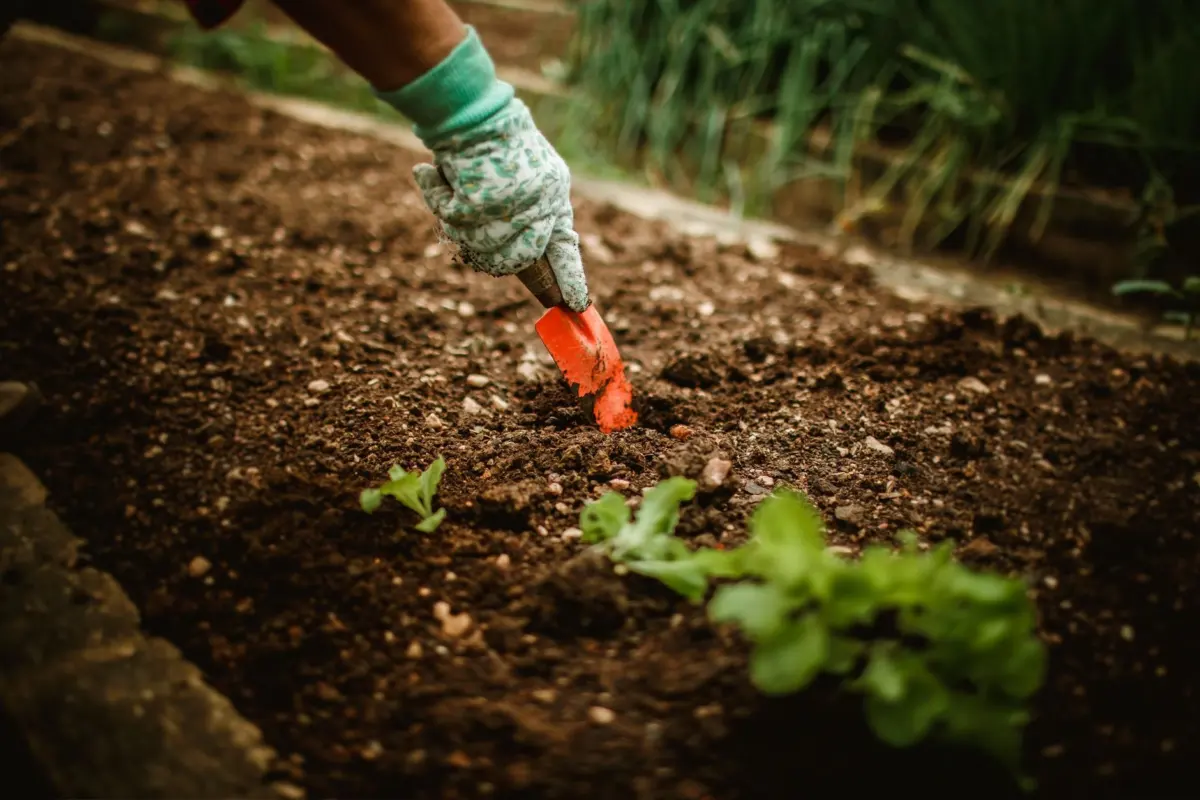
Spring planting begins when the soil allows it, not when the first warm afternoon arrives. For cool-season crops in Wisconsin, the guide’s threshold is a soil temperature of at least 45°F, which falls in early May there. In North Central Texas the equivalent step for warm-season vegetables comes in late March. If you garden between those climates, watch your own soil thermometer to decide.
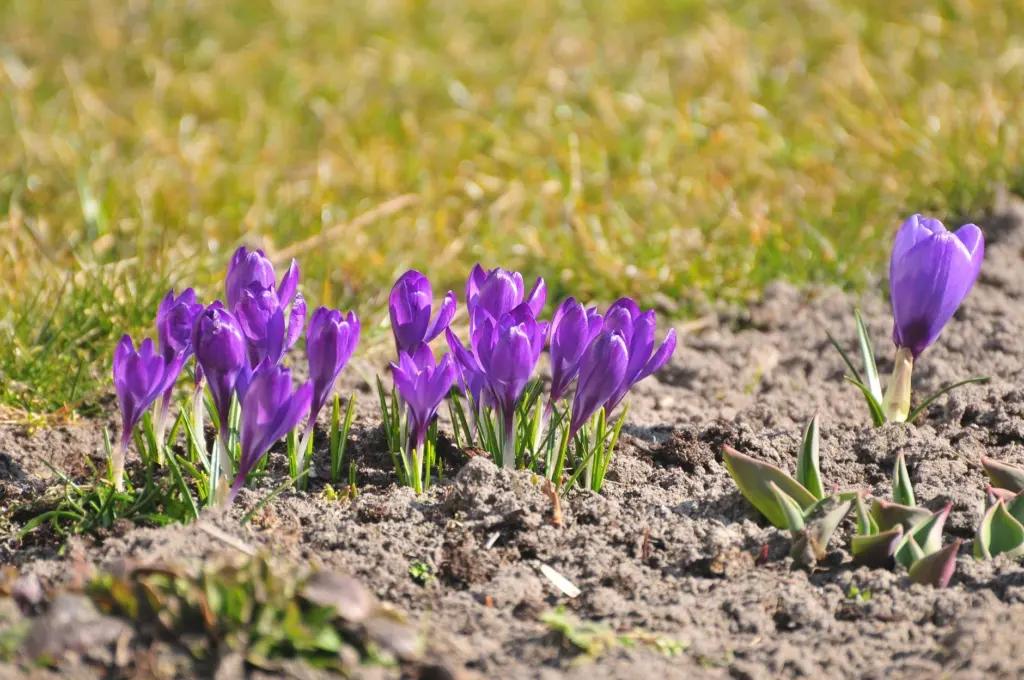
Planting tomatoes
The Wisconsin guide describes planting a tomato seedling on its side in a shallow furrow, with the plant 2.5 inches below the soil surface. This suits seedlings that grew tall indoors. If you started your own seedlings on the schedule above, it is a good technique for putting them in the ground.
Mulch: when to remove it and when to add it
Mulch has two jobs in spring, and they pull in opposite directions. Pulling it back too early exposes perennials, while leaving it on bulb beds too long can get in the way of emerging growth.
- Bulb beds: the Wisconsin guide says to keep a light covering of mulch over spring bulbs in March, then remove it from the spring-flowering bulb beds in April.
- Perennial beds: the same guide advises not to remove mulch from perennials too early. Treat this as a reason to wait, not to rush, on any bed that is not yet showing growth.
- General bed depth: the Texas checklist recommends a 3-inch layer of hardwood mulch to maintain moisture and reduce weeds. That is a working target for beds, not a rule for every material.
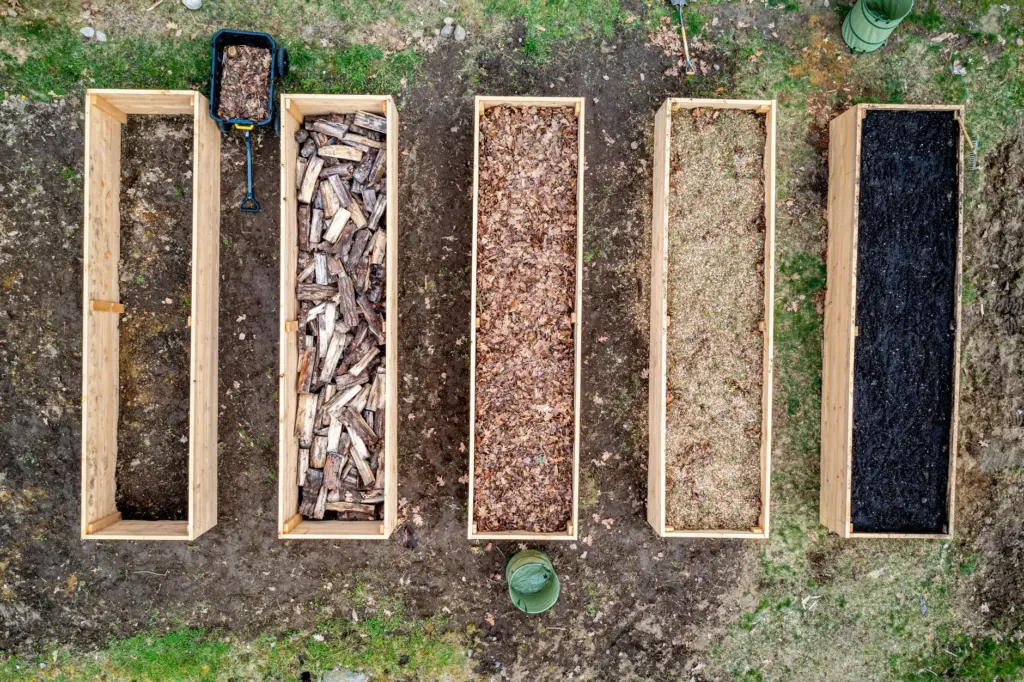
Shrubs for the spring list
Shrubs have their own timing, which varies by zone. For a flowering shrub that suits many gardens, When To Plant Butterfly Bush: The Best Timing By Zone + Seasonal Planting Tips (2026 Guide) shows how to match planting time to your zone.
Summer: divide, harvest and store
Summer jobs are less about planting and more about moving plants and storing a harvest. Most of them are tied to something that has just finished its season.
Daffodils and spring perennials
June is the time the Wisconsin guide gives for digging and dividing non-blooming daffodils. In August, Utah State University Extension’s August yard and garden checklist says to divide crowded, spring-blooming perennials. The pattern is to divide a plant after its spring show, when the clump is crowded and the plant is not in the middle of flowering.
Harvest, curing and storage
Garlic and onions need to dry before they go into storage. The Utah checklist advises letting them cure for 2-3 weeks. Afterward, store potatoes, garlic and onions in a cool, dry place at 32-40°F, away from apples. Check the storage spot with a thermometer before moving the crop in.
If pumpkins are part of your fall plan, how to grow pumpkins is a separate guide to planting dates and care.
Fall: lawn, trees and shrubs, and cleanup
Fall has the most time-sensitive work of the year. The Utah checklist and the Texas checklist agree on the overall pattern: improve the lawn while it is still growing, plant woody plants as the weather cools, and clear the beds before winter.
Lawn work in order
Three lawn tasks have their own windows in the Utah checklist:
- Early September: apply a slow-release lawn fertilizer to provide long-lasting results through the fall months.
- September-October: aerate compacted sites with a hollow core aerator while turfgrass is actively growing.
- Before heavy frosts: seed new lawns or repair damaged areas, allowing 4-6 weeks for establishment before heavy frosts arrive.
The 4-6 week figure is the one to count backward from your first fall frost date. If you are short of that window, a thin repair may be better than a late full seeding. For the seeding steps themselves, see how to overseed a lawn.
Trees, shrubs and hydrangeas
The Utah checklist says to plant trees and shrubs as the weather becomes cooler. That makes late summer into autumn the planting window for woody plants, and it overlaps with the lawn jobs, so schedule them together. Shrubs you already own also need attention before winter. How To Winterize Hydrangeas: Protect Blooms And Roots This Winter (Step‑By‑Step, Zone Tips) covers protection by zone.
Leaves, containers and tubers
Fallen leaves can go back into the garden. The Texas checklist says to mow, shred, mulch or compost them. Whichever you choose, raking them into a compost bin is one of the simplest ways to keep a fall project useful rather than wasteful.
Annual containers need emptying before winter. The same checklist says to clean them with a 10% bleach solution and store them upside down for the winter. A clean, empty pot is also a better starting point if you want to refresh your porch with new plantings, and Fall Planter Ideas: 9 Easy, Cozy Designs to Refresh Your Porch in 2026 offers designs to fill them.
Tender tubers need separate handling. If dahlias are in your garden, how to store dahlia tubers for winter walks through lifting and storage.
Bulbs: matching the calendar to each type
The question of when to plant bulbs has no single answer, because the answer depends on the bulb and on your zone. What the sources do establish is the shape of the year. Forced bulbs that have bloomed and dried are stored and then planted in the garden in fall, according to the Wisconsin guide. The Texas checklist sets a planting depth for fall-planted bulbs: the base of the bulb should sit at a depth three times the bulb’s diameter.
What to do after bloom
The bulb year continues after the flowers fade. The Texas checklist says to let the foliage of spring-flowering bulbs mature and yellow before removing it. That means resisting the urge to cut the leaves for a tidier look. If you divide daffodils, do it in June on the non-blooming clumps, as covered in the summer section.
Guides by bulb type
For a general overview, When To Plant Bulbs: A Seasonal Calendar For Gorgeous Blooms In 2026 is the place to begin. Then choose the guide that matches what you grow:
- Tulips: When To Plant Tulip Bulbs: The Simple Calendar And Tips For Reliable Spring Blooms.
- Daffodils: When To Plant Daffodil Bulbs: The Simple 2026 Guide To Timing For Bigger Blooms.
- Alliums: When To Plant Allium Bulbs: The Easy 2026 Guide To Perfect Spring Or Summer Blooms.
- Ranunculus: When To Plant Ranunculus: The Seasonal Guide To Gorgeous Blooms (2026).
- Dahlias: When To Plant Dahlia Bulbs: Timing Tips For Bigger Blooms In Your Zone (2026).
- Cannas: When To Plant Canna Bulbs: The Smart Guide To Timing, Planting, And Season-Long Care (2026).
- Amaryllis: When To Plant Amaryllis Bulbs: The Best Timing For Big Holiday Blooms (2026 Guide).
Choose by what you already own. If you have a mixed collection, handle the hardy spring bloomers in fall and check each of the others separately, since their timing differs from the fall-planted group.
Winter: protect equipment and containers
Winter has the lightest plant workload and the most equipment work. This is also when the Texas checklist places debris removal and cutting back perennials, so a first mild day is a good time to finish any tidying you skipped in fall.
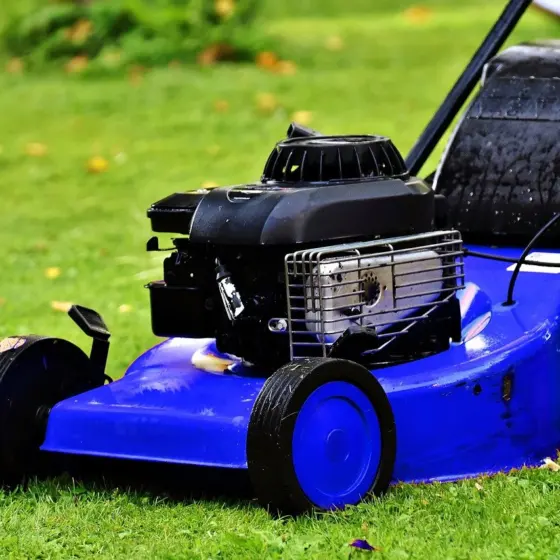
Two machines are easy to overlook until the first hard freeze. How To Winterize A Lawn Mower: Easy Steps To Protect Your Machine This Winter (2026 Guide) covers the mower. How To Winterize A Sprinkler System: A Simple 2026 Checklist To Prevent Freeze Damage covers the irrigation system. Complete both before the ground freezes.
If you want something green near the door through the cold months, Outdoor Winter Planter Ideas: 15 Stylish, Low‑Maintenance Designs For Cold Climates (2026) offers cold-climate designs. Planters are a good use for containers you cleaned in fall.
Seasonal task calendar at a glance
The table collects the dated tasks from the sources above and ties each to the plants it supports. The months come from the regions named in the sources, so move them to fit your own frost dates.
| Timing | Task | Plants it supports | Planning use |
|---|---|---|---|
| Mid-February (Wisconsin guide) | Start seed indoors | Impatiens, vinca, pansies, geranium, begonias; leeks and onions | Count back from your last frost date and sow these first. |
| March (Wisconsin guide) | Keep a light mulch covering on beds | Spring bulbs | Leave it in place until the April removal. |
| Late March (North Central Texas) | Begin planting warm-season vegetables | Tomatoes, peppers, beans, corn, cucumbers, squash | Use only if your climate is similar; otherwise wait for your own soil to warm. |
| April (Wisconsin guide) | Remove mulch from bulb beds; sow tomato seed indoors | Spring bulbs; tomatoes | Tomato transplants at seven weeks old give the earliest fruit and best results. |
| Early May (Wisconsin guide) | Plant cool-season crops when soil is at least 45°F | Cool-season vegetables | Check soil with a thermometer, not the air. |
| June (Wisconsin guide) | Dig and divide non-blooming daffodils | Daffodils | Mark clumps that did not bloom while they are visible. |
| August (Utah checklist) | Divide crowded spring-blooming perennials; cure garlic and onions 2-3 weeks | Spring perennials; garlic, onions | Store cured crops at 32-40°F, away from apples. |
| Early September (Utah checklist) | Apply slow-release lawn fertilizer | Lawn | Fall feeding sets up the lawn for the cooler months. |
| September-October (Utah checklist) | Aerate compacted turf with a hollow core aerator | Lawn | Do it while grass is actively growing. |
| Before heavy frost (Utah checklist) | Seed or repair lawn, allowing 4-6 weeks to establish | Lawn | Count backward from your first fall frost date. |
| Fall (Utah and Texas sources) | Plant trees, shrubs and fall bulbs; clean containers | Woody plants; hardy bulbs | Plant bulbs with the base at three times the bulb’s diameter in depth. |
| Winter (Texas checklist) | Remove debris and cut back perennials | Perennial beds | Finish on a mild day before spring growth starts. |
The dated tasks come from University of Wisconsin Extension and Utah State University Extension, with the North Central Texas entries from a county master gardener checklist.
Frequently asked questions
What should I use to cover plants during a freeze?
Use sheets, row cover, freeze cloth or boxes. The Texas checklist is explicit that plastic should never be used to cover plants.
When can I cut back the leaves of spring bulbs?
Wait until the foliage has matured and yellowed. Cutting green leaves early is a tidying shortcut the Texas checklist advises against.
What do I do with bulbs I forced indoors?
Once they have bloomed and the tops have dried, store them and plant them in the garden in fall, as the Wisconsin guide describes.
Why does seed-starting mix matter?
A sterile, soil-less medium helps avoid damping off, according to the Wisconsin guide. Ordinary garden soil does not offer that protection indoors.