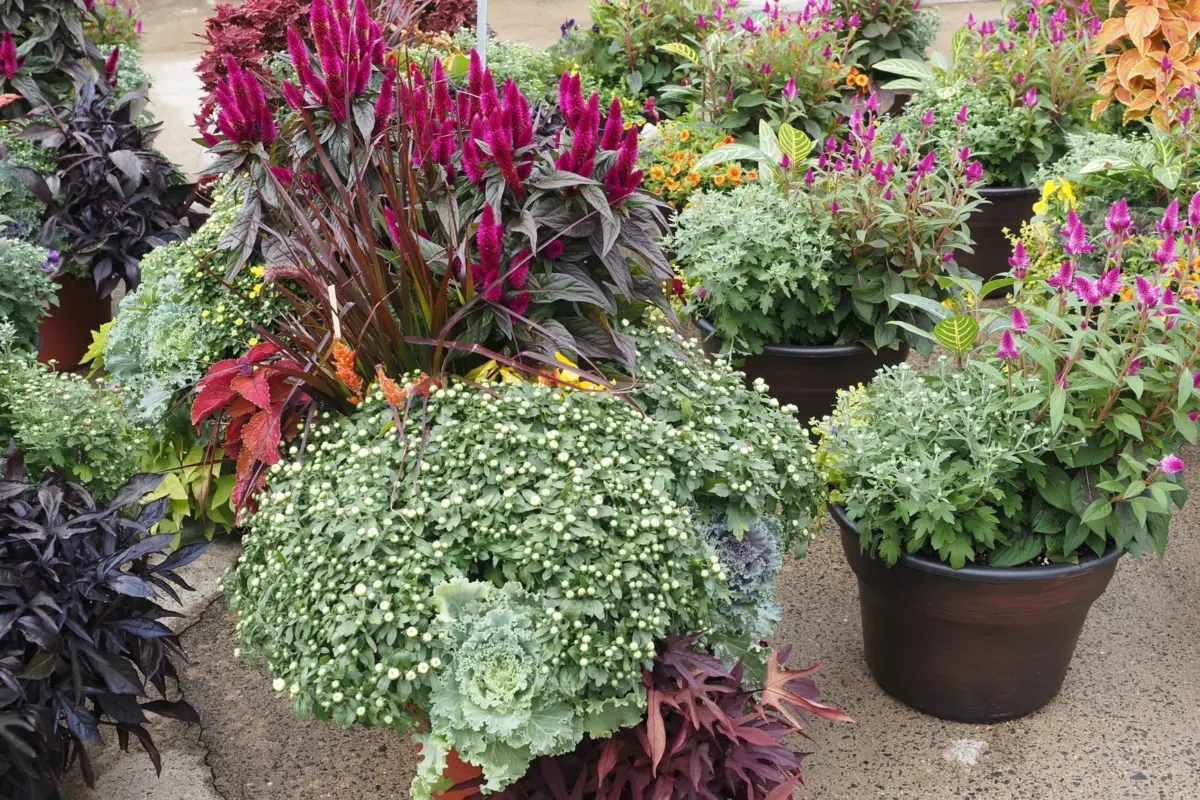
The best fall planter ideas pair a showy centerpiece, such as chrysanthemums or ornamental kale, with frost-tolerant fillers like pansies and marigolds, planted in a drained container of nutrient-rich potting soil. Your local frost timing decides what holds up.
Fall containers are one job on your seasonal garden checklist. This guide covers which plants to buy, how weather changes their look, how to build the container and where to put it.
How cool nights and frost shape plant choice
Fall containers work best when plant choice follows the weather rather than the calendar. Ornamental kale shows this most clearly. A flower-growing guide says kale colors up only after nights cool, and it names nights below 50 degrees F as the threshold. Kale bought in early autumn may look mostly green at first. Pair it with plants that already carry color, such as chrysanthemums, and let the kale catch up as the weather cools.
Frost is the second filter. A garden-planter guide says gomphrena and marigolds can handle a light frost or two, and a garden-center design blog says pansies can withstand early frosts. Neither source gives a temperature. Treat that tolerance as a buffer for the first cold snaps, not as a promise that the plants survive a hard freeze. Look up your area’s typical first-frost date before you shop. It tells you whether to plant now, wait for kale to color, or keep a cover ready for the first cold night.
Best plants for fall planters
A fall planter needs one focal plant, one or two supporting plants and something with height. The table sorts the frost-tolerant supporting plants, which are the ones most likely to keep a porch looking good as nights cool.
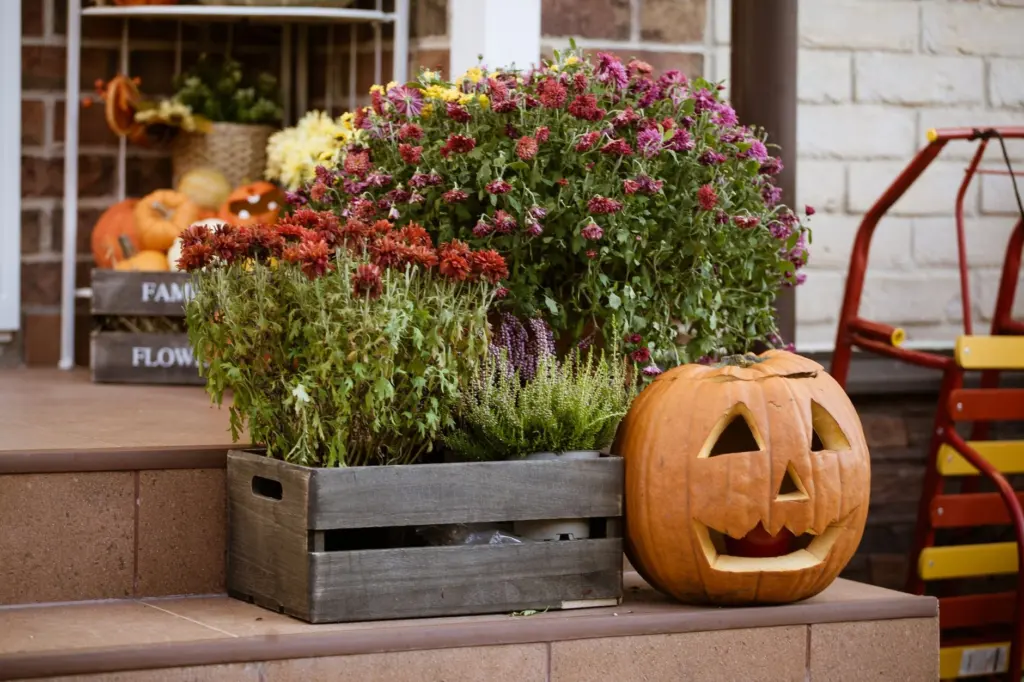
| Plant | Frost tolerance | Planning use |
|---|---|---|
| Pansies | Withstand early frosts | Low, front-of-container color for the first cold stretch of fall |
| Gomphrena | Handles a light frost or two | A filler that keeps color through the first cold snaps |
| Marigolds | Handles a light frost or two | Warm early-fall color; plan to replace them if frost keeps returning |
Frost details for pansies come from a garden-center design blog, and those for gomphrena and marigolds from a garden-planter guide.
Chrysanthemums for the focal point
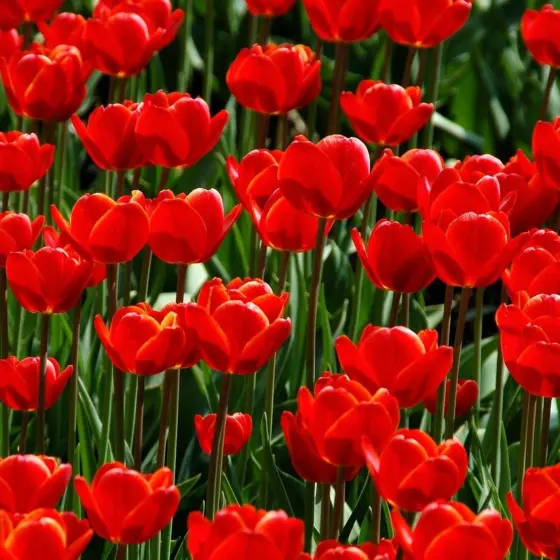
Chrysanthemums are described by a flower grower as the official flower of autumn. They come in many colors, and the same source suggests bright yellow or deep fuchsia to brighten a front porch. Choose one dominant mum color per container so the plant reads as the centerpiece. Then pick kale and fillers that contrast with it instead of competing.
Ornamental grasses for height
Purple millet is an ornamental grass that, according to the garden-center design blog, adds drama and height with deep purple plumes. It suits a container that would otherwise look flat, because the plumes lift the display above the mums and kale. Use it as the tall element and let everything else stay lower.
Containers and potting mix
Any container, including a terracotta pot, needs drainage holes at the bottom. That is the one container requirement the garden-planter guide insists on. Choose a decorative planter only if it has holes or you can add them. A stylish pot without drainage turns fall rain into a waterlogged root zone.
For the fill, the same guide recommends a nutrient-rich organic potting soil. Fresh potting mix is worth buying for a seasonal display because the plants go in together and must look good quickly. Reusing tired soil from a summer pot gives them less to draw on.
Choose a container with enough room for roots to grow and for air to circulate, as nursery-made arrangements do according to the design blog. No planting count is given for any size, so judge by the plants: if the rootballs barely fit, move up a size or plant fewer.
Layering a fall container
Layering means arranging plants by height so that every one stays visible. The main rule from the garden-planter guide is to put taller plants at the back and shorter ones at the front. A pot against a wall or door follows that rule directly. A pot seen from all sides is better with the tall plant in the middle and the rest stepping down around it.
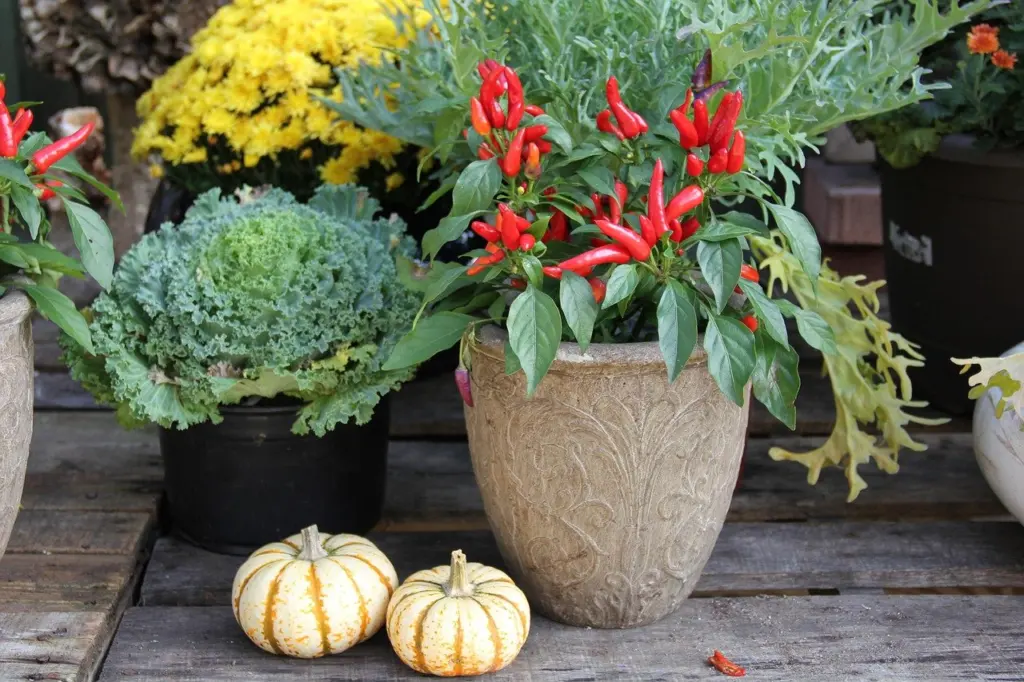
- Test the arrangement. Set the plants, still in their nursery pots, inside the container and adjust until the heights read well.
- Plant the height first. Place the tallest element, such as purple millet, where it will stand behind or above the rest.
- Add the centerpiece. Put the chrysanthemum or ornamental kale just in front of the tall plant so it fills the middle of the display.
- Finish the edge. Fill the front with low plants such as pansies, marigolds or gomphrena.
- Fill the gaps. The same guide says not to be afraid to push plants all the way to the edge of the planter, and that annuals need no spacing.
Crowding suits a display that lasts a season. It would not suit permanent perennials. If you want the container to look full from the first day, plant tightly. If you plan to reuse some plants later, leave them more room.
Grouping and placing planters
Planters read as a design when they sit where visitors stop and look. The front-door area is the obvious choice, and a pair or cluster beside the door has more impact than one pot. Vary the heights so the group looks composed instead of repeated. Put the tallest pot on the side where the eye should land first, and keep the others within clear view of the walkway.
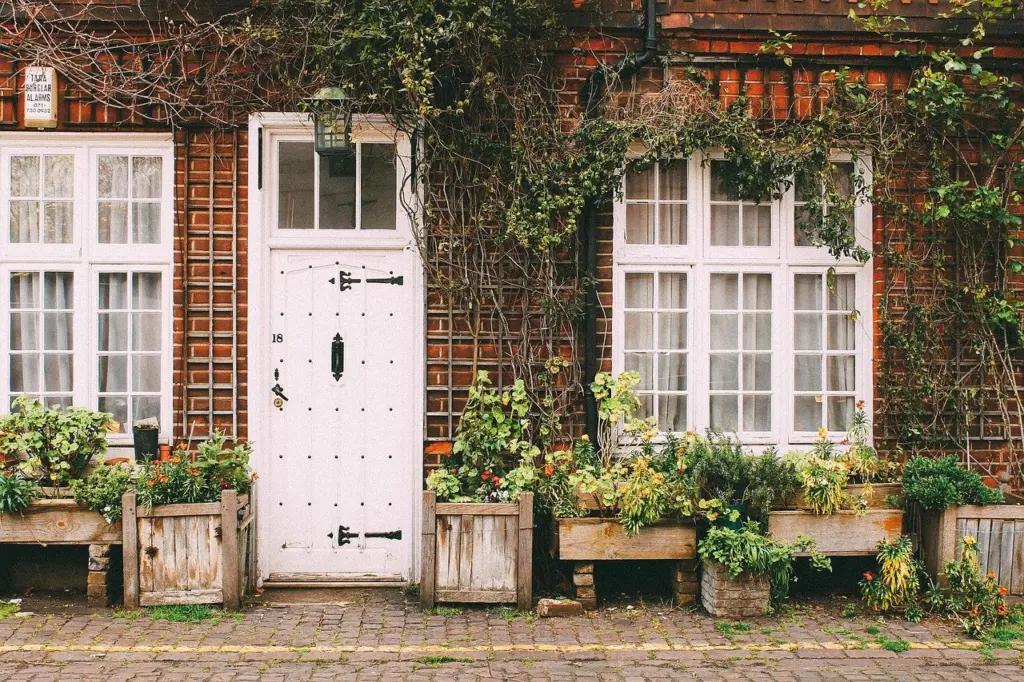
Sun matters too. Ornamental kale wants a sunny spot, so a shaded porch step is better for other plants than for kale. Place the planters before you plant them if the pots are heavy, because a filled container is harder to move.
Accents and end-of-season care
Natural accents finish a container without adding more plants. The garden-center design blog mentions incorporating natural elements like pumpkins, gourds or pinecones. Set a pumpkin or gourd at the base of the planter, where it adds a second shape beside the foliage. Use pinecones to fill a gap. Keep to one or two accent types so the plants stay the focus.
Plan the end of the display as you plan the beginning. Pull out annuals that frost has finished and empty the pots before the soil freezes hard. Outdoor shrubs and tubers also need attention at this time of year. Our guide on How To Winterize Hydrangeas: Protect Blooms And Roots This Winter (Step‑By‑Step, Zone Tips) covers the shrubs, and how to store dahlia tubers for winter covers the tubers. Doing the planters first keeps the porch tidy while you work through those jobs.
Frequently asked questions
Can pansies stay in a planter through winter?
They can bloom all winter when protected, according to the garden-center design blog. Protection is the condition, and the source gives no temperature, so move pots to a sheltered spot if a hard freeze is forecast.
How much water and room do pansies need?
A flower-growing guide says to water about 1 inch a week and deadhead fading flowers. It gives 7 to 12 inches apart as the spacing in a bed. In a container, plant them closer, as you would other annuals.
What light and soil does ornamental kale want?
The same flower-growing guide says to plant it in sun, in moderately moist rich soil. That points to a bright porch and regular potting soil, not a dry or shaded corner.