A bag of tulip bulbs arrives in late summer, and the urge is to plant at once. When to plant bulbs depends on the type: spring bloomers go in during autumn as the soil cools, while tender summer bulbs wait for early spring.
Keep our seasonal garden checklist alongside this guide for the rest of the year’s timed jobs. The sections below correct the most common timing misunderstandings and then set out a calendar.
Quick answer by bulb type
The Royal Horticultural Society sorts bulbs into three timing groups. Spring-flowering and hardy summer-flowering bulbs are planted in autumn. Tender summer-flowering bulbs such as gladioli are planted in early spring. Autumn-flowering bulbs such as nerines are planted by late summer. Most of the mistakes in the table come from blending those groups into one date.
| Common misunderstanding | What the guidance says | Planning use |
|---|---|---|
| Plant every bulb the day it arrives | Apart from daffodils, wait until soil temperature at planting depth stays below 60 °F; daffodils go in during October or November | Check the soil, not the shop’s delivery date |
| Every bulb is an autumn job | Tender summer-flowering bulbs such as gladioli go in during early spring; autumn-flowering nerines go in by late summer | Sort your order by flowering season before you plan |
| Tulips and daffodils share one date | Daffodils, crocus and hyacinths preferably by the end of September; tulips in November | Plant daffodils and crocus first, tulips later |
| A late planting makes no difference | Bulbs may flower poorly after later than recommended planting | Aim for the early end of your window |
| Autumn timing is the same everywhere | In coastal South Carolina, most bulbs are planted in late December or early January | Let your local climate override a default calendar |
Timings come from the RHS bulb planting guidance, written for its home climate, and the Clemson Home and Garden Information Center.
Spring bulbs: tulips, daffodils and crocus
Spring-flowering bulbs are planted when the soil and weather are right, not when the bulbs reach the shop. The two ideas below explain most of that timing.
Reading soil temperature
Soil temperature is the most practical trigger. Clemson’s extension factsheet advises waiting to plant spring-flowering bulbs other than daffodils until the soil temperature at planting depth stays below 60 °F. Daffodils are the exception and can go in during October or November. A soil thermometer pushed in at planting depth is the most direct check, and it suits anyone tempted to plant on the first cool weekend.
Air temperature gives a second cue in colder regions. The Ramsey Master Gardeners in Minnesota say spring bulbs can go in once evening temperatures average 40° to 50°F, while leaving 6 to 8 weeks before the ground freezes. In their area that typically means September to mid-October. The leftover weeks matter because roots need time to form before the soil locks up.
Why spring bulbs need a cold spell
Clemson notes that most bulbs require a 12- to 16-week chilling period to produce flowers. That is why planting in autumn works: winter supplies the cold. Where winters are mild, UC Cooperative Extension recommends prechilling tulips and hyacinths in the refrigerator for about 4 to 6 weeks at 35 to 45°F before planting them in the fall. Tulips are the bulb that most often needs this step, so do it before planting rather than hoping the winter will do the work.
Summer and autumn bulbs: not one schedule
The question of when to plant summer bulbs has no single answer, because the label “summer-flowering” covers two hardiness groups. The RHS guidance separates them clearly:
- Hardy summer-flowering bulbs: plant these in autumn, alongside the spring bulbs. They can stay in the ground through winter, so they share the autumn work.
- Tender summer-flowering bulbs: plant these in early spring. Gladioli are the RHS example, and they stay out of the ground in autumn.
- Autumn-flowering bulbs: plant these by late summer. Nerines are the RHS example, which makes them the earliest job in the bulb calendar.
The practical test is hardiness: check the supplier’s description to see which group a bulb belongs to before you choose a date. Some bulb-like crops carry their own rules, and ranunculus is covered separately in When To Plant Ranunculus: The Seasonal Guide To Gorgeous Blooms (2026).
How hardiness zones change timing
Hardiness zones shift the window: colder regions plant earlier in autumn, and warmer regions plant later and sometimes add a chilling step. A zone number is a starting point, and soil temperature then confirms the date.
- Colder zones (1–6): planting guidance for cold zones says to plant early enough for roots to establish before the ground freezes.
- Minnesota (zones 3 to 5): the Ramsey Master Gardeners give typical planting from September to mid-October, tied to that 6 to 8 week buffer.
- Warmer zones (7–11): the same retailer guidance says bulbs may need 8 to 10 weeks in the refrigerator, then planting in December or January.
- Coastal South Carolina: Clemson recommends planting most bulbs in late December or early January in coastal areas.
- Alameda County, California: UC Cooperative Extension puts the ideal spring-bulb window at roughly late September through November.
These regional windows differ by months, which is why a single national date misleads. In a cold zone, favour the early end of your window so roots are in before freeze-up. In a mild one, treat refrigeration as part of the plan rather than an emergency fix.
A month-by-month bulb calendar
Use this sequence as an order of work and shift it to your climate using the zone windows above.
- Late summer: plant autumn-flowering bulbs such as nerines, which the RHS says go in by late summer.
- September: plant daffodils, crocus and hyacinths, preferably by the end of September according to the RHS. Gardeners in cold Minnesota zones are in the same period, running to mid-October.
- October and November: Clemson puts daffodils in October or November, and the RHS plants tulips in November. The Alameda County window of late September through November sits here too.
- December and January: warmer gardens plant in late December or early January in coastal South Carolina, or after refrigeration in zones 7–11.
- Early spring: plant tender summer-flowering bulbs such as gladioli, per the RHS.
Autumn is also busy elsewhere in the garden, so it helps to batch bulb planting with other jobs such as how to overseed a lawn. More timed projects are gathered in the Seasonal Projects category.
Planting depth and common pitfalls
Depth guidance looks inconsistent because sources measure different things. The common thread is a depth of roughly three times the bulb’s size:
- Bulb depth: the RHS advises planting most bulbs at two to three times their depth.
- Bulb height: UC Cooperative Extension gives a common rule of about 3 times the bulb’s own height.
- Bulb width: Clemson plants bulbs three to four times as deep as they are wide, measured from the base. It puts daffodils at 6 to 8 inches (about 15–20 cm).
Do not plant deeper than these ranges. The Ramsey Master Gardeners warn that if bulbs are planted too deep, flowers will bloom late or not at all. For small bulbs such as crocus, work from the bulb’s own size rather than copying the daffodil figure.
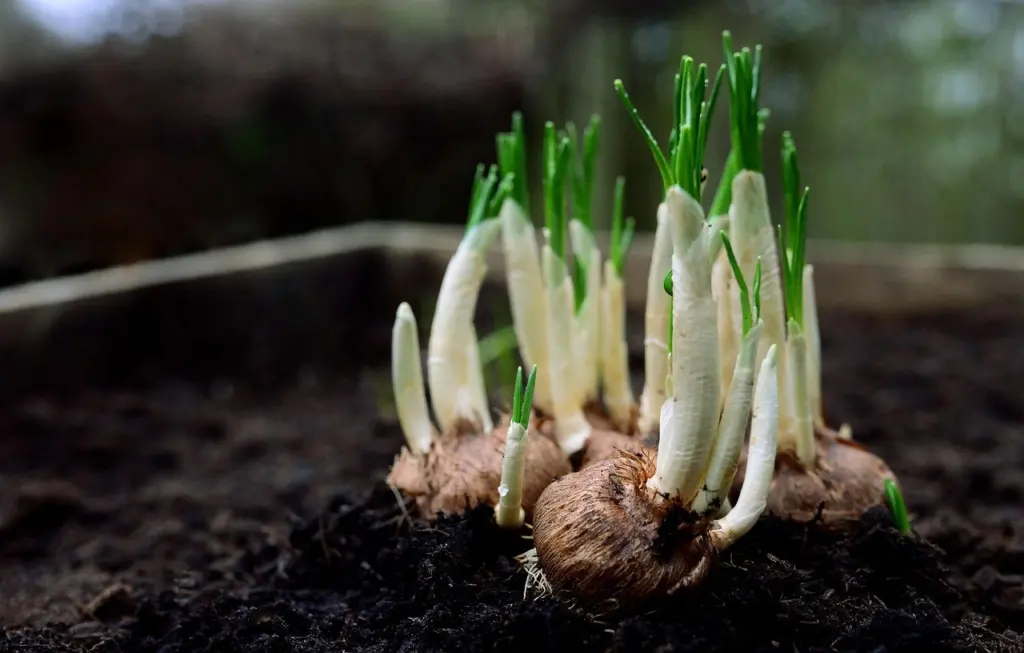
Frequently asked questions
| Question | Answer |
|---|---|
| Can I still plant spring bulbs in December? | Yes, if needed. UC Cooperative Extension says planting can run into December in Alameda County, but earlier in fall is better, and the RHS warns that bulbs may flower poorly after later than recommended planting. |
| Where should I keep bulbs until planting day? | Store them in a cool area below 60 °F, as Clemson advises. |
| Do animals dig up newly planted bulbs? | They can. Clemson notes that animals often dig and eat tulip and crocus bulbs during the winter. |