| Decision | Value and condition | Planning use |
|---|---|---|
| Soil temperature cue | 55°F to 60°F at about 6 in depth | Plant when your own bed reaches this reading, not on a fixed calendar date. |
| Oklahoma planting window (zones 6a to 8a) | Generally mid-October through November | Use it as a model for a mild-winter region, then confirm with a soil reading. |
| Zone 6 target | Bulbs in the ground by late October | Treat late October as the deadline for the cooler end of that range. |
| Zone 8 late window | Often into December if the ground has not frozen | The window stays open longer, but a frozen bed closes it. |
| Depth by bulb size | 6-8 in for large bulbs; about 2 in for miniature | Measure the hole before you drop bulbs in, and sort bulbs by size first. |
| Spacing by bulb size | 4-6 in apart for large bulbs; 2-3 in for miniature | Set wider spacing for large bulbs so clumps have room to multiply. |
Timing and soil-temperature figures come from Longfield Gardens’ Oklahoma timing guide, and depth and spacing from Holland Bulb Farms.
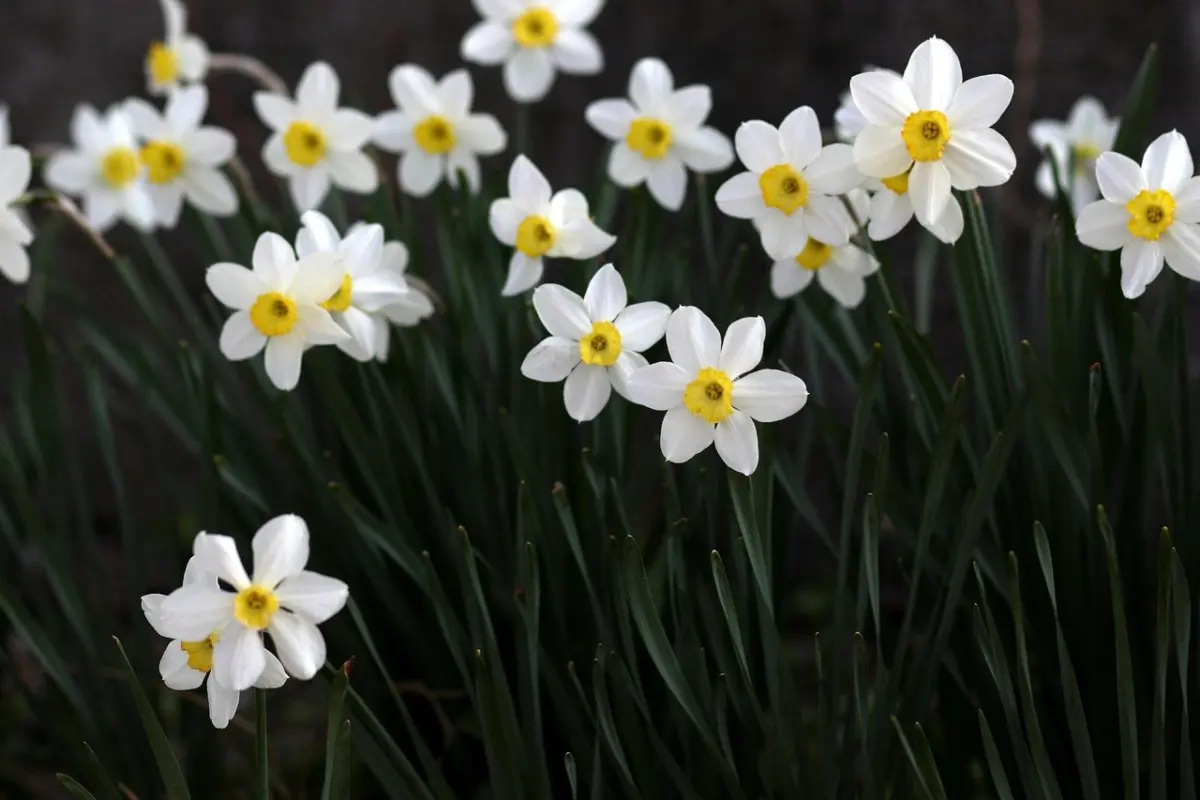
When to plant daffodil bulbs is a fall decision: plant once soil about 6 in deep cools to 55°F to 60°F, which means mid-October through November in Oklahoma, and before the ground freezes.
Pair this guide with the seasonal garden checklist so bulb planting lands alongside your other autumn jobs.
What timing changes for your bulbs
Planting date decides whether a daffodil bulb gets a root system before winter. Holland Bulb Farms notes that daffodils are typically planted in fall, that their roots form in fall, and that they bloom in mid to late spring. The practical consequence is that the planting window is really a rooting window.
The soil-temperature range in the table above is what Longfield Gardens calls the sweet spot. It is cool enough to prevent rot and premature sprouting, yet warm enough for roots to grow. Here is how that plays out in practice:
- Planting too early: warm soil loses the protection against rot and premature sprouting that the cooler range provides, so wait for the reading rather than the first cool morning.
- Planting on time: bulbs root in fall and are ready for mid to late spring flowers, which is the outcome the whole schedule is built around.
- Planting late: a frozen bed ends the window altogether, so late planting is only an option where the soil is still workable.
- Planting in a wet spot: Eden Brothers advises against any site that attracts standing water for a prolonged period, so fix drainage or move the planting rather than adjusting the date.
Planting windows by zone
The USDA map divides the U.S. into 13 zones based on average annual minimum temperatures. Holland Bulb Farms lists daffodil hardiness as zones 3-8 and suitable zones as 3-9. Eden Brothers gives the broadest window: you can comfortably plant from September through December. Your zone and your soil narrow that span.
Coldest zones
Zone 3 can see lows of -30°F according to Lost Coast Plant Therapy. Where winters are that severe, the aim is simply to give bulbs time to root in fall. Use the soil reading as your trigger and have the bulbs bought and sorted before it arrives, so planting is not delayed by errands.
Zones 6 to 8
Oklahoma is a useful worked example because it spans zone 6a in the northwest to 8a in the southeast. Longfield Gardens gives a general window of mid-October through November, with a zone 6 target of late October and a zone 8 window that often runs into December if the ground has not frozen. If you garden in a similar zone elsewhere, borrow the pattern: the cooler zone plants earlier, the milder zone gets extra weeks, and soil temperature has the final say.
Zone 9 and microclimates
The warmest zone in this range rarely drops below freezing, and it is also the upper limit of the suitable range Holland lists. Treat it as the edge of where daffodils are dependable rather than the middle of it. Microclimates matter too: one part of a yard can feel like a different growing zone altogether. A sheltered bed beside a wall may cool later than an open lawn, so check each planting area on its own.
Reading soil temperature before you plant
A soil thermometer turns a vague “when it cools down” into a clear go signal. Longfield Gardens recommends planting once soil has dropped to around 55°F to 60°F at a depth of about six inches. Push the probe to that depth in the actual bed, since the surface warms and cools faster than the soil where the bulbs will sit.
If you do not own a thermometer, use the weather as a stand-in. The same guide suggests planting when daily highs stay consistently in the 60s and lows are in the 40s for about two weeks. That is a rougher cue than a probe, so lean on it only when you cannot measure.
Depth, spacing and site
Depth and spacing by bulb size
Guides differ slightly, so match the figures to bulb size and choose within the range. Place every bulb pointed side up, as Holland Bulb Farms advises for large bulbs.
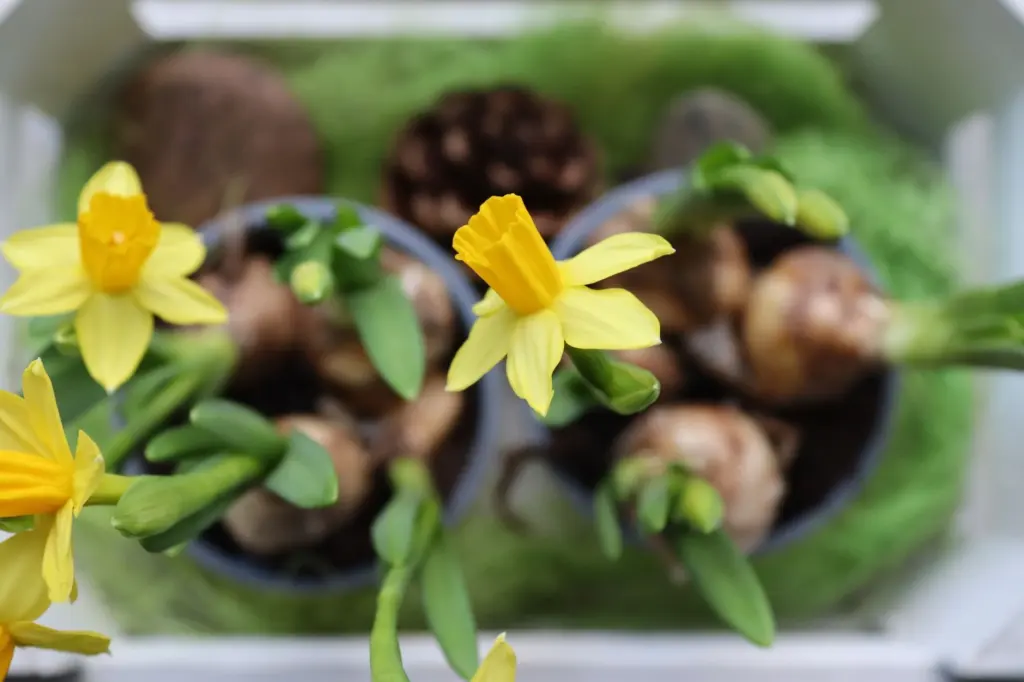
- Large bulbs: Holland recommends 6-8 in for depth and 4-6 in apart.
- Miniature bulbs: about 2 in for depth, with 2-3 in for spacing between them.
- A shallower supplier recommendation: Eden Brothers suggests about 6 in deep and 4 or 5 in apart, which sits at the shallow end of Holland’s range for large bulbs.
- Metric measurements: The Seed Collection gives 10-15 cm deep and 10-15 cm apart, with the pointed tip facing upwards.
Light, drainage and first watering
Pick a spot with partial to full sun. Longfield Gardens calls a site with at least six hours of direct sun ideal. After planting, The Seed Collection says to keep the soil moist but not wet until shoots emerge. That advice pairs with the drainage point above: moisture helps roots start, while soggy soil works against the bulb.
Naturalizing and aftercare
Daffodils multiply quite quickly, which is why they suit naturalizing in lawns, borders and under trees. For a drift that looks intentional, Eden Brothers advises planting in groups of at least 30 and avoiding crowding. Set the bulbs in loose clusters and let them spread in place.
After flowering, leave the leaves alone. Holland says foliage may be removed only once it has yellowed and dried, by gently pulling it out of the soil, and Eden Brothers likewise says to wait until it has turned brown naturally before cutting or trimming. Planting among perennials that will fill in as the leaves fade keeps the bed tidy meanwhile.
More bulb timing guides
Daffodils are only one part of a bulb calendar. If you also grow tender bulbs, compare their schedule in When To Plant Amaryllis Bulbs: The Best Timing For Big Holiday Blooms (2026 Guide) and When To Plant Dahlia Bulbs: Timing Tips For Bigger Blooms In Your Zone (2026). For more timed jobs through the year, browse Seasonal Projects.
Frequently asked questions
Can I plant daffodils in spring?
It is not the normal approach. Daffodils are typically planted in fall so that roots form before winter and flowers follow in mid to late spring, according to Holland Bulb Farms. A spring planting skips that fall rooting period.
Do daffodils need chilling in warm zones?
Chill still matters. Lost Coast Plant Therapy warns that planting too late may mean bulbs do not receive the chill they need to bloom properly. In warmer gardens, plant within the window rather than pushing it to the last moment.
How long from planting to flowers?
One supplier, The Seed Collection, says daffodil plants should flower in approximately 90-180 days. The spread is wide, so use it as a rough expectation rather than a promise.
Can I grow daffodils in pots?
Yes. The Seed Collection recommends a container of a minimum of 10 litres for daffodils. As in the ground, choose a container that avoids standing water.