| Decision | Supported value | Planning use |
|---|---|---|
| Planting time | Early to mid autumn (RHS); October to November for most climates (Dutchgrown) | Order bulbs in late summer so they are in hand when autumn soil cools. |
| Soil condition | 60°F (about 15.6°C) or colder, but not frozen | Use soil temperature, not the calendar date, to trigger planting. |
| Depth | About four times the bulb diameter (RHS); about 6 in (15 cm) for large bulbs and 4 in (10 cm) for smaller ones (Dutchgrown) | Measure the bulb, then dig deeper for big globe types. |
| Spacing | Smaller species 7.5-10 cm (3-4 in) apart; taller species at least 20 cm (8 in) | Give tall alliums more room than dwarf ones. |
| Late planting | May give slightly shorter bloom times and smaller plants | Late planting is a compromise, not a failure. |
Figures come from the RHS allium growing guide and the Dutchgrown allium guide.
When to plant allium bulbs comes down to autumn: early to mid autumn in the RHS guide, October to November in a bulb grower’s guide, while soil is cool but not frozen. Spring planting is a fallback, not the plan.
Timing is one task in a busy season, so it helps to slot it into your seasonal garden checklist alongside the other bulb, shrub and irrigation jobs that fall due at the same time.
Planting windows and what they mean for bloom
The practical consequence of the autumn window is that the date you plant affects how good the display is, and the soil and the first freeze set the limits. These are the choices that follow from it.
- Aim for early to mid autumn. The RHS recommends this window and notes that most alliums flower in May and June. It is a UK source, so gardeners elsewhere should read it as “cool autumn soil, well before deep winter”, which is how Dutchgrown frames its October to November window for most climates.
- Let soil temperature make the call. Dutchgrown advises planting when the soil is 60°F (about 15.6°C) or colder, but not frozen. A warm October can therefore mean waiting, and a cold snap can mean planting sooner than the calendar suggests.
- Beat the freeze. Easytogrow says to plant a few weeks before the ground freezes. Where winters arrive early, that deadline matters more than any calendar window, so plan to finish early rather than squeezing bulbs in at the last workable moment.
- Accept a small penalty for late planting. Dutchgrown notes that planting later in the season may lead to slightly shorter bloom times and smaller plants. If a bed is not ready, planting late is still better than leaving bulbs in a bag, but the cost is real.
These points explain why a single national date is less useful than a local trigger. The next section covers how hardiness zones fit in.
USDA zones and mild-winter gardens
Hardiness zones help you choose a species more than they set a planting date. A grower guide from Organic Heirloom Seed lists Allium moly for USDA zones 3-7, with a prechill for zones 7b-10 of 10 days. That is one species, not a rule for every allium, so check the label of the variety you buy before assuming it suits your zone.
For a cold-winter garden, the practical approach is to combine the zone check with the freeze rule above: choose a variety rated for your zone, then plant when the soil has cooled and a few weeks of workable ground remain. For a mild-winter garden, the prechill note is the key detail, because it shows that some alliums are given a cold period before planting where winters are warm. The pack supports this for Allium moly only, so ask the seller whether your chosen variety needs the same treatment.
Exposure matters in any zone. The RHS advises avoiding cold, exposed or waterlogged sites, which is a good reason to put bulbs in the shelter of a border rather than in the windiest corner of the garden.
Spring planting as a fallback
Yes, you can plant alliums in spring, but treat it as rescue planting. Easytogrow lists the planting season as fall or spring, and Harding & Bloom says that if you missed autumn, potted alliums in spring can give you an instant show.
The wording matters. The instant show comes from potted plants, which suits a gardener who wants colour this season and does not mind containers. If your goal is a border that comes back on schedule, autumn remains the reference timing in the RHS and Dutchgrown guidance, so buy bulbs for next autumn as well.
Depth and spacing by size
Larger bulbs go deeper and need more room. Sources express depth in different ways, so use them as a range and adjust for the bulb in your hand.
- Diameter rule. The RHS says to plant border alliums at about four times the diameter of the bulb.
- Height rule. Harding & Bloom suggests roughly three times the bulb’s height. The two rules measure different things, so do not combine them; pick one and keep the hole on the deeper side for large bulbs.
- Size-based holes. Dutchgrown digs holes about 6 in (about 15 cm) deep for large bulbs and 4 in (about 10 cm) for smaller ones.
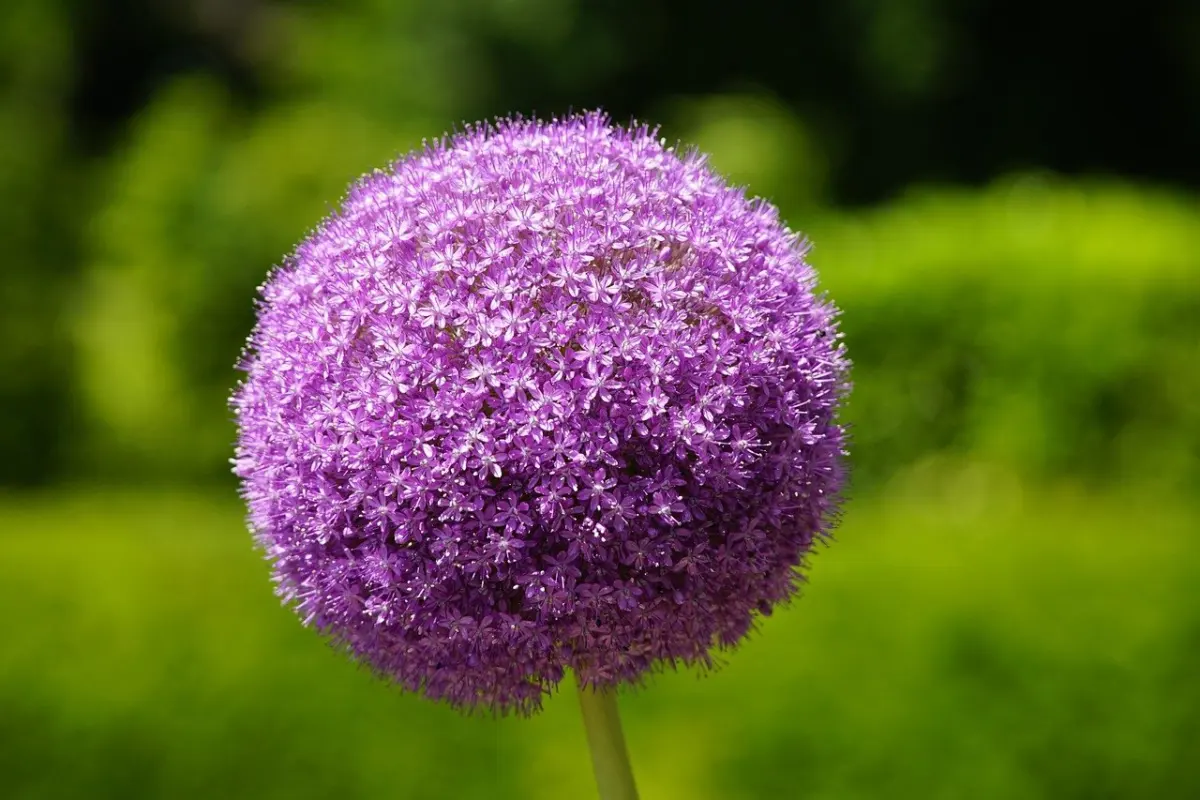
- Giant globe types. Harding & Bloom lists Globemaster at 15-20 cm (6-8 in) deep with 20-30 cm (8-12 in) between bulbs, which suits gardeners planning for large flower heads.
- Species range. Easytogrow notes that depth and spacing depend on species, while Organic Heirloom Seed lists Allium moly at 3 in deep. The small species sit at the shallow end.
- Gaps between bulbs. The RHS puts smaller alliums 7.5-10 cm (3-4 in) apart, and taller species at least 20 cm (8 in) apart, so a mixed planting should be spaced by the tallest bulb, not the smallest.
If you are unsure which variety you have, measure the bulb and use the size-based depths, as they are the most conservative reference. Depth is only useful in a hole that drains, so the next section covers the site.
Site, soil and mulch
The RHS says border alliums do best in a sheltered site with free-draining soil and plenty of sun, and that waterlogged ground should be avoided. In a heavy or wet bed, the choice is to move the planting or improve drainage before the bulbs go in, because timing and depth cannot make up for sitting in wet soil.
Mulch has one supported role here. Harding & Bloom recommends mulching with grit in wet winters to help prevent rot, so a gritty top layer is worth considering where winter rain is heavy and the soil holds water. Where winters are drier, there is no supported reason to add it for the bulbs’ sake.
Fitting alliums into the autumn calendar
Allium planting competes with other cold-weather jobs. If your irrigation lines need draining before freezing weather, How To Winterize A Sprinkler System: A Simple 2026 Checklist To Prevent Freeze Damage covers that task. Shrubs in the same border may need protection too, and How To Winterize Hydrangeas: Protect Blooms And Roots This Winter (Step‑By‑Step, Zone Tips) explains how to do it. Doing the bulb planting first, while soil is workable, keeps the later chores from squeezing out the window.
Frequently asked questions
Do alliums need watering after planting?
Usually not in the ground. The RHS describes alliums as drought tolerant and says watering plants grown in the ground is not usually necessary.
Can I grow alliums in containers over winter?
Yes, but protect them more carefully. The RHS notes that plants in containers can be more susceptible to winter cold than those in the ground.
How many bulbs make a good group?
Harding & Bloom suggests groups of 5-7 bulbs, or 3 for larger types, and repeating the same group every 60-90 cm along the border.