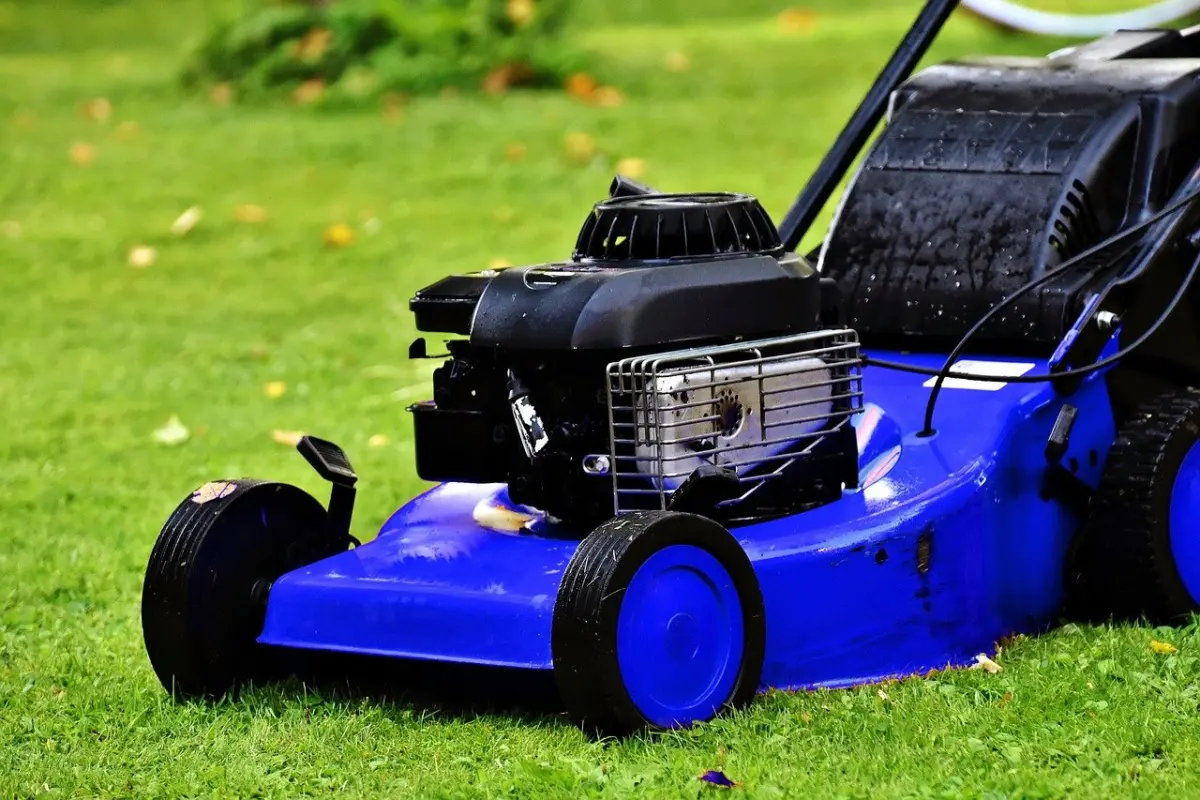
To winterize a lawn mower, run stabilized fuel through the engine or run the tank dry, change the oil, service the plug, filter and blade, then store the battery and machine somewhere dry. Fuel matters most.
Fold this job into your seasonal garden checklist so the mower is ready before the first cold snap. More end-of-season jobs are collected under Seasonal Projects.
Why winter storage damages a mower
Four things go wrong over winter: the fuel ages, moisture collects in the tank, the battery drains and the deck rusts. Each step below targets one of them.
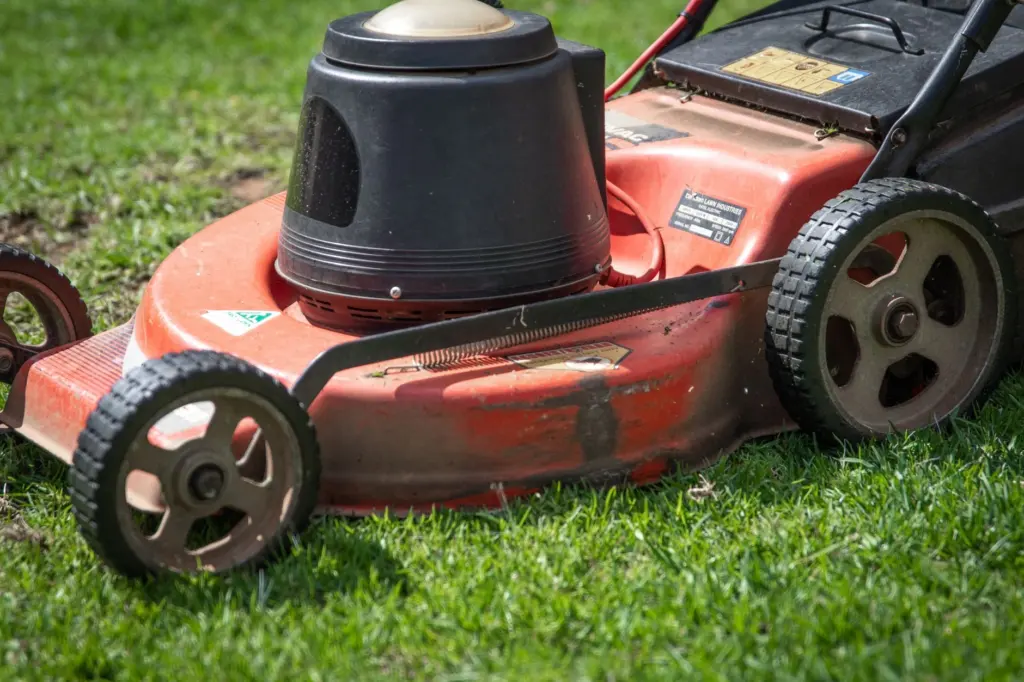
- Fuel ages. The normal usable life of gasoline is three to six months, according to a mower-care guide. Untreated fuel left in the tank for a long storage period is therefore a gamble.
- Moisture collects. A partly empty tank lets condensation form on the inner walls, as dealer winterizing advice explains.
- The battery discharges. A battery left connected and unattended can drain completely, and that matters on any mower with an electric start.
- The underside corrodes. Grass and damp left under the deck invite rust and mold, according to this preparation guide.
The fall checklist in order
Order matters because some jobs need a running engine and others need the spark plug disconnected. This sequence keeps the engine warm for the oil change and the plug wire off for every job near the blade.
- Add stabilizer to a nearly full tank and run the engine, or run the tank dry.
- Drain the oil while the engine is still warm and refill it.
- Disconnect the spark plug wire.
- Clean the underside of the deck.
- Inspect, sharpen or replace the blade.
- Clean or replace the air filter and check the spark plug.
- Remove or maintain the battery.
- Park the mower dry and off the ground.
Fuel: stabilize it or burn it off
Either empty the tank or treat the fuel; both work. A hardware-store maintenance guide puts it as draining the tank or adding a fuel stabilizer product. Choose by how you want to spend your time.
When stabilizer is the better choice
Stabilizer suits owners who want the mower ready to start without touching the carburetor. Fill the tank to about 95% capacity with fresh fuel and add a premium stabilizer. Then let the engine run for five to ten minutes so the treated fuel reaches the whole engine. A nearly full tank leaves less room for condensation.
When running the tank dry is the better choice
Running the mower until it burns all of its gasoline suits owners who prefer to store the machine with no fuel at all. A preparation guide notes that storing a mower without gasoline is safer. It also removes any question about fuel age.
| Fuel detail | Value | Planning use |
|---|---|---|
| Untreated gasoline, normal usable life | 3 to 6 months | Do not leave plain fuel in the tank for a long storage period. |
| Stabilized fuel, shelf life | At least 12 months, up to 24 depending on the product | Check the product label before relying on the upper end. |
| Tank level when adding stabilizer | About 95% full with fresh fuel | Fill before dosing so the treated fuel mixes through. |
| Engine run time after dosing | 5 to 10 minutes | Run it long enough for stabilized fuel to reach the engine. |
Shelf-life and run-time figures come from a mower-care guide, and the fill level from dealer winterizing advice.
Oil change, spark plug and air filter
Changing the oil before storage removes contaminants and helps the mower start smoothly in spring, according to a seasonal checklist. Draining works best when the engine is warm, which is why the oil change follows the stabilizer run in the order above. Look up the oil grade and quantity in the owner’s manual rather than guessing, as this guide advises.
Spark plug
Disconnect the spark plug wire before any work near the blade or under the deck. The same mower-care guide says this prevents accidental starts. Some owners also put a tablespoon of oil into the spark plug hole and pull the starter cord to coat the cylinder, as one checklist describes. Do this only with the plug removed.
Air filter
Check the filter type first. A foam filter can be washed in warm soapy water, as noted by dealer advice. Other filter types normally must be replaced, according to this guide. Many manufacturers recommend doing this once a season. Doing it in fall means the mower needs no parts run in spring.
Blade and underside
A dull blade can look as if it cuts, but it mashes the grass fibers. Dealing with it now means the first mow of spring starts with a clean cut. Disconnect the spark plug wire first, as covered above.
- Sharpen on the mower carefully. If you sharpen with the blade still attached, tilt the mower on its side rather than upside down.
- Replace rather than sharpen if damaged. A blade that is dented or bent should be replaced with a new one, according to this preparation guide.
- Clean the underside. Thoroughly clean the bottom of the mower to prevent rust and mold growth. Do it before you sharpen so you can see the blade’s condition.
Storing the mower battery
A mower battery keeps its charge best between 40 and 80 degrees Fahrenheit, according to a maintenance guide. Keep it in a dry, secure location, as another guide advises.
For a riding mower, disconnect the battery and connect it to a smart trickle charger in a temperature-controlled space. This is the dealer recommendation. If the battery has to stay in the mower, a trickle charger helps prevent a complete discharge, as this checklist notes. Leaving a battery unattended in an unheated shed is the case to avoid, since an unheated shed may fall outside the 40 to 80 degrees Fahrenheit range.
Where to park it for the winter
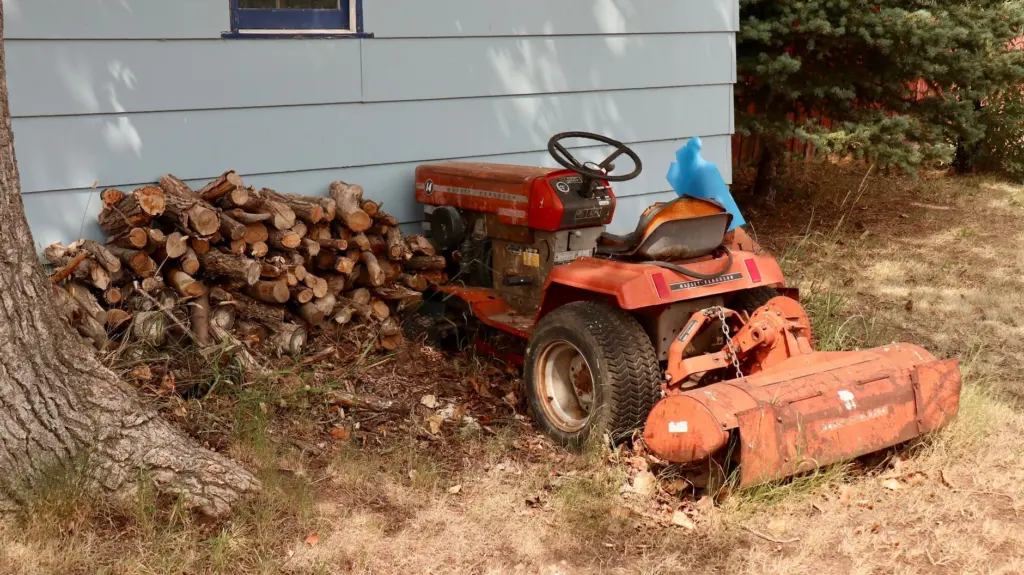
Indoors and dry is the target. If the mower cannot be stored indoors, elevate it using a platform or wood blocks so the wheels and deck stay off damp ground, a tip from the seasonal checklist.
Setting up the first mow of spring
Each fall task pays off in spring. Fresh oil and treated or empty fuel mean an easy start, a sharp blade means a clean first cut, and a maintained battery means an electric start works. Write the date and the work done on a tag attached to the mower so spring’s startup is a short reversal rather than a diagnosis.
With the mower sorted, turn to planting plans. Timing guides such as When To Plant Dahlia Bulbs: Timing Tips For Bigger Blooms In Your Zone (2026) and When To Plant Butterfly Bush: The Best Timing By Zone + Seasonal Planting Tips (2026 Guide) help you decide what the mower will be cutting around next season.
Frequently asked questions
What oil should go into the mower?
Follow the owner’s manual for grade and amount. Fresh oil is typically SAE 30 or 10W-30, depending on the engine, according to dealer winterizing advice.
How often does the spark plug need replacing?
Plugs often last up to three years, though this varies with yard size and growth, according to a preparation guide. A fall inspection tells you whether yours is due.
How do I dispose of the old oil?
Treat it as hazardous waste and dispose of it responsibly rather than pouring it away, as a mower-care guide reminds owners.
Is it fine to stabilize fuel and skip draining the tank?
Yes. Stabilized fuel lasts at least 12 months and up to 24 depending on the product, so a treated tank can wait out winter. Pick one method, either stabilizing or running the tank dry, rather than doing both.