When to plant amaryllis bulbs comes down to counting back: a bulb supplier says plant 8 weeks before the bloom date, and a Master Gardener answer says the first week of November for Christmas blooms.
Cool rooms can stretch that schedule, so a warm, bright spot matters as much as the date. The seasonal garden checklist places this job alongside the rest of the season’s tasks.
Counting back from the bloom date
Amaryllis flowers on a fairly predictable clock once the bulb is potted and kept warm, so the planting date is the bloom date minus the forcing time. The forcing time is a range rather than a single number, which is why different guides give slightly different dates for the same Christmas target.
| Situation | Time to bloom | Planning use |
|---|---|---|
| Indoor bulb planted early to mid-November | 4 to 8 weeks | Fits a holiday display; allow for the slower end if the room is not warm. |
| General rule for a potted bulb | 7 to 10 weeks | A safer planning range for target dates outside the November window. |
| Winter planting compared with spring | Longer in winter than in spring | Add margin to any winter date rather than trusting the short end of a range. |
| Working-backward rule | Plant 8 weeks before the date you want flowers | A starting point for any target date, adjusted for room warmth and light. |
The November range comes from Clemson’s Home and Garden Information Center, and the general rule, winter note and 8-week rule come from a specialist bulb supplier’s planting guide.
Christmas blooms
Clemson notes that amaryllis is most often grown indoors for flowers during the winter holidays, and that flowers can be expected in 4 to 8 weeks when bulbs are planted in early to mid-November. The Master Gardener answer on Northern Gardener is more specific: for blooms on December 25, plant in the first week of November. It also says forcing usually takes about 6 to 8 weeks and can run longer in cool houses.
Those sources point to the same decision. Aim for the first week of November, not the middle of the month, unless the pot will sit in a reliably warm, bright room. Mid-November planting leans on the fast end of the range, and a cool house removes that margin.
Dates other than Christmas
For a New Year party, a late-winter display or any other date, use the 8-week rule as the starting point and shift earlier if the bulb will sit somewhere cool. Because winter flowering takes longer than spring flowering, a bulb potted in the depths of winter deserves more lead time than the same bulb potted in spring.
What speeds or slows the clock
Three conditions move a bulb along the range in the table: warmth, light and season. Each one is easy to adjust at planting time, so check them before settling on a date.
- Room warmth. Clemson says amaryllis prefers warm temperatures of 70 to 75 °F for best growth until the roots form and the leaves and flower stalk grow. A cool house, as the Master Gardener answer points out, lengthens the wait.
- Light. Clemson recommends a well-lighted area that receives at least 4 hours of direct sunlight daily. Warmth does not replace light, so give the pot the brightest window you have rather than a warm but dim shelf.
- Season. The supplier guide says winter flowering takes longer than spring flowering, which is the reason to plant a little earlier, not later, when the target falls in midwinter.
If your only bright window is also cool, treat the longer end of the range as normal and plant at the early side of your window.
Dormancy and storage before planting
Dormancy is the rest period that precedes a fresh round of growth, and it has to finish before your planting date, not after it. Planning backward therefore starts one step earlier than the pot.
For bulbs held in storage, the supplier guide advises a cool temperature between 40 and 50 °F and a minimum of 6 weeks of storage. For a bulb you already own and want to flower again, Clemson says to stop watering and fertilizing it for 8 to 10 weeks. In both cases the rest period is a fixed block of weeks, so start it early enough that it ends before the first week of November if Christmas is the goal.
Potting steps
Potting is quick, and most of the detail is in the container, the mix and how much of the bulb stays showing. Follow these steps in order.
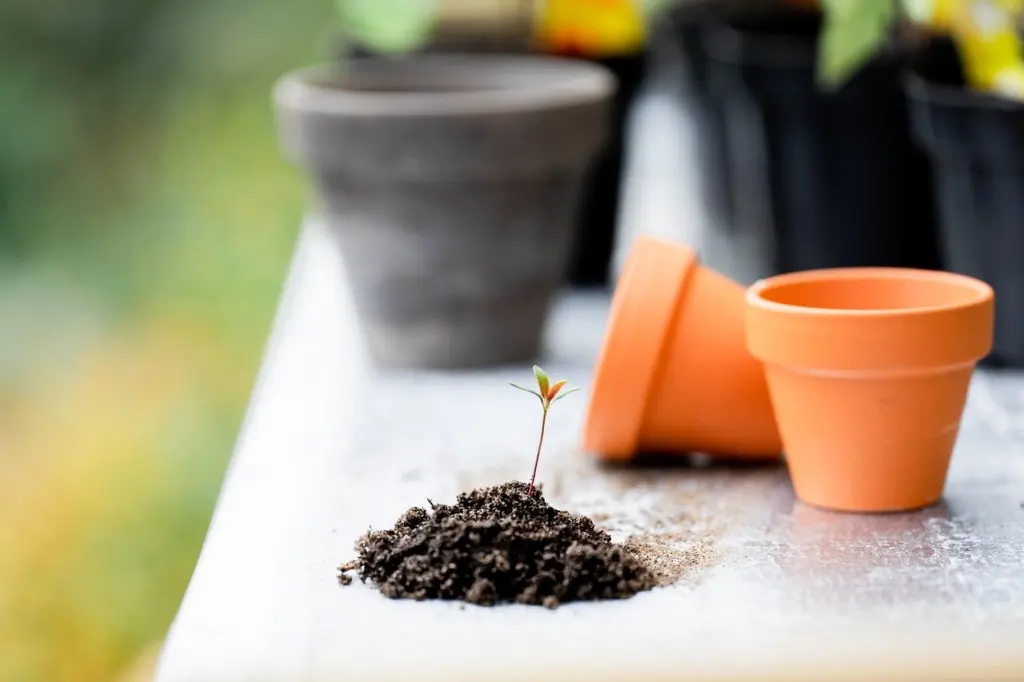
- Pick a snug container. Clemson recommends a container one to two inches larger in diameter than the widest part of the bulb. The Master Gardener answer adds that pots should always have drainage holes.
- Fill with a free-draining mix. Clemson calls a mixture of equal parts peat and perlite excellent.
- Set the bulb high. Clemson says to plant with about one-third to one-half of the bulb above the growing medium surface, and the Master Gardener answer says approximately half the bulb can and should stick up above the soil.
- Place the pot in warmth and light. Use a spot with at least 4 hours of direct sunlight daily, and keep it at 70 to 75 °F until roots form and the leaves and stalk grow, per Clemson.
Staggering blooms
To spread flowers over a longer stretch, pot bulbs in batches instead of all at once. The supplier guide says that to achieve continuous bloom, you plant at intervals of 2 weeks.
In practice, work out the date for your earliest bloom, plant the first pot then, and plant each following pot 2 weeks later. Keep every pot in the same conditions, because a cooler or darker room will slow one batch and erase the gap you planned. Outdoor spring bulbs follow their own calendar, covered in When To Plant Daffodil Bulbs: The Simple 2026 Guide To Timing For Bigger Blooms.
Outdoor planting and hardiness zones
Amaryllis can go outdoors, but only in mild regions; elsewhere it stays a pot plant. The University of Florida’s IFAS Extension says that in most regions of the United States, amaryllis must be grown as potted plants in the home or greenhouse. In Florida, by contrast, they are grown outdoors all year and make excellent garden plants. UF/IFAS adds that amaryllis can be planted anytime in the landscape, depending on the source, but is best transplanted during the winter months.
Clemson reports that amaryllis is cold hardy in South Carolina through USDA planting Zone 8. If your zone is colder, assume the bulb will not survive winter in the ground. The University of Arkansas Extension notes that holiday amaryllis bulbs are not really considered hardy for Arkansas, although many gardeners plant them outdoors anyway. Treat that as a gamble, not a plan.
For pots that spent winter indoors, Clemson says they can be moved outdoors in the spring after the threat of frost has passed. If you are building outdoor winter containers as well, Outdoor Winter Planter Ideas: 15 Stylish, Low‑Maintenance Designs For Cold Climates (2026) covers designs for cold climates, and more timing guides are collected under seasonal projects.
Frequently asked questions
Can I plant amaryllis after the holidays?
Yes. The supplier guide gives a planting period from October until the end of April, and notes that flowering takes longer in winter than in spring.
How many flower stalks will one bulb produce?
It depends on bulb size. Clemson says a bulb 30 to 32 centimeters (11.8 to 12.5 inches) in circumference will produce two flower stalks.
How soon will a visible bud open?
The University of Arkansas Extension says you should have a flower in about 6 weeks from the bud’s appearance.
How far apart should bulbs go in the ground?
For in-ground planting where the climate allows, UF/IFAS says to plant the bulbs 12 to 15 inches apart with the neck of the bulb protruding above ground.