The best patio ideas with plants start with containers sized to the plant, a shade structure matched to the sun, and seating that planting wraps around. Plan for watering: patio containers typically need it daily in summer.
| Decision | Starting point | Planning use |
|---|---|---|
| Container for a small tree or large shrub | At least 18-24 inches wide, with adequate drainage | Choose the pot before the plant, and put the heaviest pots in their final position before filling them. |
| Summer watering | Typically daily for patio containers | Site pots within reach of a tap or hose, or accept a daily routine from the start. |
| Pergola frame | Steel, cedar or treated pine | Pick by the look you want and how much upkeep you will accept, then confirm structural suitability before using composite lumber. |
| Pergola roof | Open rafters through to a full underlayment roof | Open tops suit climbers and dappled light. Fuller roofs give more cover but leave less room for plants overhead. |
| Cool-evening comfort | Gas fire pit and garden heaters beneath a freestanding pergola | Budget for the heat source alongside the structure, not as an afterthought. |
| Year-round appeal | Plants chosen for warm months plus fall and winter interest | Mix at least one evergreen and one winter-interest plant into every grouping. |
Container sizing, watering and plant suggestions here draw on nursery guidance on patio gardens. Pergola frame and roof options come from a pergola pricing guide and a contractor’s list of pergola combinations.
A patio feels like part of the garden when planting overlaps the hard surface instead of stopping at its edge. If your patio already exists and the beds around it are bare, begin with landscaping around a patio. If you are starting from a blank slab or deck, read on and work through the sections in order.
Where to start with a planted patio
Your starting point depends on what the space lacks most: plants, shade, warmth or privacy. Pick the situation below that matches yours and begin there.
Choosing your first project
- Bare patio, no budget for construction: start with containers. Pots are the lowest-commitment way to add planting, and they can be rearranged as you learn where the sun falls. One design source puts it plainly: container gardens and planters are your friend when you want decor that is also alive.
- Hot, exposed patio: start with shade. Plants struggle and people avoid sitting out when afternoon sun has no relief. Compare options in patio shade ideas before committing to a structure.
- Overlooked patio: start with evergreen screening in large pots.
- Comfortable but cold in the evenings: start with heat and light, then add planting that looks good in that light.
- Very small outdoor space or a high-rise: treat it as a balcony. The constraints are weight, wind and floor area, and balcony garden ideas covers them directly.
Patio, deck or porch?
The ideas in this guide apply to any hard outdoor surface, but the surface changes what is practical. A deck raises questions about pot weight and how to protect the boards, and it has its own styling logic. Deck Decorating Ideas: Transform Your Outdoor Space On Any Budget — 2026 Guide covers that ground, while Budget Backyard Deck Ideas: Practical, Stylish Ways To Build And Style Your Outdoor Space In 2026 helps if you are still deciding whether to build one. A covered entry or front stoop is a different brief again, and porch plant ideas deals with hanging baskets and shaded doorway planting.
The patio surface and its planted edges
The surface decides where plants can go. Hard paving leaves you with pots and edge beds, while a patio with open joints or a surrounding border gives more room to grow in the ground. Think about planting at the same time as you choose the material, not after it is laid.
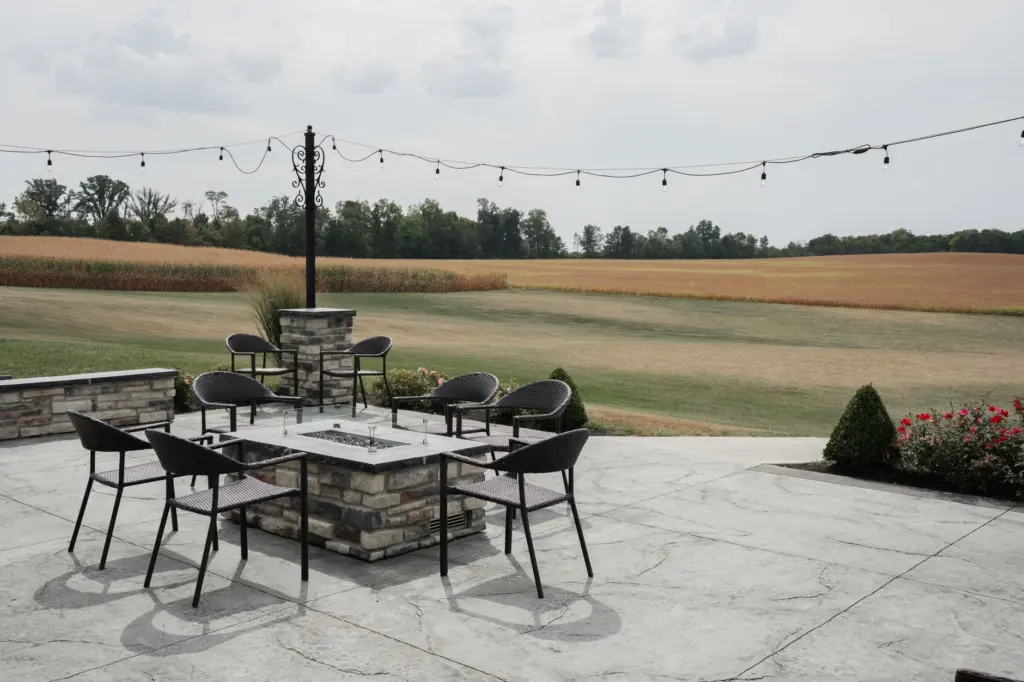
Planning around the material
Material cost ranges vary widely by region, product and labour, and a single national figure would mislead more than it helps. The practical approach is to request itemised quotes for at least two surface types, and to ask each contractor to price the base preparation separately from the surface itself. Base work is the part you cannot easily change later, so it deserves the most scrutiny. Compare like with like: the same area, the same edge treatment, the same finished level against the house.
Whichever surface you choose, leave deliberate gaps for planting before the work starts. Cutting a bed out of finished paving is far more disruptive than leaving one at the design stage. Good places for planting include:
- The house-side edge: a strip along the wall gets shelter and suits taller plants that anchor the space.
- Outside corners: a bed here softens the edge and gives climbers or small trees a place to stand.
- Beside steps: a pair of matching pots or a narrow bed frames the transition into the garden.
Choosing plants for the edge beds
Edge beds are the best place to tie the patio to the wider garden, because the same plants can appear on both sides of the paving line. Repeating two or three plants from the main borders in the patio beds makes the space read as one design. For bed layout, depth and plant choice, landscaping around a patio goes into more detail than there is room for here.
If you would rather not spend weekends maintaining beds, choose tougher plants for the margins. The guide to low maintenance plants for patio settings lists options that tolerate irregular watering and lean care. That advice matters most for second homes and busy households, where the planting has to survive gaps in attention.
Container plants: the working core of a planted patio
Containers are the quickest way to make a patio feel like a garden. They let you position plants at seat height, change the scheme each season and plant in places with no soil. They also carry the heaviest maintenance load, so size, drainage and watering need to be right from the start.
Container size and drainage
For small trees and large shrubs, nursery guidance recommends containers at least 18-24 inches wide to provide adequate root space. That is a minimum for woody plants, not a target for every pot, so annuals and herbs can go in smaller vessels. The same source states that the container should have adequate drainage. Treat a pot without drainage holes as a decorative sleeve: put a plain, drained pot inside it instead of planting directly.
There is a trade-off to weigh before you buy. Larger containers usually need less watering, but the weight makes them harder to move. For a patio you plan to rearrange, choose a few big anchor pots for permanent positions and keep smaller seasonal pots light enough to shift. Settle the placement of the heavy ones before filling them with soil.
Plants that suit patio containers
Small trees in big pots are a good fit for patios that lack much ground for planting, according to the same guidance. The table groups the specific plants that source names by the job they do, which is a more useful way to choose than by species alone.
| Job on the patio | Plants named | Planning use |
|---|---|---|
| Screening and blocking views | Windmill Palm, Juniper, Arborvitae | Evergreens hold their screening role in every season, so put them where the unwanted view sits. |
| Long flowering colour | Knockout Rose Trees | Use as a focal point near the seating, where months of blooms are noticed most. |
| Evergreen colour all year | Blue Prince Holly | A dependable pot for the front of a grouping. |
| Fall colour and winter interest | Red Twigged Dogwoods, Burning Bushes | Pair with evergreens so the patio is not bare once leaves drop. |
These plant suggestions come from a nursery guide, so check hardiness against your own zone before buying. One online patio plant collection offers a growing-zone filter running from zone 3 through zone 11, which shows how widely container choices vary by climate. A plant that thrives in a mild zone may need winter protection or replacing where winters are harder.
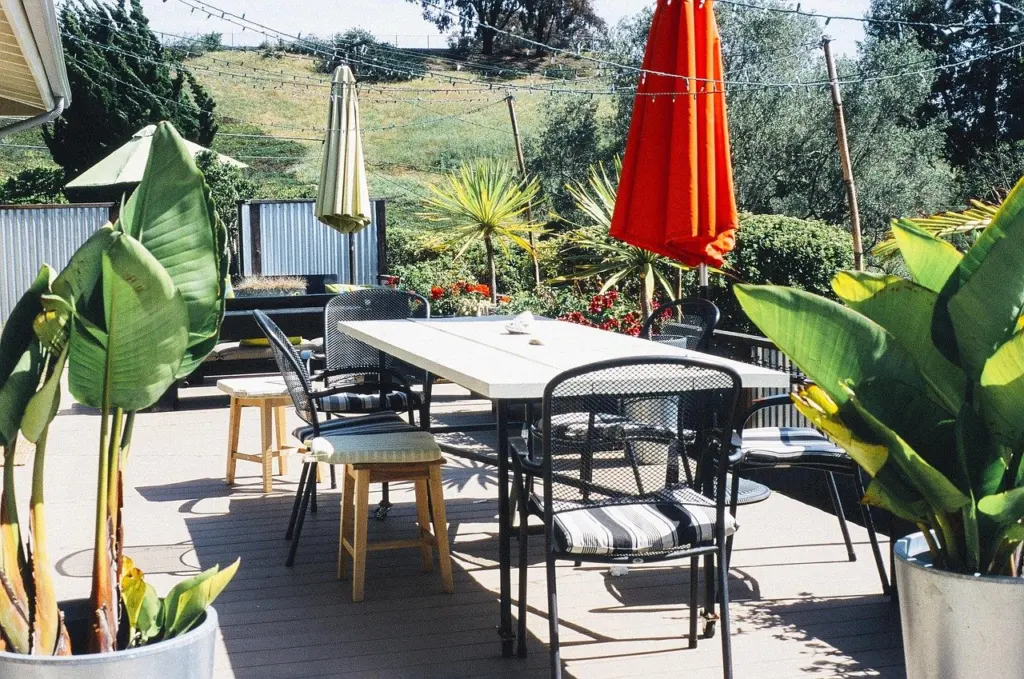
Grasses, foliage and low-effort pots
For texture that moves in the breeze, ornamental grasses work well in tall containers beside seating. They need different handling from flowering shrubs, particularly over winter, and ornamental grasses in pots sets out varieties and cold-season care. Combine grasses with one woody anchor plant and one trailing or low plant per grouping, and the arrangement will look planned rather than accumulated.
Watering and saucers
Container plants on patios typically need daily watering during summer months. That figure should shape the design: group pots close together and close to a water source, so a daily round takes minutes. Hot west-facing positions are the hardest on pots. For intense afternoon sun, the same guidance advises heat-tolerant plants in large containers to prevent root stress.
Empty saucers promptly. Standing water in them risks root rot and gives mosquitoes a place to breed. If you cannot commit to emptying them, raise pots on feet or remove the saucers during wet spells.
Shade structures and pergolas
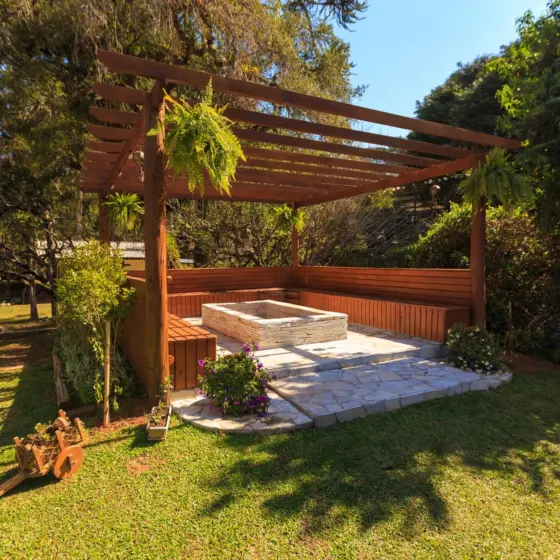
A pergola turns a patio into a defined room and gives plants something to climb. It is the biggest single decision in this guide, so settle its position, frame and roof style before you commit to furniture or lighting. Contractors describe pergolas as a way to keep the space below cool and comfortable, which makes them most useful on patios that get strong sun.
Frame material and roof style
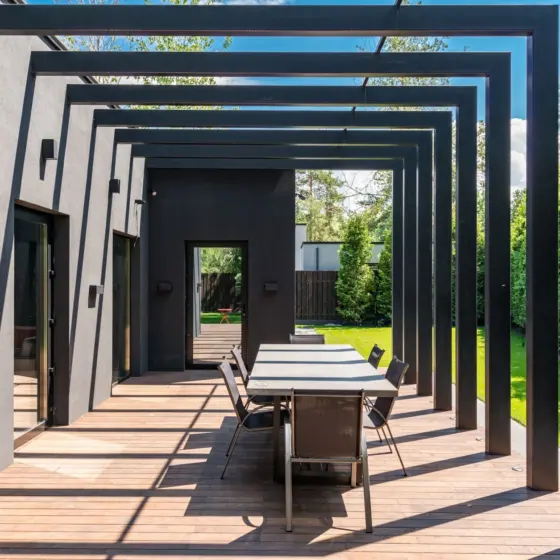
A pricing guide lists three main frame choices: steel, cedar or treated pine. The same guide cautions that composite lumber needs care in structural applications, so ask the builder to confirm that any composite component is meant to carry load before you accept it in a design.
The roof is where pergolas diverge most. The pricing guide notes that you can choose the degree and style of the roof finish, from open rafters to a full underlayment roof. Think about what you want overhead:
- Open rafters: best for climbing plants and filtered light, and the natural choice if the pergola is meant to feel like part of the garden.
- Stationary louvers: simple wood louvers can be angled to provide shade at varying times of day, a good compromise when the sun is high in the afternoon.
- Fabric canopy: a canopy can be added to the top and sides, with weight rods to hold it.
- Fuller roof: choose this when overhead cover matters more than climbing plants.
Choosing between freestanding and attached
A freestanding pergola can stand in the middle of a lawn or garden, and it suits patios set away from the house. An attached design uses the house wall as one support and works well on a patio directly outside a door. Both are covered in detail: Attached Pergola Ideas: Stylish, Space-Saving Designs To Transform Your Home In 2026 for the house-side option, and Small Pergola Ideas: Stylish, Space‑Saving Designs to Transform Tiny Yards in 2026 for compact yards where a full-size structure would overwhelm the space.
Planting the pergola
The planting is what links the structure back to the garden. Climbers soften the frame and add fragrance. Best vines for pergola covers fast shade, fragrance and training. Give the choice of vine as much attention as the timber, because the plant will outlast any single season’s styling.
Making the patio cozy
Cozy comes from enclosure, warmth, soft light and comfortable seating. Plants contribute to enclosure and make the rest of the space look better. The guidance on patio gardens frames a planted patio as a celebration of the senses, so choose plants for scent and texture as well as for how they look.
Enclosure and privacy
Evergreens in large pots can block unattractive views and create more privacy: the nursery source names Windmill Palm, Juniper and Arborvitae for this role. Position them on the side where you are most overlooked, and leave the other sides lower so the space does not feel boxed in. For bigger screening projects involving fences, trellis and hedging, Backyard Privacy Ideas: Smart, Stylish Ways To Create Seclusion In 2026 goes further.
Warmth and fire
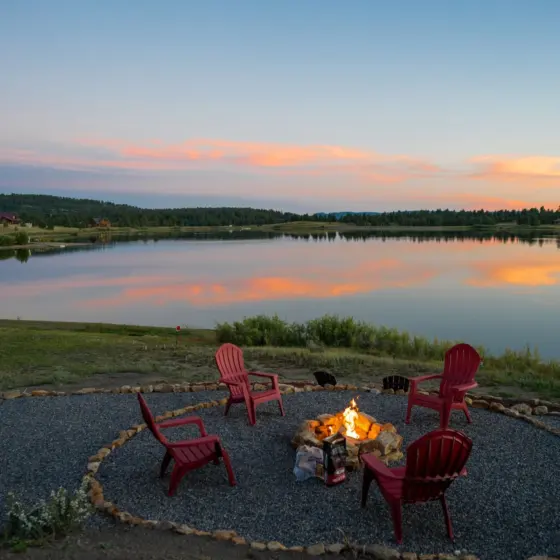
Contractors describe adding a gas fire pit and garden heaters for cool nights to a freestanding pergola. That is a sensible pairing, because a structure overhead helps define the sitting area around the heat. Before you plan a fire feature, decide whether you want a sitting-height gathering point or a smaller heater at the table, because the answer determines the layout.
Several guides here go deeper on fire features. Cozy Fire Pit Seating Ideas: Smart Layouts, Materials, and Safety Tips for 2026 deals with how to arrange chairs around one. Backyard Fire Pit Ideas That Transform Your Outdoor Space In 2026 covers placement within the wider landscape. Budget-conscious readers may prefer Pea Gravel Fire Pit Ideas: 20 Stylish, Low-Cost Designs to Transform Your Backyard in 2026.
Light after dark
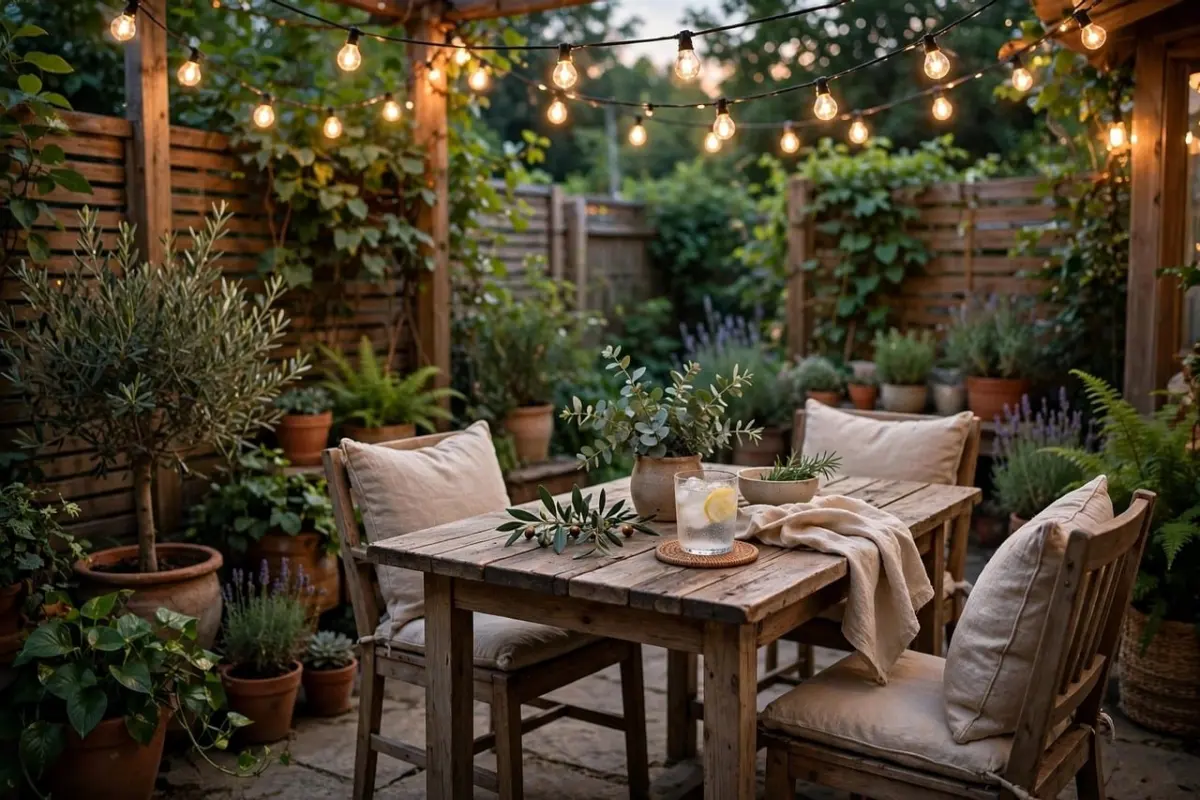
String lights and low fixtures create the glow that makes a patio usable after sunset, and planting gives the light something to fall on. Aim lights at foliage and textured surfaces instead of the seating itself. The fuller treatment is in patio lighting ideas, written around showing off plants. If you have a pergola, Pergola Lighting Ideas: Transform Your Outdoor Space With Cozy, Stylish Illumination In 2026 addresses lighting the structure itself. The approach to the front door is a separate job, handled in Modern Front‑Of‑House Lighting Ideas To Boost Curb Appeal In 2026.
Outdoor furniture and layout
Furniture should leave room for the planting, not compete with it. A patio crammed with seating has no space for pots, while one with plants and nowhere comfortable to sit will not get used. Decide how many people you want to seat regularly, and plan the pots around that layout.
Comfort first
Contractors suggest that a freestanding pergola can hold comfortable upholstered furniture for hours of reading and quiet reflection. That is a useful reminder that the seating, not the structure, determines how long people stay. Choose cushioned pieces for the spot where you want to linger, and lighter, easier-to-clean pieces for dining. Where upholstered furniture sits under cover, the pergola roof choice matters, so pair the two decisions.
Arranging pots around seating
- Anchor corners: put the largest pots at the corners of the seating area, where they frame the space and do not obstruct movement.
- Cluster in odd groups: a group of three pots of different heights looks designed, while a single row looks like storage.
- Keep paths clear: leave a comfortable walking route from door to garden, so plants are never knocked as people pass.
- Leave watering access: make sure you can reach each pot to water it without moving furniture, given the daily summer routine.
Adding cooking and swimming
If entertaining is the goal, fit cooking into the plan from the start rather than adding it later. Outdoor Kitchen Layout Ideas: Smart, Space‑Saving Plans To Entertain And Cook Better In 2026 covers how to lay out the work area so it sits alongside the dining space without dominating it. For larger yards that might take water, Budget Backyard Pools: 12 Clever Ideas To Create A Cool Oasis Without Breaking The Bank (2026) helps you judge what is realistic. In both cases, keep a planted buffer between the activity area and the quiet seating.
Planning for all four seasons
A patio that only looks good in July is used for about a quarter of the year. Nursery guidance advises using plants to create 4 season interest, and the easiest way to do that is to give each season a different plant to carry it.
Building a year-round palette
- Spring through summer: Knockout Rose Trees offer months of colourful blooms and make a strong focal point.
- Fall: Burning Bushes and Red Twigged Dogwoods bring dazzling fall colour and winter interest.
- Winter: Blue Prince Holly keeps evergreen colour all year, so it holds the scheme together when others drop leaves.
- Screening throughout: Juniper, Arborvitae or Windmill Palm keep privacy intact in every season.
Build the scheme by choosing the evergreens first, then adding seasonal performers around them. Because the evergreens remain, the patio never looks empty, and replacing one seasonal plant does not disturb the overall arrangement. Keep the number of plant types low, and repeat them across the patio for a calmer result.
When to change plans
If a plant sulks in its pot after a season, move it rather than persisting. Containers make this easy, which is their advantage over planting in the ground. A common cause is a mismatch between the plant and the position, such as a heat-tolerant plant needed for a hot west-facing spot but placed in a sheltered one, or the reverse. Fix the position first and the pot second.
Sequencing the work and the budget
Do the structural and surface work first, the heavy pots second, and the lighting and soft furnishings last. This order avoids damaging finished planting during construction and lets you judge how much shade and enclosure you still need before buying more.
- Fix the surface and any shade structure. These are the hardest to alter later, and they decide where light and shelter fall.
- Place the anchor pots. Position large containers and fill them in their final spot, since they will be difficult to move afterwards.
- Add the furniture. Arrange seating around the planting, not the other way round.
- Install lighting and heat. Once you know where people sit, light the planting and place any heater or fire feature near them.
- Fill in the seasonal layers. Add smaller, lighter pots and replace them through the year.
If money is tight, spread the project across seasons. Containers, a few evergreens and good lighting go a long way, and a pergola or a full surface rebuild can follow when funds allow. A planted patio improves with each stage, and nothing in this order needs to be redone if you follow it.
Frequently asked questions
How do I make a patio cozy?
Add enclosure, warmth, soft light and comfortable seating. Evergreen pots and a pergola provide the enclosure, a gas fire pit or garden heaters add warmth, and upholstered furniture makes people stay.
What plants suit patio containers?
Small trees and large shrubs suit big pots, including Knockout Rose Trees, Blue Prince Holly, Red Twigged Dogwoods and Burning Bushes. For screening, Windmill Palm, Juniper and Arborvitae are named options.
Do patio containers really need watering every day?
In summer, typically yes. Larger containers usually need less watering than small ones, but they are heavier to move, so choose the size to match both your routine and your layout.
Can I add privacy without building a fence?
Yes. Large pots of evergreens such as Juniper or Arborvitae can block unattractive views and add privacy, and a fabric canopy on a pergola can enclose the sides.
Which pergola frame material should I choose?
Steel, cedar and treated pine are the three main options. Pick by the look and upkeep you want, and have the builder confirm any composite lumber is suitable for structural use.