| Criterion | Pergola | Gazebo | Planning use |
|---|---|---|---|
| Roof | Open beams or slats; louvers or panels can be added | Full roof | The roof sets how much shade and rain cover you get. |
| Sun and rain protection | Less cover; sun and some rain pass through | More shade and rain cover | Choose a gazebo for dependable cover, or a pergola with closing louvers or panels. |
| Starting price | From $802 (guide dated Jul 1, 2026) | From $2,775 (same guide) | Compare entry prices first, then add site work and features. |
| Character | Suits climbing plants; easy to customize with retractable canopies | Freestanding destination with a defined shape | A pergola is flexible; a gazebo is a fixed feature in the yard. |
| Setbacks and permits | Fence-line distances, height limits and permit need vary by city | Same variation; freestanding structures face the most | Check the city’s rules before buying either. |
Roof, cover and local-rule points come from American Eagle Builders, and the starting prices from YardRoom’s guide dated Jul 1, 2026.
In a pergola vs gazebo choice, pick a pergola for filtered shade, climbing plants and a lower starting price, and a gazebo for full roof cover as a freestanding destination. Check city rules on setbacks and permits before buying either.
Choosing between them sits inside wider outdoor planning, and the guide to patio ideas shows how a shade structure fits with seating, paving and layout.
The core difference: an open roof or a full one
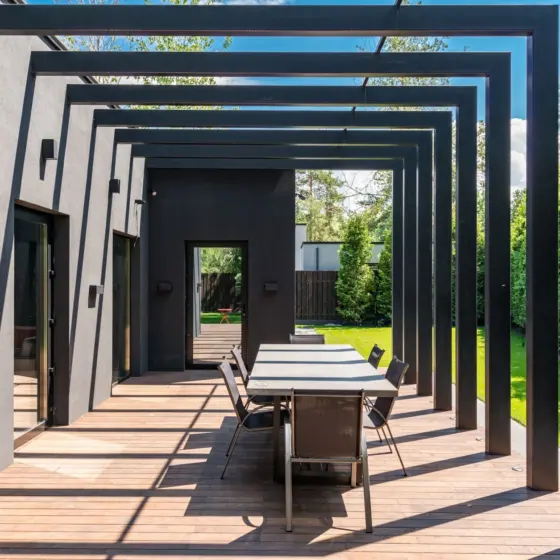
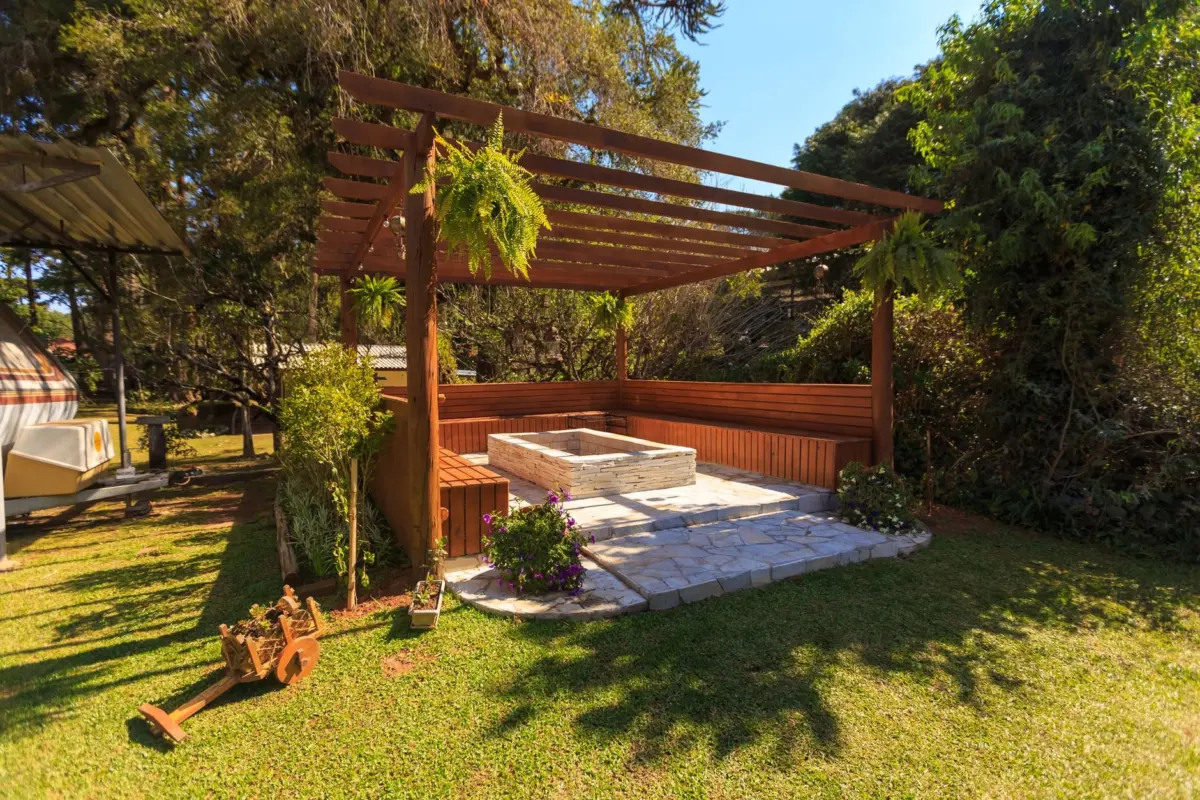
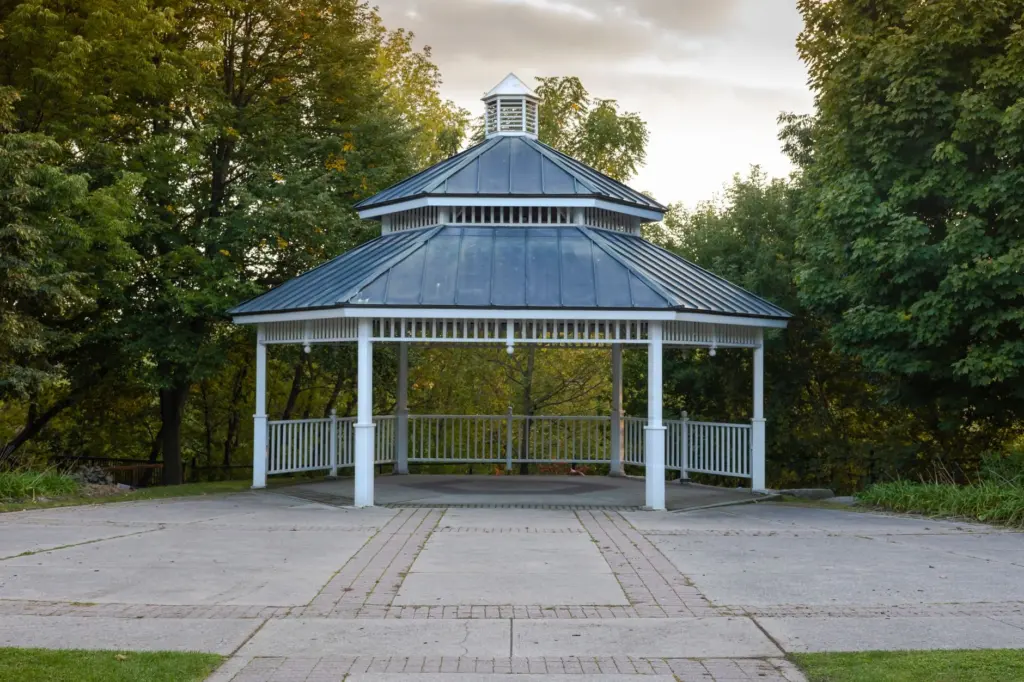
A pergola has an open roof of beams or slats, so sun and some rain pass through, according to American Eagle Builders. A gazebo has a full roof. That one design choice drives most of the other differences: shade, rain cover, plant use and how each structure sits in a yard.
YardRoom describes pergolas as open slatted structures that give filtered shade, and gazebos as freestanding destinations with defined shapes. In practice, a pergola frames a space and softens the light, while a gazebo becomes a room-like feature in its own right.
- Pergola suits flexible spaces. It works for owners who want light and air overhead and may add a canopy, louvers or plants later.
- Gazebo suits a defined retreat. It works for owners who want a roofed spot to sit regardless of the sun, and are happy for it to be a visible focal point.
When sun and rain protection decide it
A gazebo gives more shade and rain cover than a pergola. A pergola gives less, unless it has louvers that close or panels, as American Eagle Builders notes. For a spot that must stay usable in a shower, a full roof is the straightforward answer.
Slats are a different kind of benefit. They filter light rather than block it, which suits a dining or lounge area where dappled shade is welcome. Buyers comparing louvered or slatted models should ask each manufacturer for the roof specification, because the amount of shade depends on the model rather than on the word pergola.
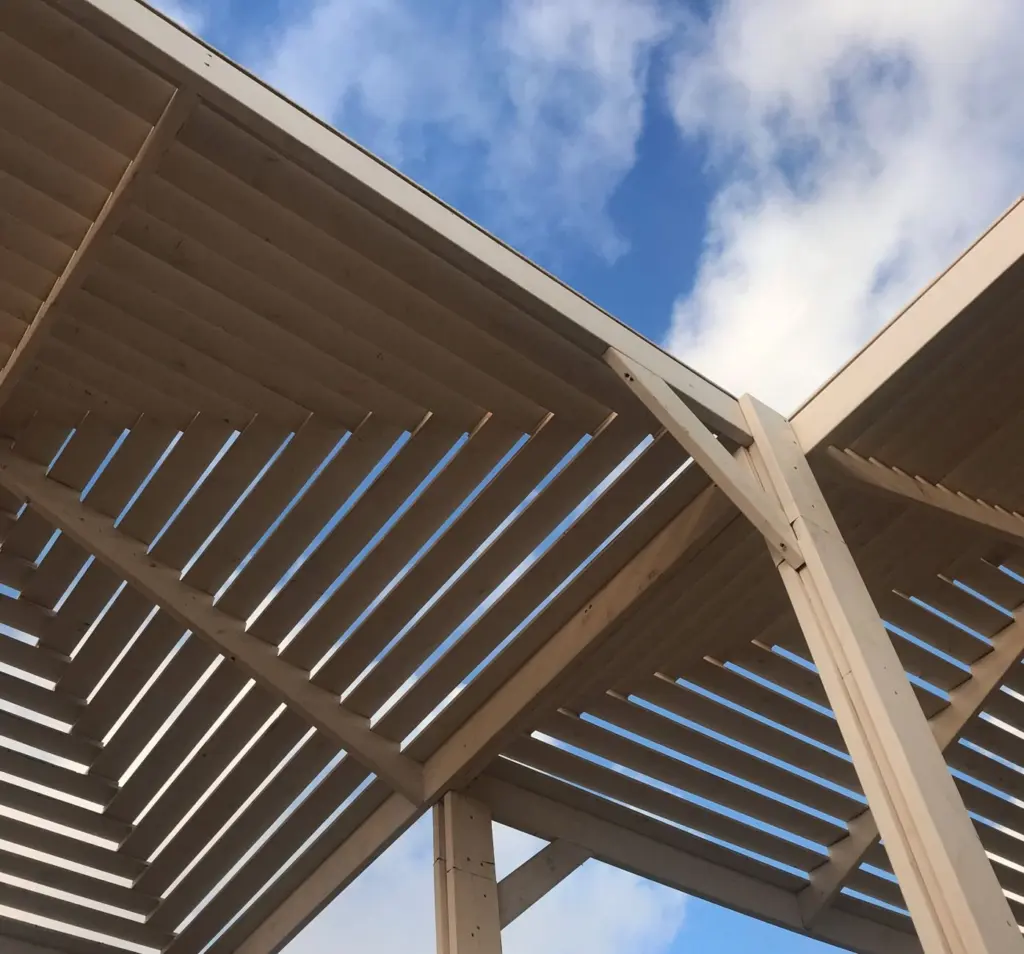
- Wet-weather seating. Choose a gazebo, or a pergola with closing louvers or panels, because a plain slatted roof lets some rain through.
- Bright sun with a view of the sky. A slatted pergola keeps the overhead openness while taking the edge off direct sun.
- Changing needs through the day. Retractable canopies can be added to a pergola, so cover can be drawn when wanted and opened when not.
When budget decides
Pergolas are the most budget-friendly option, and the gap shows at the entry level. YardRoom’s guide, dated Jul 1, 2026, lists pergolas starting at $802 and gazebos starting at $2,775. Those are floor prices, not installed totals, so use them to rank the two types rather than to set a budget.
Features move a pergola’s price a long way. Varmoza’s cost guide puts large kits of around 10×20 ft at $3,200–$3,800 for manual versions and $9,200–$12,000 for motorized ones. The same guide gives a planning allowance of $700–$1,800 for assembling a small manual aluminum kit, and notes that assembly allowances do not automatically include anchoring, foundations, electrical work or accessory fitting.
- Tight budget. A simple pergola has the lowest entry price, and it can be upgraded later with a canopy or panels.
- Motorized features. A motorized pergola can cost far more than a manual one of similar size, which narrows its price advantage over a gazebo.
- Site work. Budget separately for anchoring, foundations and any electrical work, whichever structure you choose.
Placement, setbacks and permits
A gazebo is a standalone destination, so it suits a lawn corner, a garden end or a spot reached by a path. It benefits from a clear approach and some separation from the house, because it reads as a place to go to rather than an extension of the patio.
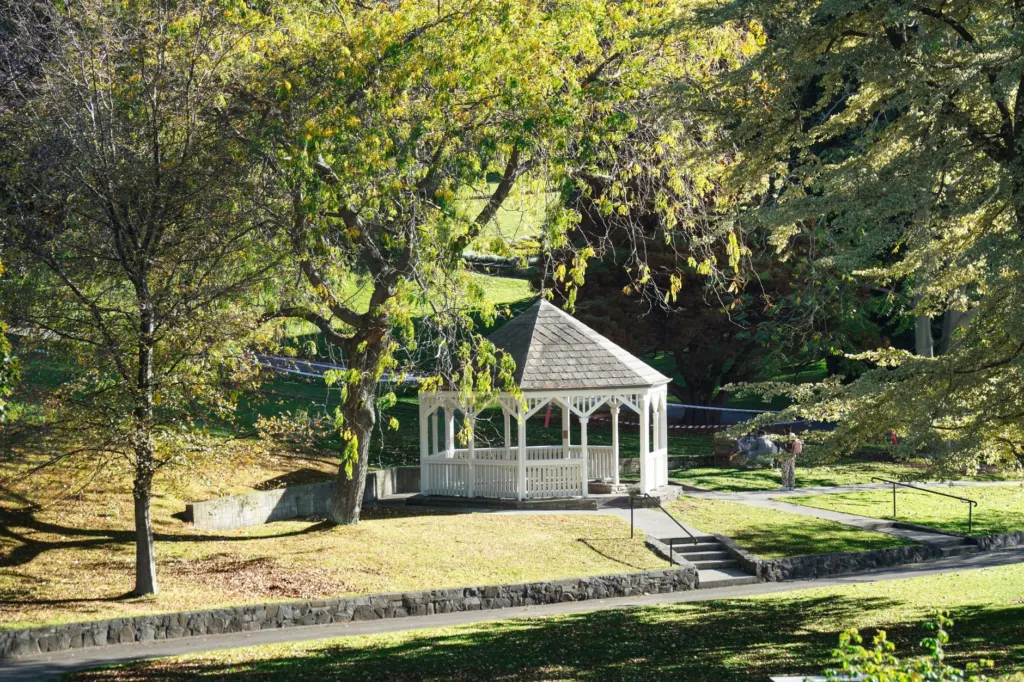
Placement is also where local rules bite. Distances from the fence line, height limits and whether a building permit is required can differ from one city to the next, and freestanding structures face the most variation, so American Eagle Builders advises checking with your city first. The setback for a freestanding gazebo near a boundary is therefore a question for the municipal code on your lot, not a general figure.
Anchoring deserves the same attention as distances. A roof that catches wind pulls on its footings, so the larger and more solid the roof, the more the footings and fixings matter.
- Small lot. Confirm setback and height limits before choosing a size, since a freestanding structure may have to sit well inside the boundary.
- Exposed site. Plan the footings and anchoring as part of the design, not as a finishing detail.
- Permit uncertainty. Ask the city whether a permit is needed before ordering a kit, because the answer can differ by structure type and size.
Making a pergola feel more like a gazebo
A pergola can move toward gazebo-like cover without becoming a gazebo. Louvers or panels can be added to the roof, and retractable canopies can be fitted, so an open frame gains a roof that closes when needed. Panels in particular turn the open roof into something closer to a solid one.
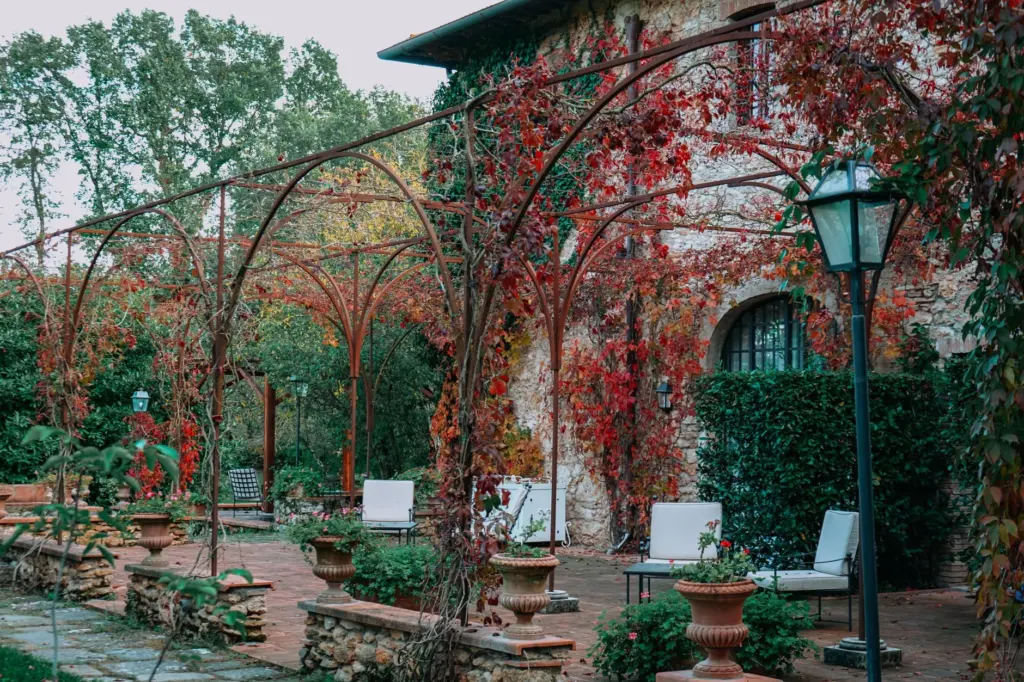
Climbing vines offer a softer route. They add a leafy layer over the frame and suit pergola structures well, although a growing canopy gives variable cover and does not replace a roof in heavy rain.
For full shade right at the back door, a patio cover is the attached alternative, since it gives gazebo-style full shade without a separate building. The guide to covered patio ideas covers that route in more detail. Owners who want protection from the weather beside the house, with the sides closed in as well, can compare screened porch ideas.
Frequently asked questions
What does a professionally installed pergola cost?
A Fun Outdoor Living guide dated Dec 8, 2025 says most Carolinas homeowners pay $4,000–$7,000 for a professionally installed pergola with durable materials. Prices in other regions can differ.
How much do footings add to a pergola project?
Varmoza’s cost guide lists $1,000–$3,000 for four new concrete footings where new foundations are required.
Which climbing plants suit a pergola?
YardRoom names wisteria, climbing roses, jasmine and grapevines as plants that thrive on pergola structures.