| Option | What it does | Planning use |
|---|---|---|
| Annual vines such as sweet pea and morning glory | Grow from seed each year; economical, and fast-growing annual vines can come from a single seed packet | The cheapest first layer. Expect to sow again every year. |
| Scarlet Runner Bean | Climbs inexpensive twine or wire supports | Pair it with string or wire instead of building a trellis. |
| Smaller hedge plants or cuttings | The frugal route to a hedge when you buy small, buy rooted cuttings or propagate cuttings yourself | Keeps plant cost down. Cover the young hedge with annual vines in the meantime. |
| Arborvitae | Thick evergreen, low-maintenance foliage | A year-round green screen with modest upkeep. |
| Skip laurel hedge | Dense green hedge that can grow up to ten feet | Plan for a tall mature hedge and check HOA size limits first. |
| Bamboo | Described as one of the fastest-growing plants in the world | Fast cover, but decide how you will contain it before planting (see the bamboo section). |
| Pergola with climbers | A structure that supports view-obstructing climbers and shelters spaces from second-story views | Best when you are overlooked from above rather than from the side. |
Plant descriptions and costs in the table follow a landscaping guide to creating backyard privacy and a patio privacy guide from a pergola and outdoor structure builder.
Layering over a few seasons keeps backyard privacy ideas affordable: start with seed-grown annual vines, add small hedge plants, and check local rules before building or planting.
Screens work best as part of the whole outdoor room, so read this alongside our guide to patio ideas with plants before you settle on a layout.
Cheap and fast: where to spend first
The cheapest privacy comes from seed, string and small plants, built up in stages. Blooming Backyard recommends a privacy plan implemented in layers over a few seasons to keep the overall cost low, and that approach answers the question of how to add privacy cheaply better than any single product.
Annual vines on simple supports
Fast-growing annual vines grown from a single seed packet are the suggested starting point. Sweet pea and morning glory are economical because they can be grown from seed each year, and Scarlet Runner Bean can climb inexpensive twine or wire supports.
That makes annuals the right first move when the budget is tight or the layout is not settled. The outlay is a packet of seed and some string, and nothing is lost if you change the plan. The trade-off is that annuals start over each year, so treat them as cover while permanent plants establish, not as the finished screen.
Small hedge plants and cuttings
Smaller plants, rooted cuttings, or cuttings you propagate yourself are the frugal route to a hedge. This route trades money for patience. If you can wait, it suits a long boundary where buying full-size shrubs would be expensive, and annual vines planted in front of the young hedge can hold the gap.
Putting the layers together
A sensible order is seed-grown climbers first, a hedge of small plants behind or beside them, and a built structure only where a plant cannot do the job. Each layer then has time to establish before the next purchase, and you can stop as soon as the sightline is blocked.
Once the first layer is rising, a modest seating area makes the screened space worth using, and the Pea Gravel Fire Pit Ideas: 20 Stylish, Low-Cost Designs to Transform Your Backyard in 2026 guide covers low-cost options for that corner.
Green screens compared
Plants block sightlines without construction. A structure builder’s patio guide points to dense evergreens such as arborvitae, fast-growing bamboo or climbing vines as the natural way to block views. They differ mainly in how permanent they are and how much control they need.
Arborvitae and hedges
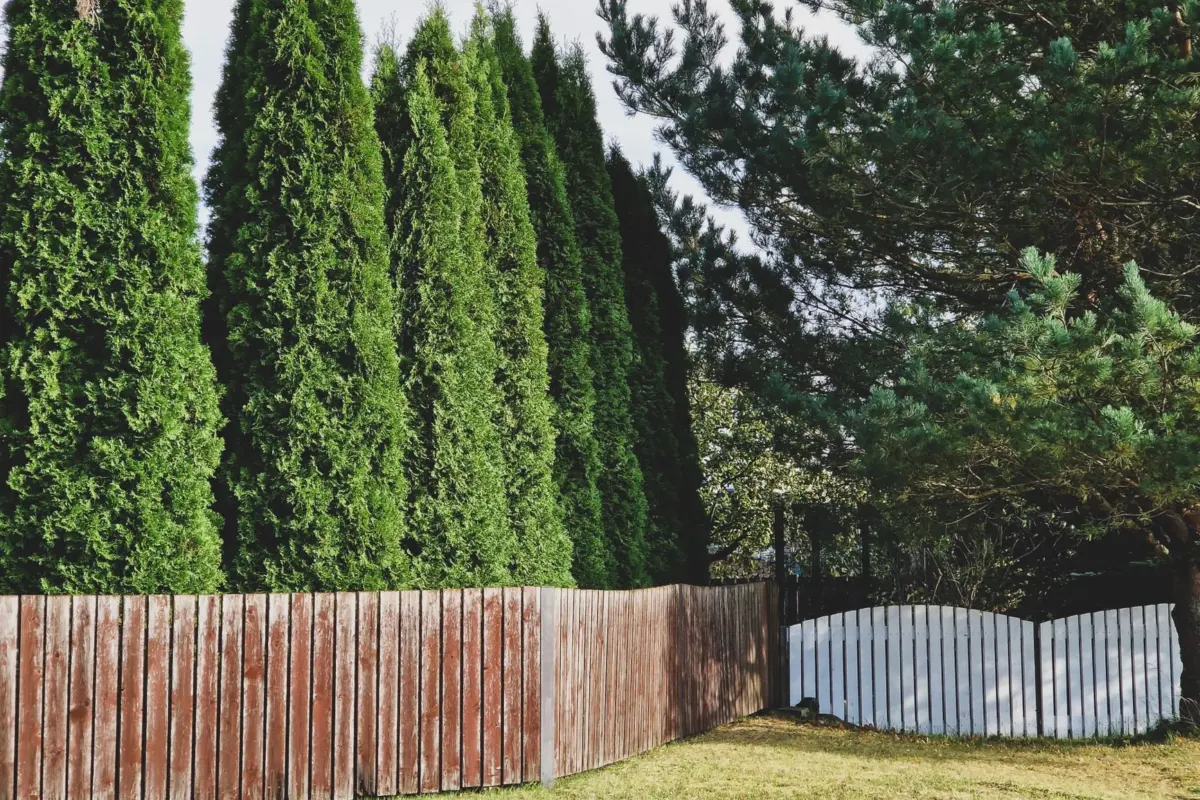
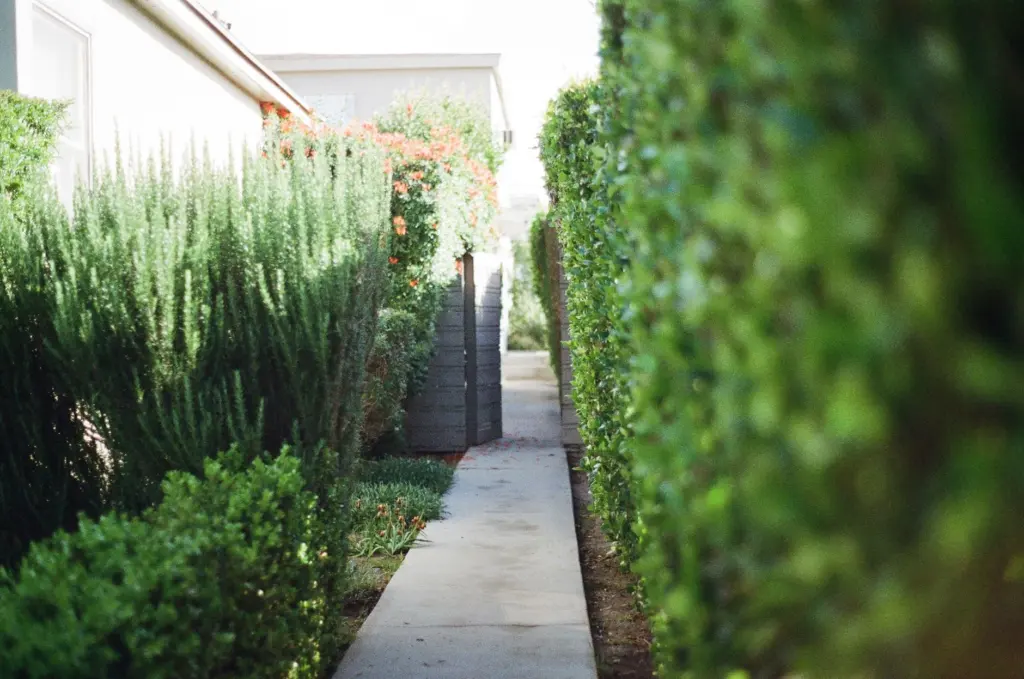
Arborvitae has thick evergreen, low-maintenance foliage, which suits a green screen that has to work in every season, not just in summer. Skip laurel is a hedge alternative: the same guide describes it as a dense green hedge that can grow up to ten feet.
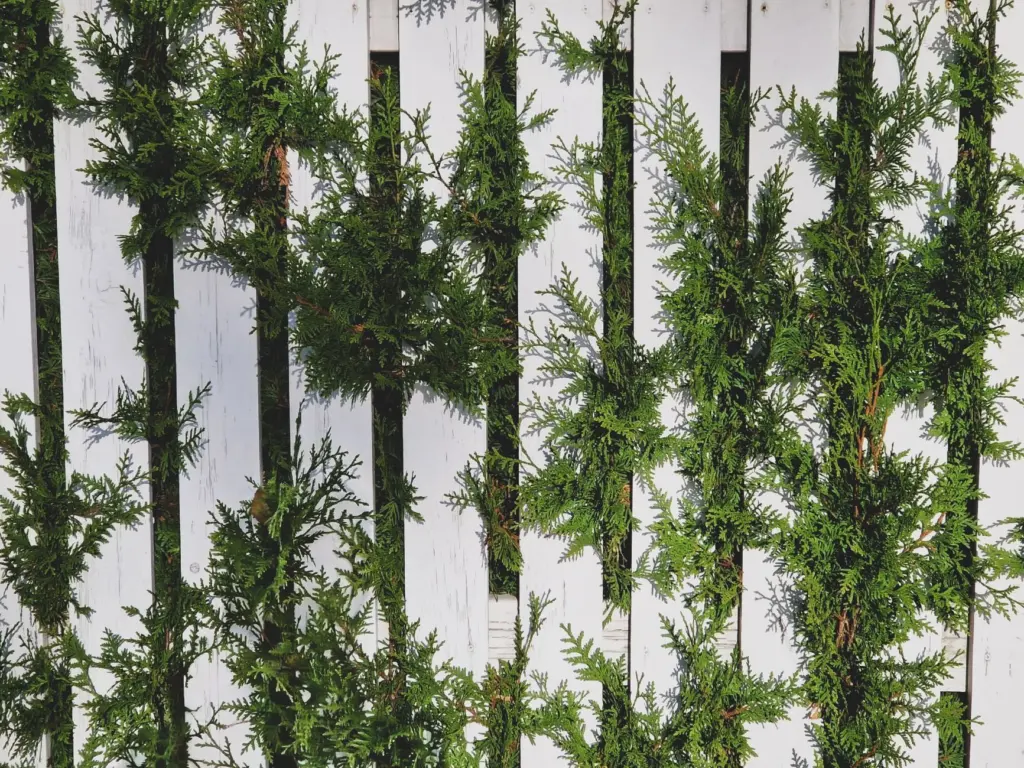
Read that height as a ceiling for the mature hedge, not a target and not a speed. It tells you how much room the hedge will eventually occupy and whether it might collide with size limits. The guide advises checking HOA rules on acceptable sizes before you build or plant a screen.
Which plants grow fastest for screens
Bamboo is described as one of the fastest-growing plants in the world, and annual vines are the quickest way to get cover in a single season. Among climbers, clematis can grow up to 20 feet and bougainvillea up to 30 feet tall, though dwarf varieties exist, according to the same patio guide.
Those climber figures are maximum heights, so they show how far a plant can reach, not how soon. The practical decision is to pick for the coverage you need now and the upkeep you will accept later. Brick & Batten notes that some quick-growing climbers need regular pruning, which is a recurring job to weigh against the speed.
Bamboo: fast, but only if contained
Bamboo’s speed is both its appeal and its risk. According to an extension Ask an Expert answer, rhizomatous (creeping) bamboo has been the subject of many neighbor-against-neighbor lawsuits because it is nearly impossible to contain.
Clumping bamboo is less invasive, but the same answer says the best control is to plant it in large above-ground containers. For a boundary screen, a clumping type in a large above-ground container is therefore the version worth considering, and creeping bamboo is best avoided near a neighbor. The extension answer also advises checking whether your city has laws or restrictions on planting bamboo along a property line before you buy.
Pergolas and other structures
A pergola gives partial, filtered privacy, not a solid wall. Brick & Batten says pergolas can filter light, frame views and create an intimate feel while still feeling breathable. That suits a patio where you want to feel sheltered without losing air and daylight.
The structure earns its cost when the problem comes from above. Blooming Backyard suggests sheltering outdoor living spaces with a pergola, canopy, sail shade or privacy umbrella to guard against peeking from second-story windows, which a hedge beside the patio will not fix.
- Overlooked from upstairs: choose a pergola, canopy, sail shade or privacy umbrella over the seating area.
- Overlooked from the side: a hedge, bamboo in a large container or a climber-covered screen does more per dollar than a roof.
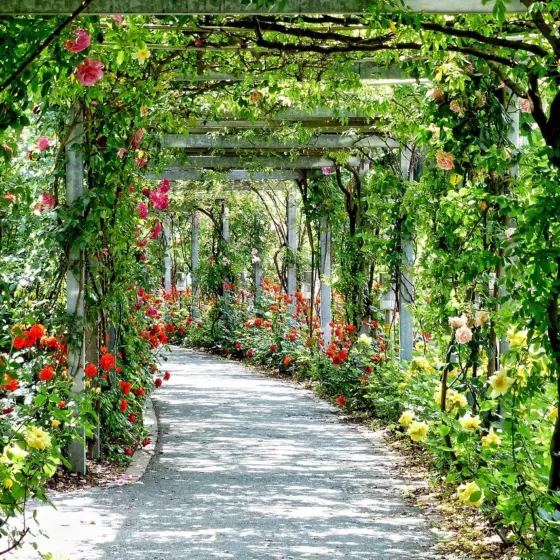
- Want a living wall on a frame: a pergola doubles as a structure for growing view-obstructing climbers and vines, so it combines the immediate effect of a frame with the density of plants.
If the screened space is a raised platform, the Deck Decorating Ideas: Transform Your Outdoor Space On Any Budget — 2026 Guide covers furnishing it once the screen is in place.
Rules to check before you plant or build
Whether a fence needs a permit depends on where you live, so ask your city or county before you build one. Separately, check your HOA rules on acceptable sizes for fences and screens, as the patio privacy guide advises.
Plants can be regulated too. Bamboo along a property line is the clearest case, and the extension answer on bamboo advises checking local city laws first. Settling these rules before purchase protects the money you spend on posts, panels and plants.
Frequently asked questions
Do narrower or wider pergola slat gaps give more privacy?
Narrower gaps give more privacy, but they make the pergola feel heavier. Wider gaps feel lighter and more casual, according to Brick & Batten.
Are outdoor curtains enough to close in a pergola?
Often they are. The same guide says that in many cases one or two sides with curtains is enough, so you rarely need to enclose every side.
Are trees a good budget screen?
Not as a first purchase. Trees take a while to grow, and large trees at the nursery are often an investment, as Blooming Backyard points out. Annual vines and small hedge plants cover the gap more cheaply.
Which climbers suit a pergola?
Popular choices include jasmine, clematis, climbing roses, wisteria, honeysuckle, grapevines, trumpet vine and climbing hydrangea, per Brick & Batten.