The best fire pit seating ideas pair a layout with a safe base: set the pit on a nonflammable, non-grass surface, keep it clear of overhead cover, and position chairs at the clearance the pit’s manufacturer specifies.
Seating shape, chair material and clearance all affect each other, so this guide works from the ground up. For wider planning around the yard, see our patio ideas with plants and other outdoor living guides.
Surface and overhead space come first
Every seating layout depends on what sits under and above the fire. Settle both before you buy a single chair, because they decide where the pit can go at all.
The ground under the pit
Architectural Digest advises setting the pit on a nonflammable, non-grass surface, such as a wide stoop or a brick patio. A paver or brick patio therefore does double duty: it gives chairs a level, stable footing and it provides the base the pit needs. If your only open space is lawn, build a paved pad first and arrange the seating on that pad rather than placing a pit on turf.
The same source suggests potentially adding a heat-resistant mat under the pit, a sensible extra where the surface is a mix of materials or where you want a visible edge to the fire zone.
The space above the pit
A pergola can frame a seating area nicely, but Wayfair’s seating guide is direct that the fire pit should not be placed beneath the pergola itself. Place the chairs and sofa under the shade structure if you like the enclosed feel, and keep the fire pit out in the open beside it. Let the structure and the fire share a seating group without sharing the same footprint.
Setting the distance between chairs and fire
Seating distance is a safety clearance, not a styling choice, and it depends on the pit’s size, its fuel and the manufacturer’s instructions for the model you own. Start with the clearance printed for your pit, and treat that as the minimum before you think about comfort.
Once the minimum is set, adjust by how people actually sit. Chairs with tall, reclined backs put heads and shoulders farther from the flames than the seat edge suggests, while low stools bring people forward. Test the arrangement with a fire lit and move anything that feels too warm, rather than pushing chairs closer to look cozy in photos.
Moving seating is the easiest fix. Wayfair notes that Adirondack chairs can fit closely together around a fire pit, which is useful for conversation. Set that closeness by the pit’s clearance, not by the width of the chairs, and keep a clear walkway behind each seat so nobody has to squeeze past the fire.
Layouts that work around a fire pit
Layouts that work share one trait: everyone can see each other and the fire, and nobody is wedged against the pit. The right shape depends on how many people you host and how permanent you want the setup to be.
A circle of chairs for small patios
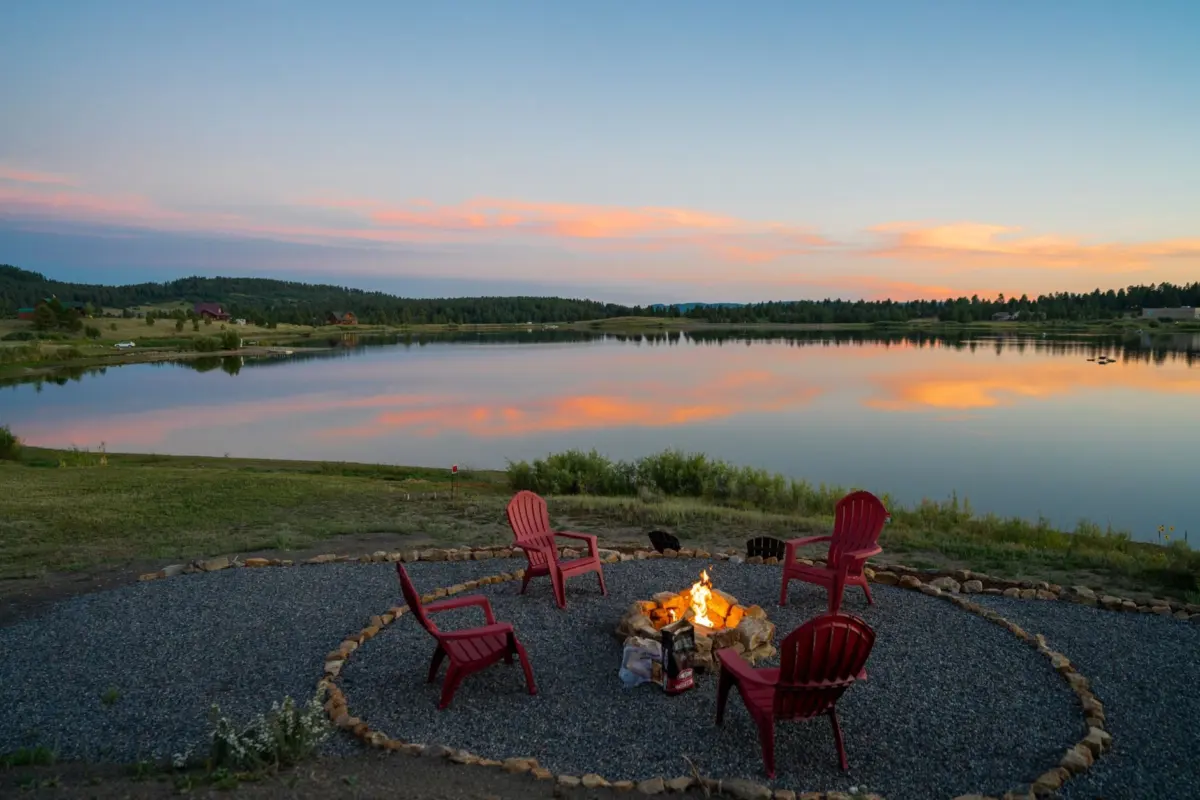
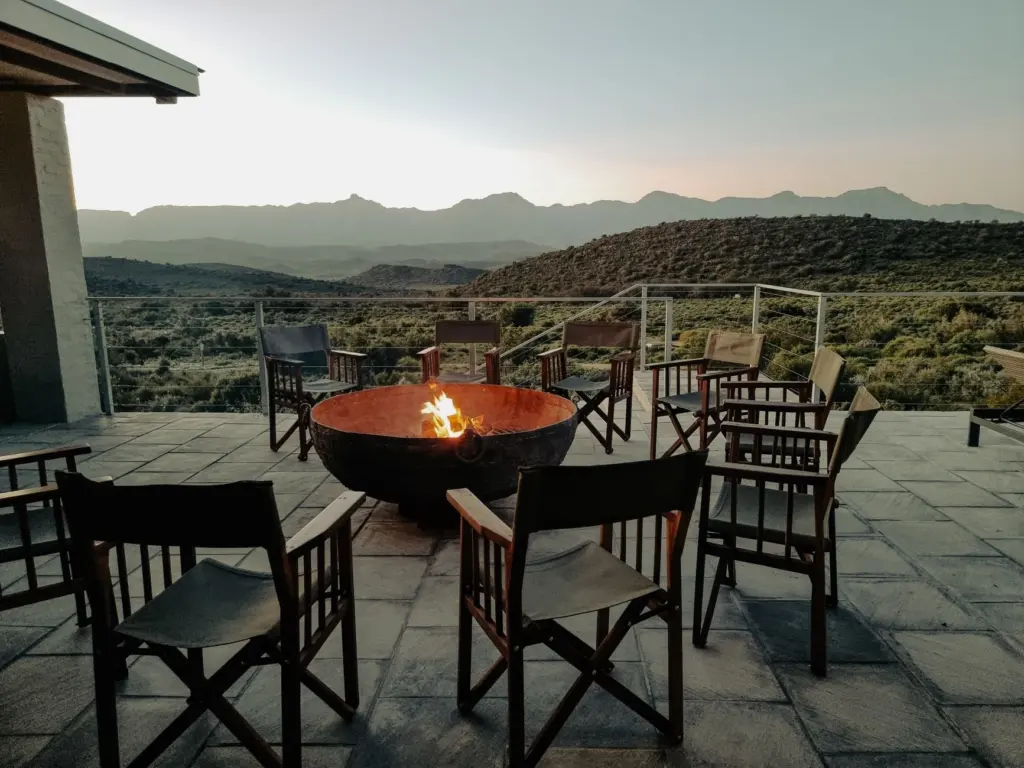
Outer’s seating guide describes four chairs around a round or square fire pit as an instant gathering zone, and suggests six or more with ottomans for larger spaces. A circle suits a small patio because it needs no extra furniture and every seat has the same view of the fire. Choose it if guests tend to arrive in small groups and the chairs may need to be tucked away afterward.
Adirondack chairs
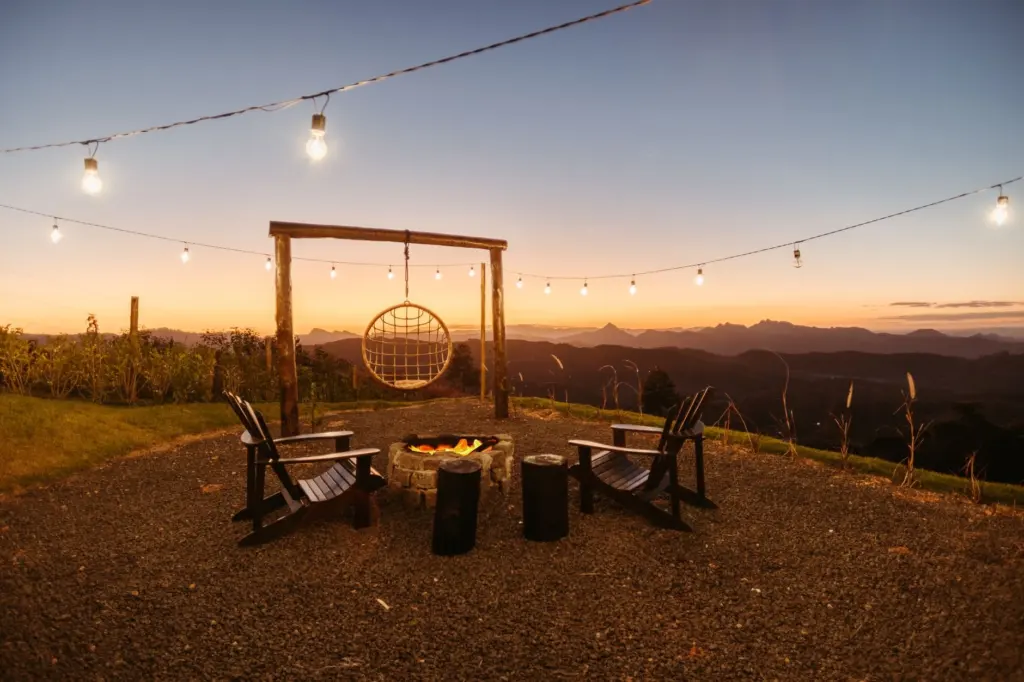
Wayfair points out that Adirondack chairs have tall, reclined backs and angled seats that suit relaxing, and that their wide armrests hold drinks. That makes them a good fit for long evenings, but a reclined seat takes more floor depth than an upright one. Allow for that when you measure the space behind the chairs.
Gliders and sectionals
If you want motion, Wayfair notes that glider chairs do not need the same space to rock as standard rocking chairs, so they are the better choice on tight patios. Sectionals can seat anywhere from one person to more than six, according to the same guide, and Outer cites seating for 6–8 as a retailer figure for a large patio sectional. A sectional is heavy and hard to shift, so place it once, at the right clearance, and build the rest of the layout around it.
Built-in stone benches
Permanent seating suits yards where the pit will stay put. Architectural Digest highlights wide stone ledges that give a natural place to set down a drink. Built-in stone benches fix the distance for good, so work out the clearance before construction, not after. Pair them with a few movable chairs so you can adapt when the guest list grows.
Zoning for a bigger yard
If the patio also hosts cooking, keep the fire circle separate from the food prep area so the two do not compete for space. The plans in Outdoor Kitchen Layout Ideas: Smart, Space‑Saving Plans To Entertain And Cook Better In 2026 show how to organize that side of the patio. If the gathering space sits next to a deck, Deck Decorating Ideas: Transform Your Outdoor Space On Any Budget — 2026 Guide covers the furnishing around it, while the pit itself still needs the nonflammable base described above.
Materials for chairs, benches and surfaces
Which materials are safe depends on what part of the setup you mean. The pit’s base should be nonflammable, while chair frames are mainly a question of weather, weight and comfort in the sun. Published guidance gives no numeric heat ratings for chair materials, so check the manufacturer’s care and heat guidance before putting any chair near flames.
| Material | What is stated | Planning use |
|---|---|---|
| Aluminum frame | Resists rust and weighs little; can get warm in direct sunlight | Good for chairs you will move often; put cushions or throws on seats that sit in sun |
| Recycled HDPE | Durable; resists fading, water and temperature swings | A low-upkeep choice for chairs that stay outdoors year-round |
| Wood | Needs periodic sealing or refinishing to protect against weather damage | Suits those who accept regular upkeep for a warmer look |
The aluminum details come from Outer’s seating guide, and the HDPE, sun-warmth and wood notes come from Plawdlik’s Adirondack chair guide.
Choose by upkeep tolerance. Recycled HDPE and aluminum ask the least of you, while wood rewards regular care. For stone benches and paver surfaces, the logic is simpler: they are built into the patio and sit on the nonflammable side of the equation, which is why they appeal for permanent setups. Because chair fabrics and cushions are not covered by a verified heat rating, keep them away from the fire’s edge and store them when the pit is in use.
Frequently asked questions
How wide should a fire pit rim be for resting drinks?
Architectural Digest recommends a wide lip of about eight inches, which is ideal for resting a drink.
How many people can one large fire pit seat?
A designer quoted in the same Architectural Digest feature says one large fire pit seats 15 people comfortably. Treat that as a quote about a specific installation, not a standard.
Is a heat-resistant mat worth adding?
It can be. Architectural Digest suggests potentially adding a heat-resistant mat under the pit, which is most useful where the surface is mixed or you want a defined fire zone.
Can I use rocking chairs near the fire?
Gliders are the easier fit, since they need less room to rock than standard rocking chairs, according to Wayfair’s seating guide. Keep the full rocking range outside the pit’s clearance.