| Pool option | Typical cost | Planning use |
|---|---|---|
| Inflatable or soft-sided pool | $17 to over $100 | Cheapest way to find out whether the family will use a pool at all |
| Metal-frame above-ground pool | $144 to over $1,000 | Better balance of price and durability for a pool you plan to keep |
| Stock tank pool, DIY | $1,500–$3,500, installed in 1–2 days | Quickest built option, suited to a small plunge-style soak |
| Plunge pool, built | $20,000–$50,000 for most builds | Compact inground option for small gardens with a bigger budget |
| Full-size pool | $50,000–$100,000 or more installed | Outside a true budget; treat it as a different project |
Inflatable and frame prices come from a supplier price roundup, and the stock tank, plunge and full-size figures from a plunge pool cost guide.
The best backyard pool ideas on a budget start with an above-ground pool or a DIY stock tank, not an inground build. Check local fence and permit rules before you buy.
This guide treats the pool as part of the garden, so planting and surfaces count as much as the water. For the wider setting, see our patio ideas with plants, or browse more in Outdoor Living.
What each budget tier means for your yard
Pool type sets most of the bill, so decide it before you design anything else. The table gives the entry prices; the choices below show what they mean in practice.
- Soft-sided or inflatable: these are the most affordable pools on the supplier roundup. They suit anyone testing the idea before spending real money.
- Metal frame: the same roundup describes metal-frame pools as a good balance between price and durability. Choose one if you want several seasons of use without a permanent excavation.
- Permanent above-ground: a pool cost guide puts above-ground pools at about $1,850–$4,977 on average including installation. It calls them significantly cheaper than inground pools and much quicker to install. A semi-inground above-ground pool is described as far more budget-friendly than a semi-inground inground pool.
- Inground: the pool cost guide gives $28,000–$55,000, or $50–$125 per square foot. That is a different financial commitment, so skip it if the aim is a low-cost oasis.
So the cheapest pool to install is a soft-sided or inflatable one. The cheapest permanent, filtered pool is an above-ground model or a DIY stock tank.
Why the price gap is so wide
Cost follows how much ground work and specialist labour a shell needs. Above-ground pools take much less time and effort to install, which is where the saving comes from. Among plunge-size builds, the plunge pool guide lists install cost and time by shell material:
- Stock tank (DIY): $1,500–$3,500 over 1–2 days.
- Vinyl liner: $18,000–$35,000 over 2–4 weeks, with the lowest entry price among built pools.
- Fiberglass: $20,000–$40,000 over 1–3 weeks.
- Precast: $20,000–$45,000 over 1–7 days.
- Gunite: $35,000–$65,000+ over 2–4 months.
Pick vinyl only if you accept the replacement cost covered below. Pick precast or fiberglass if disruption in the garden matters more than the lowest entry price.
Running costs and upkeep
Annual upkeep can outweigh a low purchase price over time. The plunge pool guide estimates maintenance at $1,400–$2,900 a year for a plunge pool and $3,000–$5,000+ a year for a standard pool. Treat a smaller pool as a running-cost saving as well as a build saving.
Liners are the main hidden cost of a cheap vinyl pool. One guide says vinyl liners often need replacing after about 4–7 years. The plunge pool guide says every 5 to 10 years. Budget for a replacement inside that window rather than assuming the liner lasts for ever.
A compact plunge pool
A plunge pool is the smallest built option, and keeping pool size to a minimum is one of the simplest ways to save. Plunge pools, sometimes called cocktail pools, typically run 6–12 feet wide and 10–22 feet long, according to the plunge pool guide. That footprint fits a patio corner without taking over the lawn.
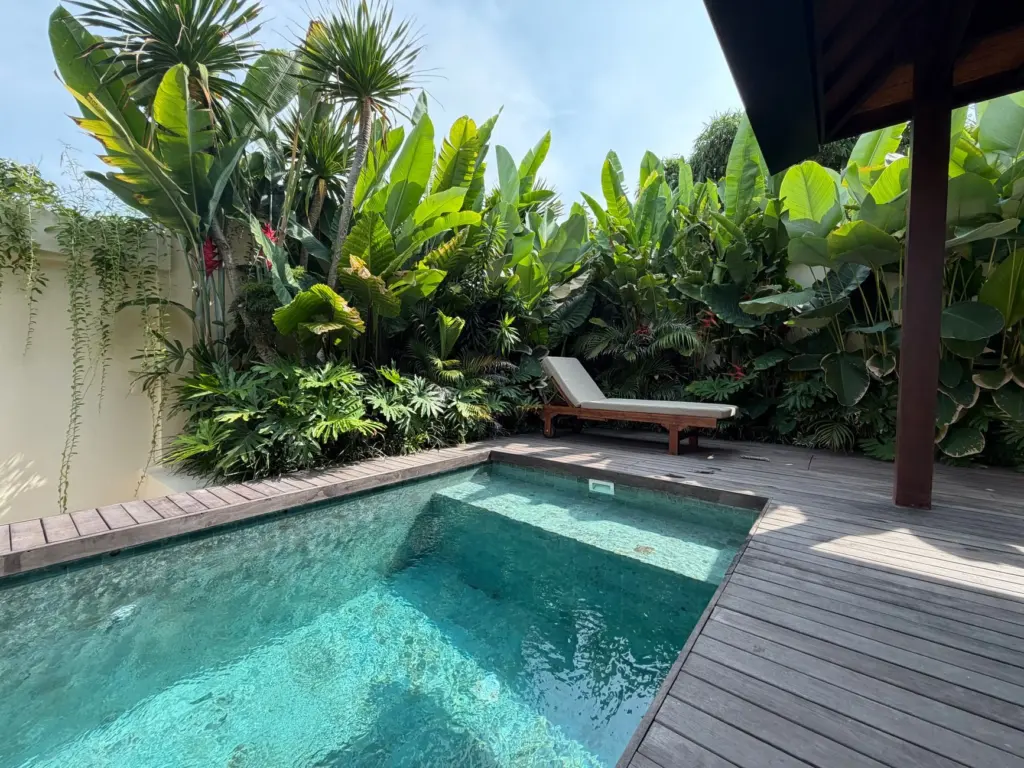
A built plunge pool is not a bargain, as the table shows. It suits a small garden where a full-size pool will never fit and the budget stretches to a permanent build. If it does not, a stock tank gives a similar soak for far less.
Decks, patios and surrounds
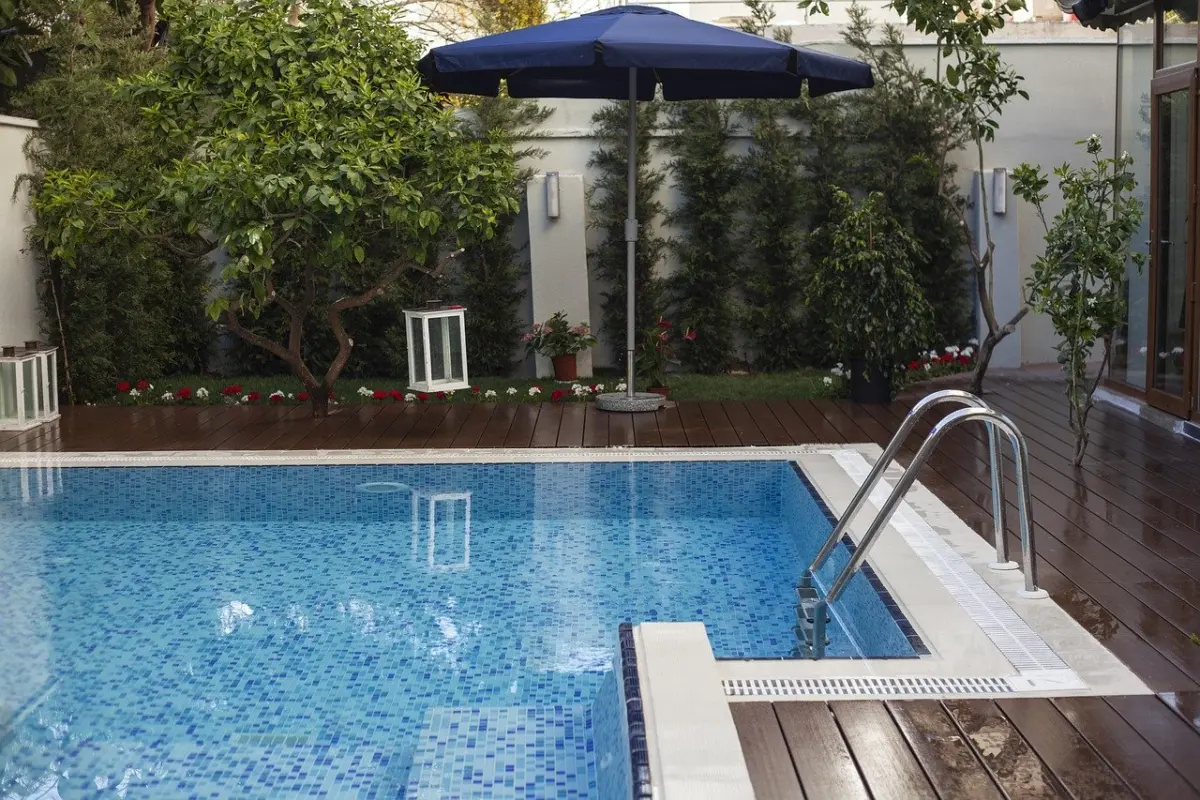
Surfaces around the water are the easiest place to overspend, and the easiest place to save. For an above-ground pool, go with a smaller sundeck on one side instead of a wrap-around deck, as the pool cost guide suggests. The same guide lists lattice, stone, faux stone and concrete as budget ways to hide unattractive pool walls. For inground pools, it says plants, rock gardens and concrete tend to be cheaper than wood.
If a paver patio feels too costly, a budget pool design roundup offers pea gravel instead of pavers. Whatever you choose, leave at least 3 feet on each side of the pool for coping, decking and safe movement, per the plunge pool guide. Check that clearance before you commit to a pool size.
If you want shade over the deck, Attached Pergola Ideas: Stylish, Space-Saving Designs To Transform Your Home In 2026 covers designs that fix to the house.
Planting around the pool
Planting is the cheapest way to make a budget pool look finished. For an above-ground pool, garden beds, shrubs or trees around the edge conceal the walls, according to the pool cost guide. Beds, shrubs and ornamental grasses all fit that job.
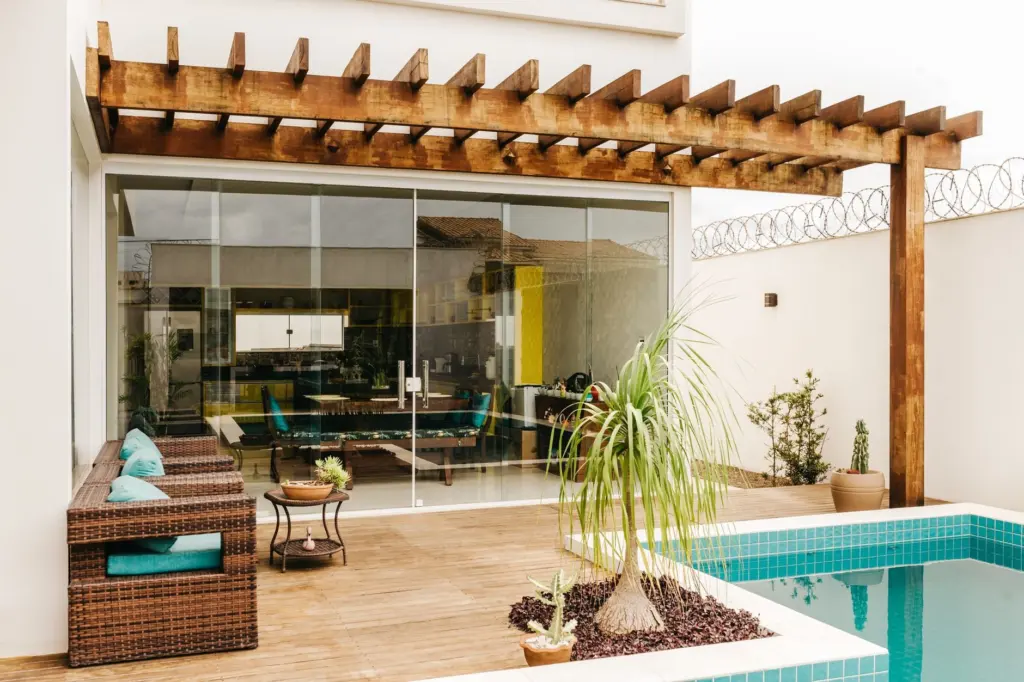
For maintenance, native plants are the safest choice. The plunge pool guide says they reduce maintenance compared with tropical species and shed less debris into the water. Choose by climate and role:
- Cooler climates: use cold-hardy large-leaf plants such as Fatsia japonica or Gunnera instead of true tropical species, for the lush look without the risk.
- Privacy at the back: banana plants, large-leaf ginger or bamboo along the back boundary create a screen, though these suit warmer gardens.
- Containers: a pool design roundup suggests layered planters of bird-of-paradise, snake plants and palms for a modern tropical edge. Our balcony garden ideas show how to group containers well.
Keep the most debris-prone plants away from the water. Dropped leaves and petals end up in the filter, which adds to cleaning work.
Fencing, safety and permits
Pool safety rules and permit requirements are set locally, so ask your local building department what applies before you buy a pool or a fence. Make this the first call, because the answer can change the pool you choose and the barrier you must budget for.
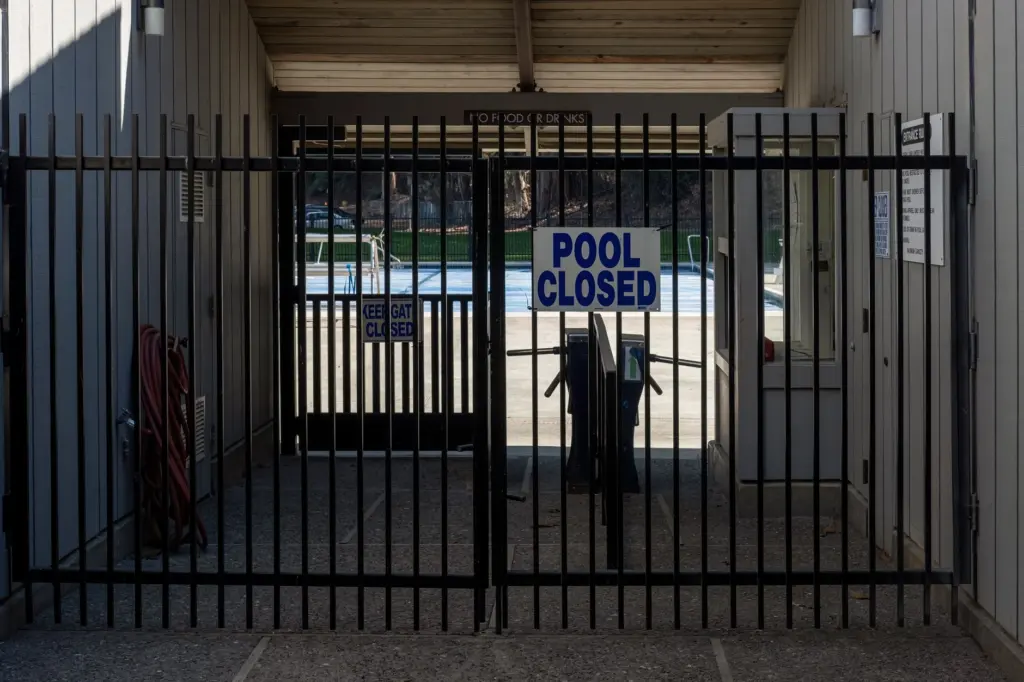
Fencing can be a large cost in its own right. The plunge pool guide prices frameless glass fencing at $200–$400 per linear foot installed. Compare quotes for simpler barriers before choosing glass. A pool design roundup suggests frosted glass rail panels or simple horizontal wood slats for safety without visual clutter, which suits a raised above-ground deck.
Frequently asked questions
Does a pool raise homeowners insurance?
Inground pools generally require an increase in homeowners insurance, according to a pool cost guide, which gives no amount. Ask your insurer for a quote before committing to any permanent pool.
How much water does a plunge pool save?
A plunge pool uses 80 to 90% less water than a standard pool, according to the plunge pool guide. The saving applies to filling and topping up.
How can I cut the build cost further?
Keep the pool small, build in the low season, or do the work yourself if you are skilled, as the pool cost guide advises. Do not take on tasks beyond your skill, since errors on a pool shell are costly to fix.