The cheapest route for backyard deck ideas on a budget is pressure-treated lumber on a simple, code-compliant frame, with plants doing most of the decorating. Check permit rules before buying anything, because attached or elevated decks often need approval.
This guide follows the money from board price to frame to finishing touches. For wider layouts that mix seating, surfaces and greenery, see our patio ideas with plants guide, part of the Outdoor Living collection.
What drives the cost of a budget deck
A deck bill is shaped by three things: the price of the surface boards, the amount of material wasted in cutting, and the structure underneath that has to pass local standards. Surface boards are the choice you can change most freely, so most savings start there.
Decking is commonly priced per linear foot of board rather than per square foot of deck. When you compare quotes, ask each supplier for the board width and the price per linear foot, then compare like with like. Cost guides from contractors and suppliers give per-foot board prices but no single total that fits every yard, so a realistic budget comes from pricing your own deck dimensions against your local supplier.
Waste matters as well. Envirobuild advises allowing approximately 10 to 15 percent extra material for angled cuts. That allowance is a reason to keep the board layout straight where you can and to choose a diagonal pattern only where you value the look enough to pay for the offcuts.
Decking materials compared
Material choice sets both the upfront price and the upkeep you sign up for. The table sets the main options side by side.
| Material | Typical price position | Planning use |
|---|---|---|
| Pressure-treated lumber (5/4×6 ACQ treated decking) | $0.75 to $1.25 per linear foot | Lowest build cost; budget for regular staining |
| Composite decking, reputed brands | $3.00 to $4.00 per linear foot | Suits owners who want to avoid recurring maintenance |
| Composite decking, discount stores | About half the price of reputed brands at some stores | Narrows the gap, so compare per linear foot against treated boards |
| Cedar and redwood | Higher price point than pressure-treated wood | Better kept for a small feature area than a whole deck on a tight budget |
Price ranges for treated and composite boards come from AP Decks, and the cedar and redwood comparison from Greenwood Contractors.
Pressure-treated lumber: lowest price, most upkeep
AP Decks names pressure-treated wood as the choice if you want the cheapest backyard deck. The trade-off is that the boards can warp, split, crack or discolour without regular staining. Treat the stain as part of the deck budget rather than an optional extra, and this material stays the best fit for a first deck or a tight spending limit.
Composite decking: higher entry price, lower upkeep
Greenwood Contractors notes that composite decking usually costs more upfront than wood, though it can reduce later maintenance. That makes it a sensible pick if you dislike annual staining and can afford the higher outlay. If you are drawn to composite on a budget, the lower-priced boards sold at some stores are worth pricing, but check them per linear foot against treated boards from the same supplier before assuming the saving is large.
Reclaimed wood and pallets
Reclaimed wood is the lowest-cost route of all when it is free. Trex points out that free or low-cost pallets can be sourced from local businesses or warehouses. Pallet boards suit planter boxes, a bench or a screen. The load-bearing frame is a different matter, because it has to meet local standards for spans and hardware, so use new, suitable lumber there and keep reclaimed pieces for decorative jobs.
Framing, permits and the parts not to cut corners on
The frame is the part of a deck that fails badly if it is skimped, so it is the wrong place to save money. Spend the savings from cheaper boards on getting the structure right.
Do you need a permit?
In many areas, yes. Greenwood Contractors states that a deck project requires permit approval and inspection, especially if it is attached to the house. Requirements differ by location, so call your local building department before you order materials. A permit also tells you which standards the inspector will check.
The same guide lists what must meet local standards: railing height, stair geometry, footing depth, joist spans and connection hardware. Treat those as fixed costs. Use them to size the deck, because a smaller footprint with correct footings and hardware is cheaper and safer than a larger deck built to a shortcut.
Protecting the frame from water
Greenwood Contractors also describes flashing, ledger attachment, moisture protection and proper load support as critical. Where the deck meets the house, the ledger connection and flashing deserve the most care. Trex recommends butyl-based tape on top of joists and beams to limit water penetration, a low-cost detail that protects the part of the deck you cannot easily replace.
Build stages in order
- Confirm the rules. Contact the local building department about permits, inspections and the standards your deck must meet.
- Set the footings. Follow the required footing depth and layout before any framing goes up.
- Frame the structure. Attach the ledger with flashing if the deck touches the house, and use the specified connection hardware and joist spans.
- Protect the joists. Apply butyl-based tape along the tops of joists and beams.
- Lay the boards. Order the extra material allowance first if you plan any angled cuts.
- Add rails and stairs. Build them to the local height and geometry requirements.
- Book the inspection. Have the work checked at the stages your permit requires.
Styling a budget deck with plants
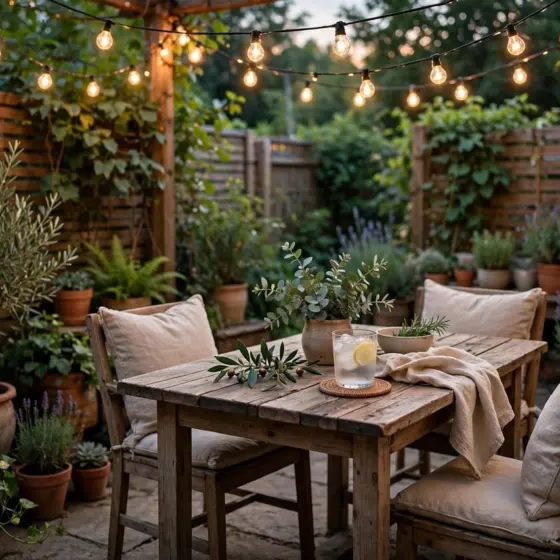
Plants are the cheapest way to make plain boards look finished, and they let you spend less on furniture and built-in features. Greenery also works in stages: add a few containers now and more as the budget allows.
Hanging and climbing plants
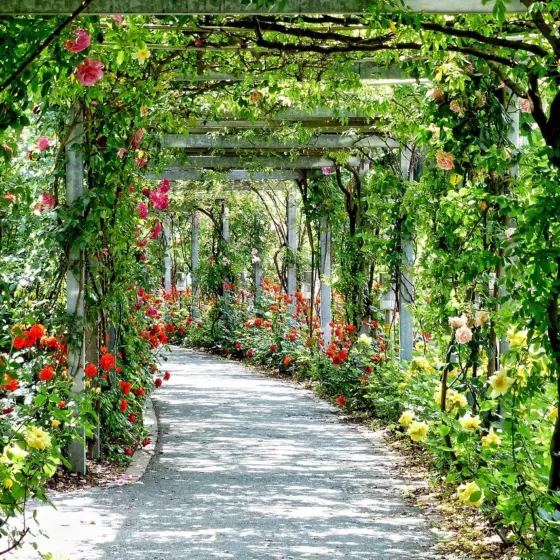
Hanging planters add greenery without using floor space, as Wicker Park points out, which is useful on a small deck. Trex suggests trailing ivy, petunias and ferns for a hanging garden, and clematis, honeysuckle and jasmine as climbers. AP Decks describes vertical hanging planter walls as cost-effective and low maintenance, so they suit a deck where you want impact without regular fuss.
Planters and containers
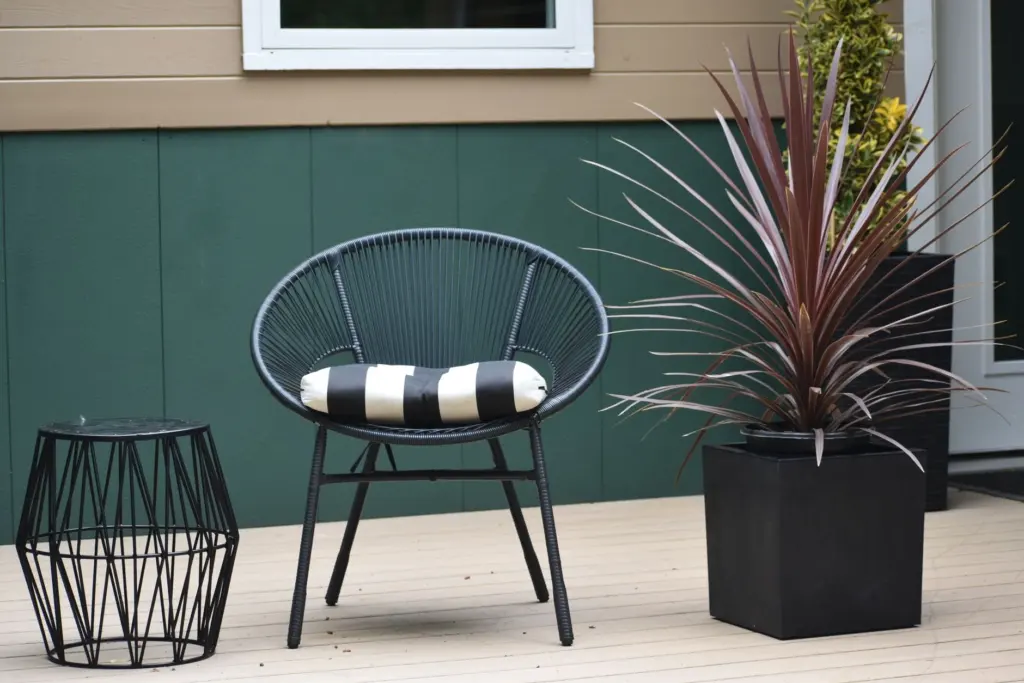
Container plants let you change the look each season without touching the structure. If you build your own planter boxes, Envirobuild notes that composite boards resist rot in prolonged contact with damp soil, unlike softwood, which requires treatment. By contrast, softwood requires treatment for that kind of contact.
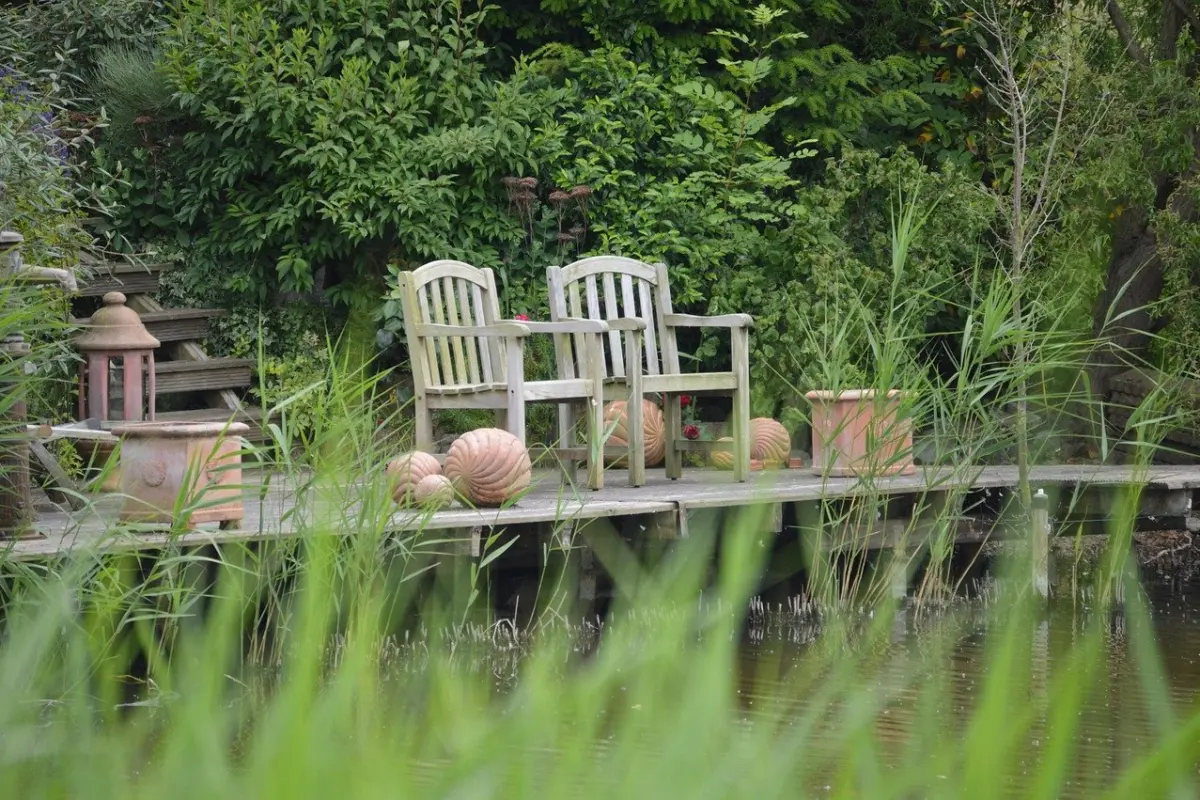
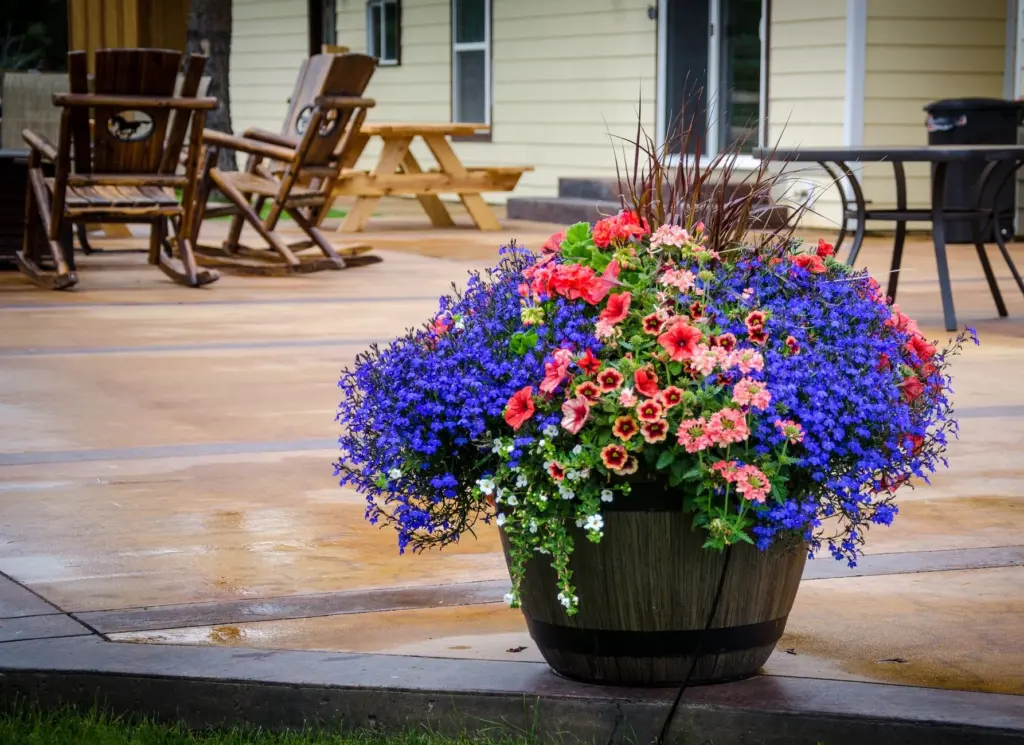
Group containers of different heights near the seating rather than scattering them evenly, so the deck keeps clear walking space. A large single container can carry a whole corner, as in the example below.
Shade and focal points
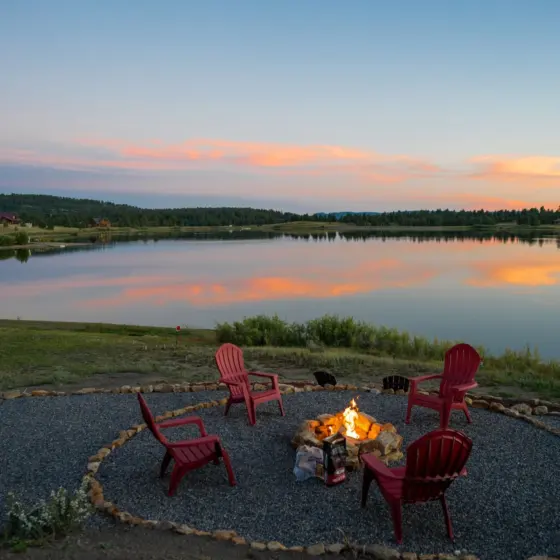
Once the planting is in, a framed overhead structure gives climbers something to grow on and the seating some shade. Our Small Pergola Ideas: Stylish, Space‑Saving Designs to Transform Tiny Yards in 2026 guide covers compact options. If the yard has room beside the deck for a fire feature, the Pea Gravel Fire Pit Ideas: 20 Stylish, Low-Cost Designs to Transform Your Backyard in 2026 guide shows ground-level designs that pair well with a plain wooden deck.
Frequently asked questions
How much does a budget deck cost?
The total depends on deck size and local prices, so price your own dimensions. Boards are the main variable: pressure-treated decking typically costs $0.75 to $1.25 per linear foot, and reputed brands cost $3.00 to $4.00 per linear foot. Allow approximately 10 to 15 percent extra material for angled cuts.
What is the cheapest decking material?
Pressure-treated wood is the cheapest option, provided you accept regular staining to limit warping, splits, cracks and discoloration.
Do I need a permit for a small backyard deck?
Often yes, especially if the deck is attached to the house. Permit approval and inspection are common requirements, and railing, stair, footing, joist and hardware details must meet local standards. Confirm with your local building department.
Is composite ever worth it on a tight budget?
It can be if you want to avoid maintenance. Composite costs more upfront than wood, but some stores sell it for about half the price of reputed brands, and composite boards also resist rot when used for planter boxes.