A large blank wall is often the hardest surface in a home to finish. Small pieces get lost on it, and leaving it bare makes a room feel unfinished. Nature-inspired art is one of the most reliable ways to decorate a large blank wall, because landscapes, leaves and flowers suit almost any style and rarely date. The short answer: choose one subject, size it to the wall, and let real plants and natural light do the rest.
|
Decision |
Rule of thumb |
|
Width above furniture |
Two-thirds to three-quarters of the furniture width |
|
Center height |
57 to 60 inches from the floor |
|
Gap above furniture |
6 to 10 inches |
|
Empty wall |
Art covers roughly 60 to 75 percent of the open width |
|
Humid rooms |
Acrylic, metal or sealed prints rather than paper |
Why Nature-Inspired Art Suits Large Walls
People respond to images of nature in a way they rarely respond to abstract shapes or text. The research behind biophilic design backs this up. Terrapin Bright Green’s 14 Patterns of Biophilic Design reports that biophilic design can reduce stress and improve well-being, and it lists a visual connection with nature as one of its core patterns.
A large wall amplifies that effect. A small botanical print reads as decoration, but a wide forest or meadow scene works more like a window. That is why big nature pieces suit rooms without a good outdoor view, such as hallways, basements and interior bedrooms.
Pick a Subject That Suits the Room
The subject sets the mood more than the color or the frame. A few reliable choices:
- Forests and greenery: calming and deep, good for bedrooms and reading corners.
- Seascapes and lakes: open and airy, useful in small or dark rooms that need a sense of distance.
- Mountains and valleys: strong horizontal lines that suit long walls above sofas and beds.
- Botanical and floral studies: detailed and lively. Loose florals echo the mixed borders of classic cottage garden plants, while single-stem studies feel more formal.
- Minimal branches and stones: quiet and spare, a natural match for rooms inspired by small Japanese garden ideas.
Light matters as well. North-facing rooms get cool, even light, so warm subjects such as autumn woodland or golden grassland balance them. South-facing rooms are bright and warm, which suits cooler greens, blues and greys.
Choose the Format: One Large Piece, a Set or a Grid
There are three main ways to fill a big wall, and each creates a different effect.
A single oversized piece gives the strongest focal point and the least visual noise. Ready-made art at that scale used to be hard to find, so many people settled for a standard 24 x 36 inch print that looked lost on the wall. Retailers now make larger formats specifically for this problem, and ranges such as Crib of Art’s XL+ paintings show the size a wide sofa or bed wall can carry with a single canvas.
A set of two or three panels (a diptych or triptych) splits one landscape across several canvases. It suits very wide walls and creates rhythm, much as repeated planting does in well-planned garden design layouts.
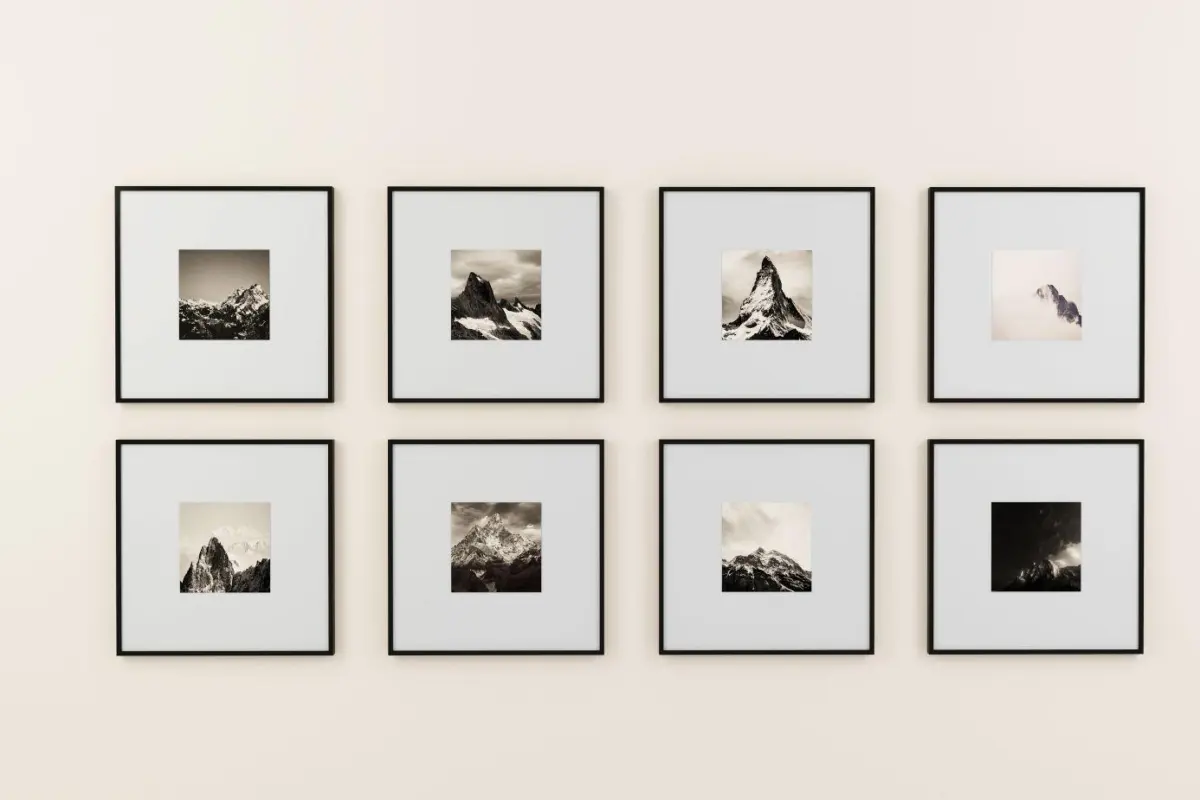
A grid of matching frames, like the mountain series shown above, works well for photography and botanical prints. Keep the frames identical and the gaps even, usually 2 to 3 inches, so the grid reads as one piece rather than several.
Get the Scale Right
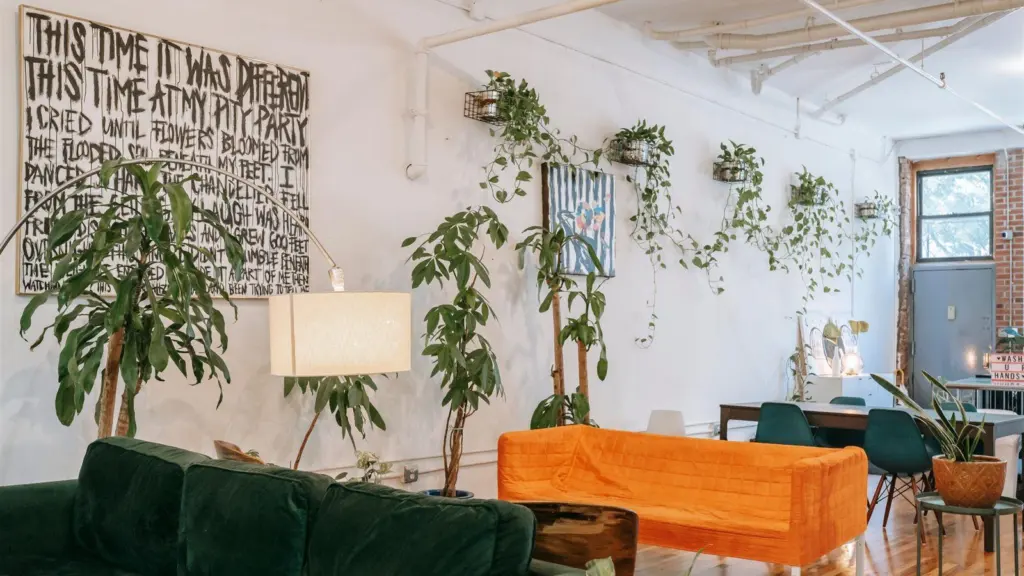
Image: Charlotte May / Pexels
Most large walls end up underdressed. Above a sofa, bed or console, the art should span about two-thirds to three-quarters of the furniture width. On an empty wall with no furniture, aim for art that covers 60 to 75 percent of the open width.
Hang the center of the piece 57 to 60 inches from the floor, which is roughly eye level. Above furniture, leave 6 to 10 inches between the top of the furniture and the bottom of the frame.
Before buying, cut paper or cardboard to the exact size and tape it to the wall with painter’s tape. Leave it up for a few days. It is far easier to change a paper template than to return a large canvas.
Pair the Art With Real Plants
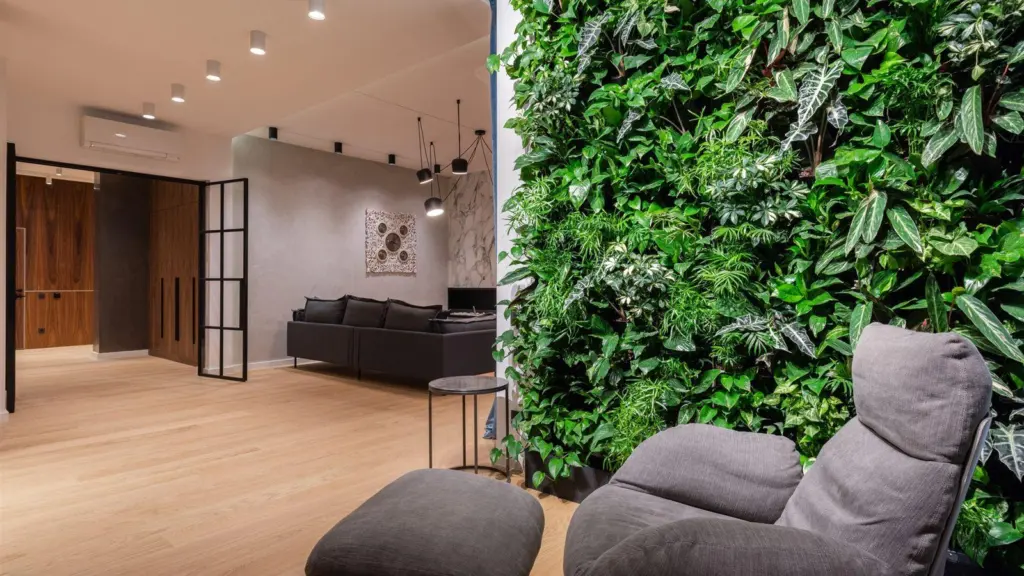
Image: Max Vakhtbovych / Pexels
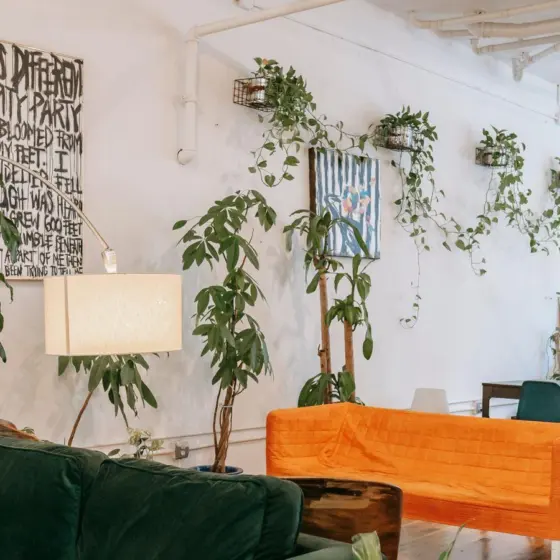
Nature-inspired art looks its best when the room contains living plants too. A tall floor plant beside the piece frames it and extends the scene beyond the canvas edge. A money tree grown indoors or a large fern works well at the side of a sofa wall.
Trailing plants on a shelf or ledge below the art soften the bottom edge. Pothos is the easiest option, and cuttings root readily, so one plant can become several. The guide on how to propagate pothos covers the method.
Keep pots at least a few inches away from the canvas and water carefully, since splashes and damp soil can mark the surface. For a bolder look, a living green wall can replace art altogether on one section of wall, though it needs irrigation and good light.
Mind Windows, Sun and Humidity
Sunlight is the main threat to any print. The Canadian Conservation Institute notes that light fades colors and that the damage depends on total exposure, which is light intensity multiplied by hours. A wall opposite a sunny garden window can bleach greens and blues within a few years.
Choose a wall that gets indirect light, or use UV-filtering glazing or window film. In kitchens and bathrooms, humidity is the bigger problem. Acrylic and metal prints handle moisture far better than paper or unsealed canvas, so they are the safer choice in those rooms.
Rotate With the Seasons
Gardens change through the year, and a large wall can too. Two pieces of the same size, one with spring greenery and one with autumn color, can be swapped as the seasons turn. Using the same hanging points means the swap takes minutes.
Timing the change to other jobs makes it easier to remember. Many gardeners already keep a list of seasonal garden projects, and adding an art swap to the spring and autumn tasks keeps the room in step with the garden outside.
Frequently Asked Questions
What is nature-inspired art?
Nature-inspired art is any artwork based on the natural world, including landscapes, seascapes, botanical studies, florals and wildlife. It can be realistic or abstract. Natural textures such as wood, stone and pressed plants also count.
How big should art be for a large wall?
Above furniture, aim for two-thirds to three-quarters of the furniture width. On an empty wall, the art should cover about 60 to 75 percent of the open width. When in doubt, choose the larger size.
How high should large art be hung?
The center should sit 57 to 60 inches from the floor. Above a sofa or bed, leave 6 to 10 inches between the furniture and the frame. Very tall pieces can sit slightly higher.
Is one large piece better than several small ones?
One large piece creates a stronger focal point and less clutter. Several pieces work if they share a subject, frame style and spacing. Mixing unrelated small prints on a big wall usually looks busy.
What nature art suits a living room?
Wide landscapes, seascapes and mountain scenes suit living rooms because their horizontal lines match a sofa wall. Large botanical studies work well in modern rooms. Choose a palette that echoes a color already in the room.
Can nature art go in a bathroom?
Yes, as long as the material handles humidity. Acrylic, metal and sealed prints are the best choices. Avoid paper prints and unsealed canvas near showers and baths.
How do I stop wall art from fading?
Hang it away from direct sunlight and use UV-filtering glass or window film. LED lighting gives off very little UV, so it is a safer choice for lighting art than older bulbs.
Do plants and wall art go together?
Yes. Plants extend the nature theme beyond the frame and soften the edges of a large piece. Keep pots a few inches from the art and water carefully to avoid splashes.
How do I decorate a large wall on a budget?
One large print costs less than a gallery of framed originals. Painting the wall a soft green or earth tone and adding plants also stretches a small budget. Paper templates help you avoid buying the wrong size.
Bringing It Together
A large blank wall gives nature-inspired art room to work. Choose a subject that suits the light, size the piece to the wall, and test it with paper before buying. Real plants and a seasonal swap complete the effect, so the wall changes along with the garden outside.