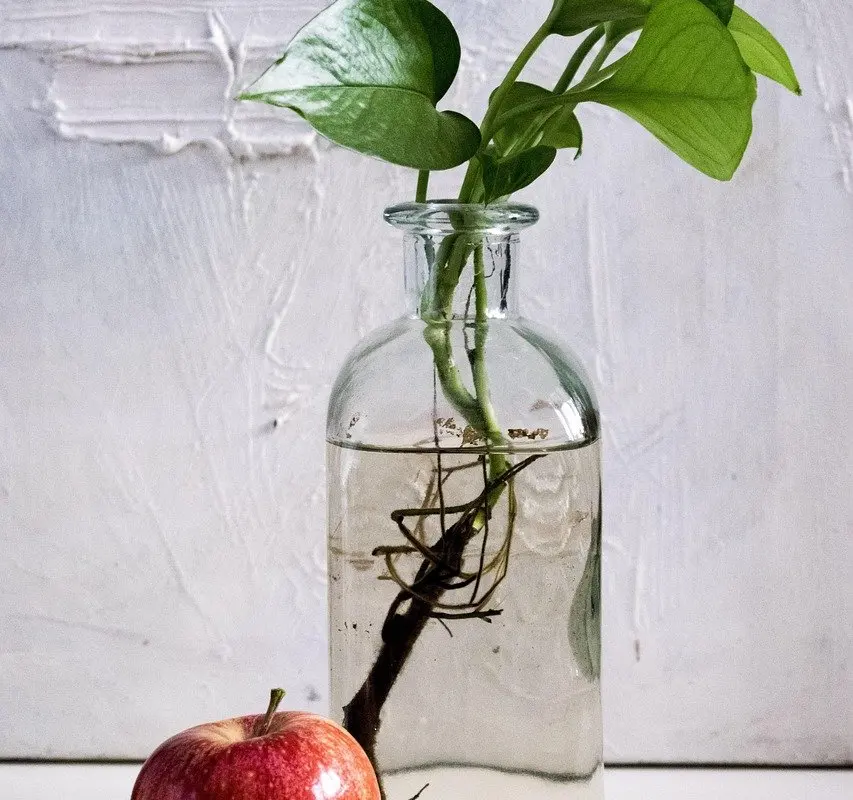
To learn how to propagate pothos, cut a stem just below a node, keep a node on every cutting, and root it in water or potting mix. Water lets you watch roots form, soil is slower, and division needs no rooting wait.
This guide fits into our wider gardening for beginners coverage, and more plant guides sit under our plants and gardening guides.
Why pothos cuttings root so readily
Pothos (Epipremnum aureum), a plant native to tropical Southeast Asia, roots from the stem rather than from a leaf, according to a plant-care propagation guide. The part that matters is the node. Everything else about the method follows from it: where you cut, how many nodes a cutting needs and what you keep out of the water.
The node is where roots form
A node is a small bump on the vine, and a home-gardening walkthrough describes it as the place your new roots come from. A leaf with no node on its stem will not give you a new plant, so look for the bump before you pick up the scissors. Cut just below it with clean scissors.
What a good cutting looks like
Each cutting needs at least one node, as a houseplant feature puts it. A nursery propagation guide describes a typical cutting as usually around 4-6 inches long with at least four leaves. A longer cutting with more leaves gives you a fuller plant sooner. A single node with one leaf is enough to root but gives a thinner start.
Light and warmth speed things up
Warm temperatures and bright, indirect light help pothos root faster, and the same guide notes that pothos prefers bright, indirect light but can tolerate low light. A cutting in a dim corner will still root, but expect it to be slower.
Rooting pothos in water
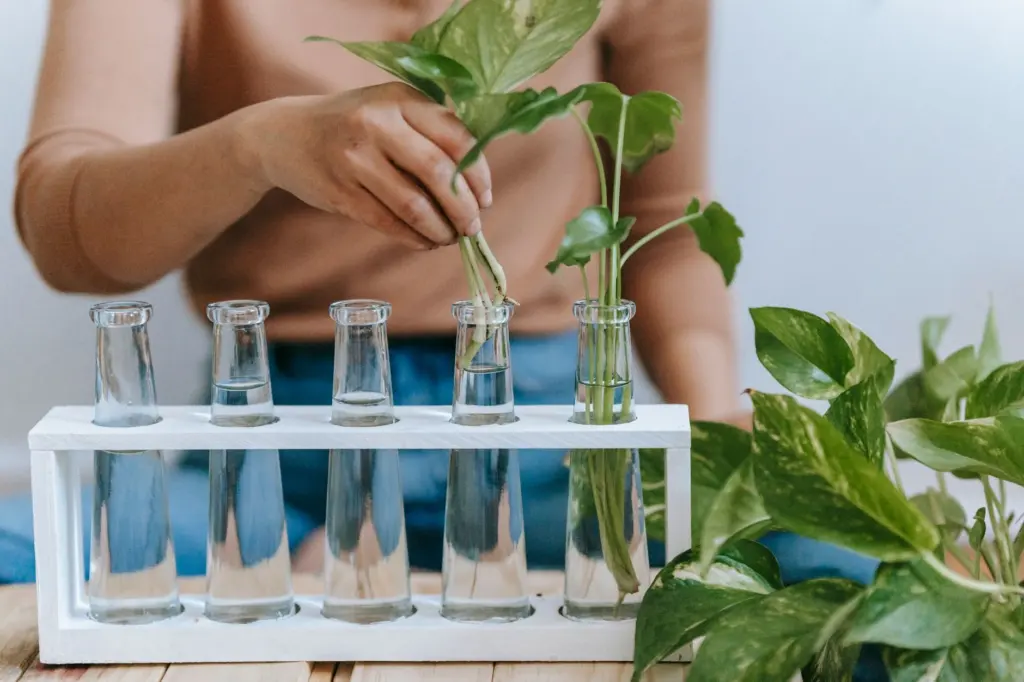
Rooting in water is the easiest method to monitor because you can see every root. It suits anyone who wants to check progress without disturbing the cutting.
Steps for water propagation
- Cut below a node. Use clean scissors and cut just below the node, leaving at least one node on the cutting.
- Strip the lower leaves. Remove the leaves that would sit underwater, because submerged leaves can rot.
- Choose a bright spot without direct sun. The nursery guide recommends a sunny location, but not direct sunlight. Another walkthrough also suggests a kitchen counter out of direct sunlight.
- Refresh the water. Change it every 3-5 days. A houseplant feature recommends rinsing the container and adding fresh water every couple of days to discourage pathogens. Aim for the shorter interval if the water looks cloudy.
- Wait for roots. Most cuttings show tiny roots within 7 to 14 days, and stronger roots usually form after three to four weeks.
When to move a water cutting to soil
Move the cutting once the roots are a few inches long. Do not leave it in water indefinitely: the nursery guide says the longer a pothos stays in water once roots begin showing, the harder the later move to soil becomes. The same guide suggests planting in soil about a month after roots first appear. Treat that as a latest point rather than a target, and pot the cutting when the roots reach a few inches.
Plant the rooted cutting in a pot of potting mix, covering the roots and keeping the mix lightly moist while the plant adjusts.
Rooting pothos directly in soil
Yes, pothos can root in soil. It takes longer than water to show any progress, but the cutting stays in its final medium, so there is no later move to manage.
Planting and moisture
Poke a hole about the size of a pencil in the potting mix and set the cutting in it so the node is covered, following the houseplant feature’s steps. Keep the mix moist but not soggy to encourage root growth. The plant-care guide gives the reason: soggy roots can rot, so lightly moist beats wet. If your room is dry, placing a plastic bag over the cutting can boost growth by adding moisture.
Be patient and leave the cutting alone
Most cuttings begin forming roots in about three to four weeks, and strong roots often develop within six to eight weeks. The same guide advises against pulling the cutting out to check in the meantime. Tugging disturbs fragile new roots, so judge progress by the leaves instead.
Dividing a pothos plant
Division is a fast, low-effort method that gives you an instant new plant without waiting for roots to grow. It suits an established plant that already has stems growing in groups with their own roots.
Look for natural root clusters where the stems are already grouped, and separate the plant at those points. Each section keeps the roots it already has. That is why division works faster than any cutting method.
Comparing the three methods
The methods differ mainly in how long you wait and how much you can see. Use the table to match one to your situation.
| Method | First signs | Established roots | Planning use |
|---|---|---|---|
| Rooting in water | Tiny roots within 7 to 14 days | Stronger roots after three to four weeks | Best when you want to watch progress and can change the water regularly |
| Rooting in potting mix | Roots begin forming in about three to four weeks, unseen | Strong roots often within six to eight weeks | Best when you prefer to plant once and leave it undisturbed |
| Division | No rooting wait; the sections already have roots | Already rooted at separation | Best for an established, multi-stemmed plant when you want a usable plant straight away |
Timelines come from this plant-care propagation guide, and warm temperatures and bright, indirect light can shorten them.
In practice, choose water if you are new to propagation, since visible roots tell you when to pot up. Choose soil if you would rather avoid the water changes, and accept a longer wait before the cutting is established. Choose division when the parent plant already has grouped stems and you want a result without waiting.
Taking propagation further
Pothos cuttings are a cheap way to fill shelves and windowsills, and they need very little room. If you are turning from houseplants to food growing, Small Vegetable Garden Ideas: 10 High-Yield Layouts and Smart Hacks for Tiny Spaces (2026) shows how to use compact spaces well. For planting decisions in the bed itself, see Companion Planting For Tomatoes: 12 Best Picks, What To Avoid, And How To Plan In 2026.
Frequently asked questions
Is pothos safe around pets?
No. The propagation guide notes that pothos is toxic to pets if chewed, so keep jars, pots and trimmings out of reach.
Can I put more than one cutting in a pot?
Yes, and it makes a fuller plant. According to a houseplant feature, each cutting produces a single vine, so several cuttings in one planter give a bushier result.
Do pothos cuttings need bright light?
Bright, indirect light is preferred and helps cuttings root faster, but pothos can tolerate low light. Avoid direct sun for cuttings in water.