| Decision | Supported value | Planning use |
|---|---|---|
| Raised bed height | At least 6 to 8 inches above the ground surface | Choose a frame tall enough to hold that depth of growing medium. |
| Bed width | No more than 4 feet wide | Keeps the middle of the bed within easy reach. |
| Aisles between beds | 2 to 4 feet | Count this space when measuring the footprint of more than one bed. |
| Sun for lettuce | Partial sun, 4–6 hours a day; best yields in full sun | Lettuce suits the shadier spot. |
| Sun for fruiting crops such as tomatoes | At least 8 hours of direct sun; 10 hours preferred | Give tomatoes, squash and cucumbers the brightest position. |
| Container for salad | One 12-inch pot grows enough lettuce for a salad | A single pot is enough to start a salad supply. |
| Household bed size | One 4-foot by 8-foot raised bed may supply a good portion of produce for one or two people | A benchmark for how much bed a small household needs. |
These figures come from the University of Maine Cooperative Extension raised-bed guide and the NC State Extension quick reference guide.
The best small vegetable garden ideas combine a narrow raised bed or containers with a trellis, placed where crops get enough sun. Start with lettuce, beans, cucumbers and tomatoes, and size the bed for reach rather than ground area.
If you are new to growing food, our guide to gardening for beginners covers the groundwork before you commit to a layout.
Vegetables that suit small spaces
NC State Extension lists beans, carrots, cucumbers, eggplants, lettuces, peppers and tomatoes among the vegetables that do well in containers, which makes them a dependable starting set for a balcony, patio or narrow bed. The deciding factor is light, not space. The same guide says most vegetables need at least eight hours of direct sunlight, so measure the sun in your spot before choosing crops.
- Lettuce and salad leaves: the best choice for a shadier spot. Clemson Cooperative Extension plants head lettuce at one per square foot and leaf lettuce at four per square foot, so a small patch gives a lot of leaves.
- Carrots: they are on the container list and go in at 16 per square foot in a grid bed, so a small patch holds a large number of roots.
- Tomatoes, peppers, cucumbers and eggplants: these fruiting crops also grow in containers, but they need the sunniest position. Do not put them in the spot where only lettuce will thrive.
- Beans: they grow in containers and, as the vertical section below explains, can also climb a support instead of using floor space.
If the sunniest spot is only a windowsill-sized corner, fill it with one or two fruiting plants rather than many small crops. If the whole space is shaded, build the garden around leafy crops. The next question is how much bed those crops need.
Raised bed and square-foot layouts
Sizing the bed
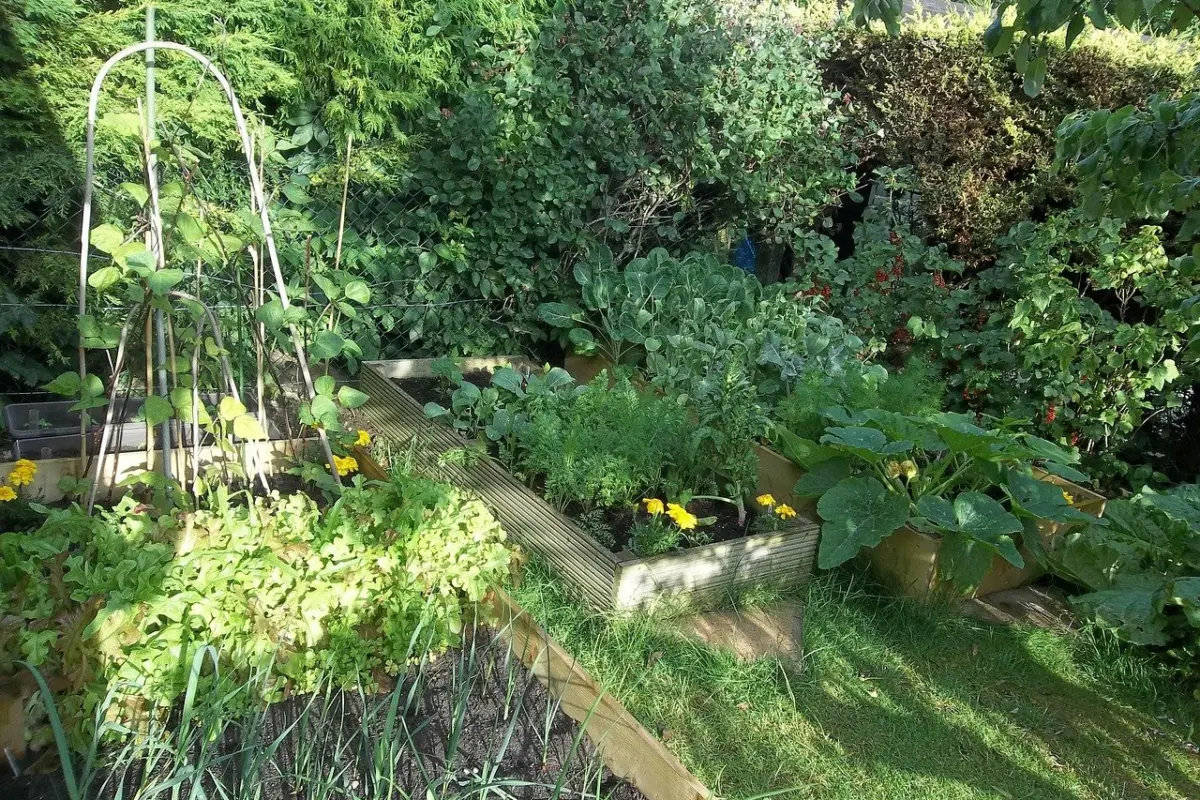
A raised bed suits a small space because you plant it intensively and never walk on the soil. The University of Maine advises building beds no more than 4 feet wide so you can reach across easily, with an aisle of 2 to 4 feet between beds for tools. It also recommends raising the bed at least 6 to 8 inches above the ground surface.
For total area, Clemson’s small-scale gardening guidance puts conventional rows at approximately 100 square feet per crop per individual for a season of fresh food. A 4-foot by 4-foot raised bed divided into 1-foot squares cuts that to 16 square feet per person for fresh foods. A second 4-foot by 4-foot raised bed brings the total to 32 square feet per person if you also want to preserve some of the harvest.
In practice, a single 4-foot by 4-foot raised bed is the right first step for one person who wants fresh salad and a few fruiting crops. A household of two, or a gardener who wants a good share of their produce, should look at the larger bed described by NC State Extension: a 4-foot by 8-foot raised bed may supply a good portion of the produce for one or two people.
Spacing inside a square-foot grid
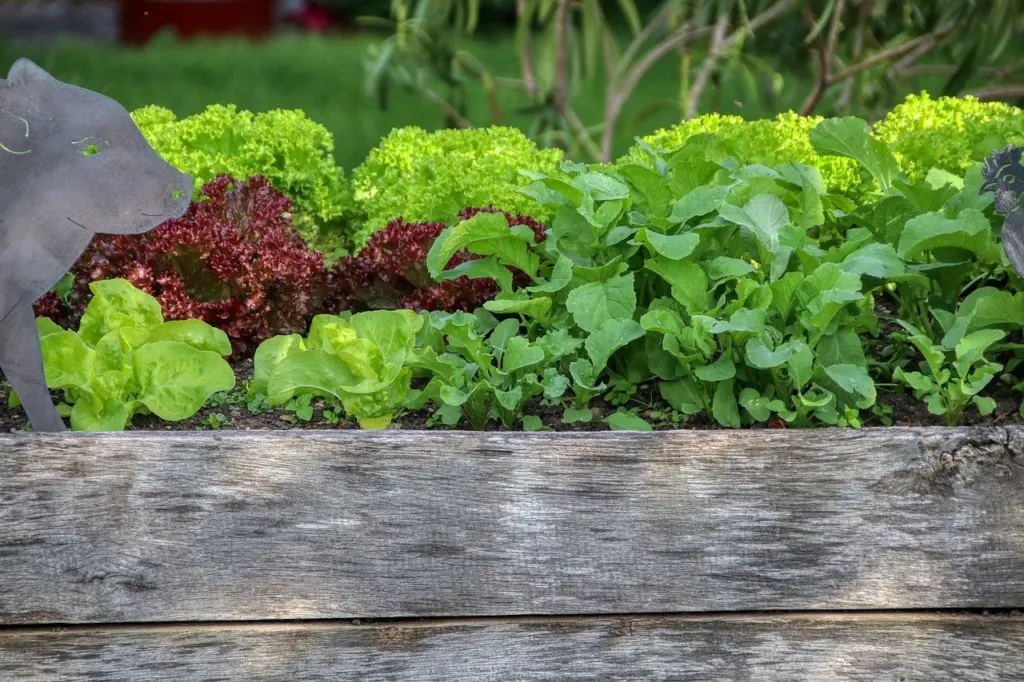
Square-foot gardening divides the bed into 1-foot by 1-foot divisions and gives each crop a set number of plants per division. Clemson’s figures show how much the count varies: one head lettuce or four leaf lettuce plants, but 16 carrots or 16 radishes in the same square. Use this to plan a bed on paper before you buy seed, giving each crop its own square so that crops with different needs do not crowd each other.
Growing vertically
Vertical growing adds productive surface without adding floor area. NC State Extension notes that trellises increase the space available, particularly for vining crops such as cucumbers and beans. Several supports suit different spaces:
- Trellis on the bed: if you grow a climbing vegetable in a raised bed, Clemson recommends placing the trellis at the north side of the bed.
- Wire cages for pots: the Royal Horticultural Society suggests galvanised wire growing cages to keep tomatoes or peppers upright in pots on balconies and patios.
- Planting pockets: the RHS describes these as suited to walls, fences or window ledges, which makes them useful where there is no ground at all.
- Planted ladder: the RHS also suggests planting up a vintage ladder to maximise growing space in tight spots.
Choose a trellis for beans and cucumbers, cages for pots of tomatoes or peppers, and pockets when only a wall or ledge is available. Whatever you pick must hold the plants’ weight and sit where the crop will get its sun hours.
Containers, soil and watering
Containers let you grow where there is no soil, but they change how you manage the plants. NC State Extension says container sizes range from a 12-inch flowerpot to a half whisky barrel. Match the pot to the crop: one 12-inch pot is enough for a salad’s worth of lettuce, while a larger vessel such as a half barrel gives fruiting crops more room.
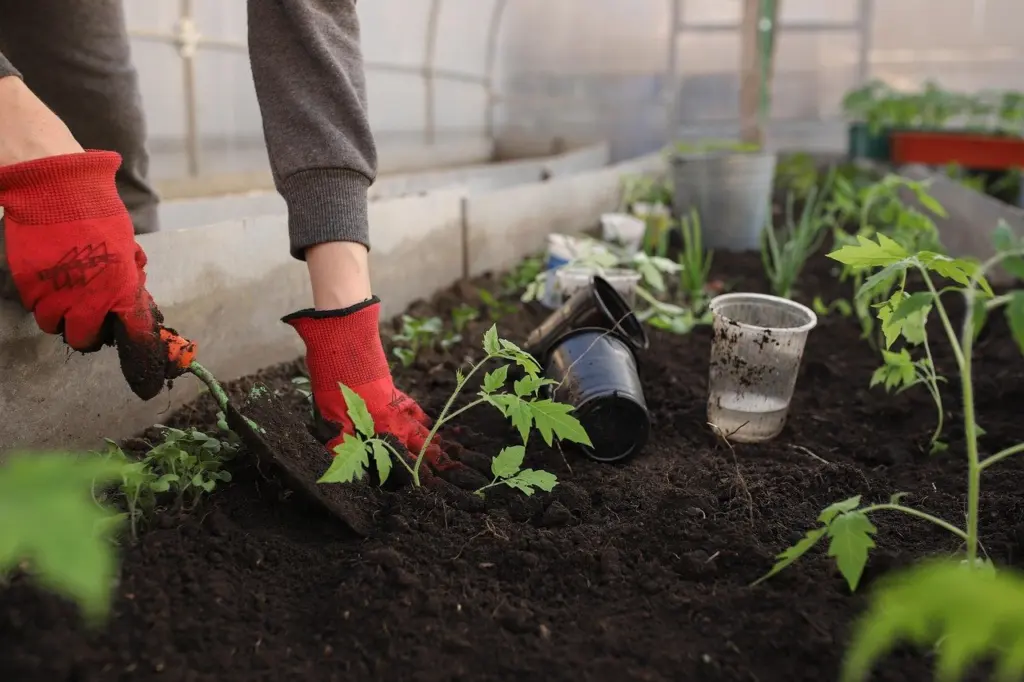
What soil containers need
For containers, the RHS says to use seed or potting composts for growing seedlings or plants in pots. For raised beds, the University of Maine describes an ideal mix of equal volumes of garden soil, organic matter and porous material. Organic matter can be compost, coir or composted manure, and the porous material is vermiculite or perlite. Choose a bagged potting compost for pots and the three-part mix for a bed built on the ground.
Watering containers
NC State Extension warns that containers require more frequent irrigation than in-ground gardens, especially as the plants grow, and suggests drip irrigation with a timer. For a balcony or patio where you cannot check plants daily, a timed drip line removes the main cause of failure. Check the pots more often as plants fill out.
Related reading
If a corner falls short of the sun hours above, it may suit foliage plants better than vegetables; our guides to How To Propagate Pothos: 3 Easy Methods For Fast, Healthy Cuttings (2026) and How To Grow A Healthy Money Tree: Simple Steps For Bigger, Happier Houseplants In 2026 cover two houseplants worth trying. For layout inspiration beyond the vegetable bed, browse our garden design pages.
Frequently asked questions
Can I harvest lettuce more than once?
Yes. The RHS says to snip salad leaves as you need them, and most plants grow more leaves for a while.
How many herbs fit in a small raised bed?
Clemson says a 4-foot by 4-foot raised bed can be organised to plant 16 different herbs, one per square foot, as described in its small-scale gardening guide.
How should I prepare the bottom of a raised bed?
Clemson advises lining the bottom of the bed with cardboard for weed control, then filling it with growing medium.
How much fertilizer does a raised bed need?
Without a soil test, the University of Maine suggests 1 to 2 pounds of a complete fertilizer such as 10-10-10 per 100 square feet.