A narrow yard with a patio, a shed wall and one sunny strip can look too tight for a productive garden. Small backyard garden ideas work by limiting paving, building upward and matching crops to the sun you actually have, not by adding more pots.
The ideas below combine edibles, perennials and vertical structures, and they sit alongside our wider guide to garden design ideas. Each section corrects a common assumption about compact yards.
Layout: define zones instead of filling gaps
A common mistake is treating a small yard as one open space to be filled. Gardeners’ World treats the job as a balance between planting, furniture and hard surface. Lanier Landscapes puts the principle simply: when you can’t expand outward, expand upward. The table sets common assumptions against what holds up.
| Common assumption | What works instead | Planning use |
|---|---|---|
| Plants should cover everything | Aim for around 50 per cent planting and furniture to 50 per cent paving or decking | Fix the seating and path area first, then fill what remains with beds and containers. |
| An open, undivided yard looks biggest | Divide the garden with flowerbeds, screens or hedges to break up the space | Use a screen or hedge to hide the far end so the yard reads as more than one area. |
| Hot colours give the most impact | Blue and purple seem further away, while hot colours seem closer | Place cool colours at the back or far end and hot colours near the seating. |
| Variety makes a small space interesting | Repeat the same plants in 3-5 places | Choose a few reliable plants and echo them around the yard for a calmer, more cohesive look. |
The ratio, division and colour advice comes from Gardeners’ World, and the repetition guidance from Lanier Landscapes.
Sun and raised beds
Sunlight decides where crops go
The belief that vegetables will cope anywhere is the quickest way to waste a bed. Gardeners’ World notes that most fruit and vegetables need around six hours of sunshine a day to produce good crops. Watch the yard through a day before committing, and give the brightest patch to edibles. Shadier corners are better used for seating, storage or other plantings.
Aspect matters too. The same guide describes a potager-style bed as good for south- and west-facing gardens. Trained fruit trees also grow best in a sunny spot and need little maintenance apart from pruning, and they take up less space than standard trees because they can be trained to fit the area.
Where raised beds help
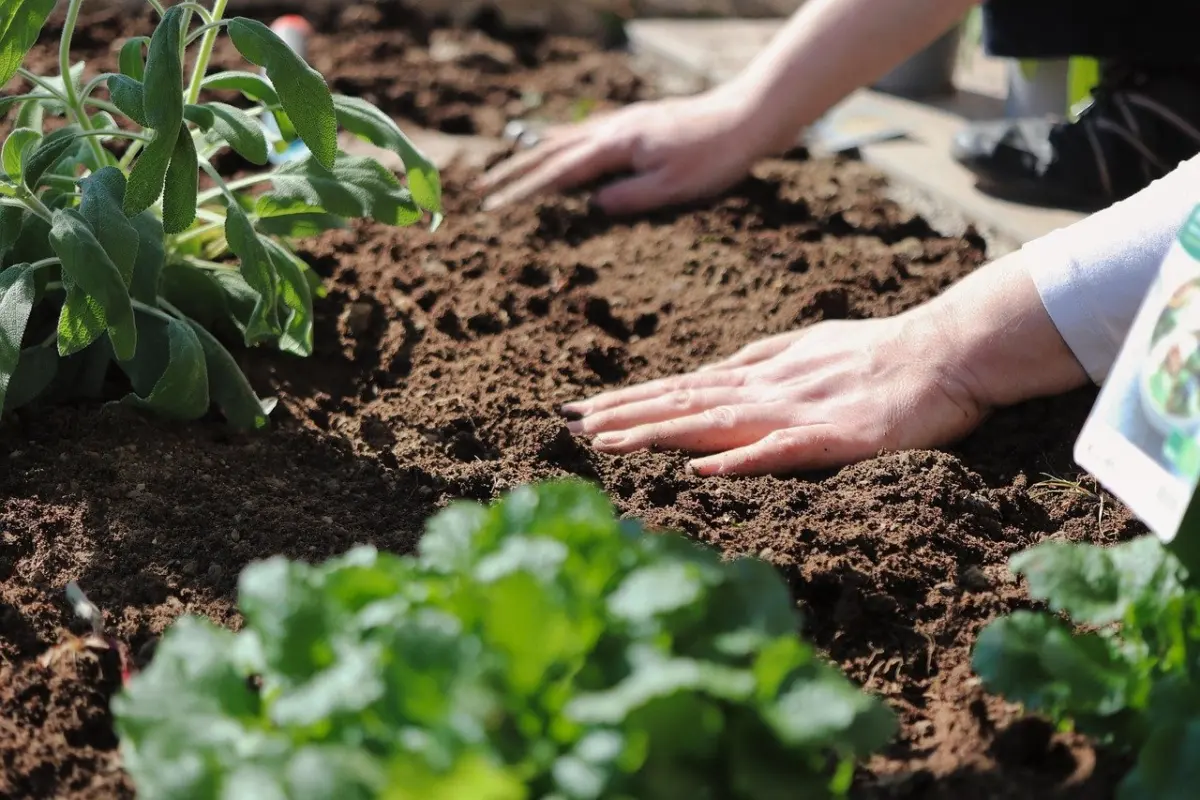
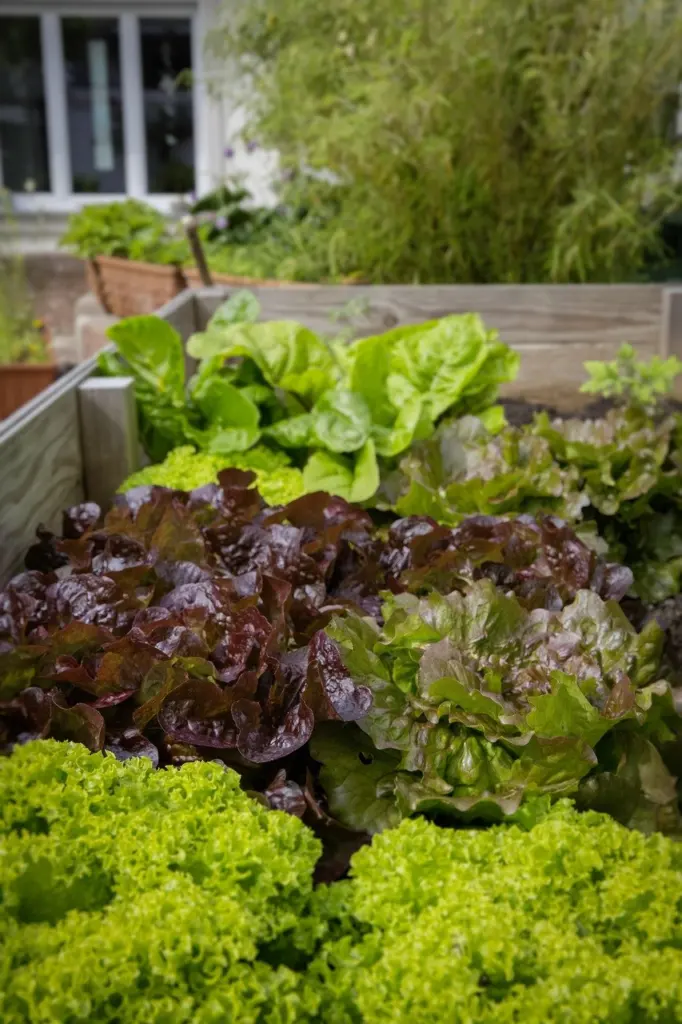
Raised beds do not create sun, so they cannot rescue a shaded site. What they add is control: a raised bed gives improved drainage and warmer soil temperatures, and the same source stresses that drainage and sunlight are crucial when planning the design. That makes them a good fit for a compact edible patch in your sunniest spot, set against a path or boundary so every part is within reach.
Plants that suit a small garden
Another misconception is that a small garden needs only small plants. Narrow, upright plants are often a better answer because they add height and structure without spreading across precious ground. The sizes below come from Lanier Landscapes’ small backyard guide.
Shrubs and grasses with a small footprint
- Compact shrubs: Fire Light Tidbit hydrangea stays 3′ x 3′, and Yuki Blossom Deutzia is a dwarf mounding shrub reaching 1-2 feet tall. Both suit front-of-border positions.
- Narrow grass: Karl Foerster feather reed grass gets 4-5′ tall but needs only 18″ of width, which makes it a vertical accent in a tight bed.
- Slim evergreen: Sky Pencil holly gives 8-10 feet of height with a very narrow width, sometimes just 18 inches. It works as a living screen where a hedge would take too much room.
- A narrow tree: Frans Fontaine hornbeam stays narrow for a tree at 8-12′ wide but 40′ tall, and can be shaped and pruned. That width still suits only the roomier end of small yards.
Bulbs and compact edibles
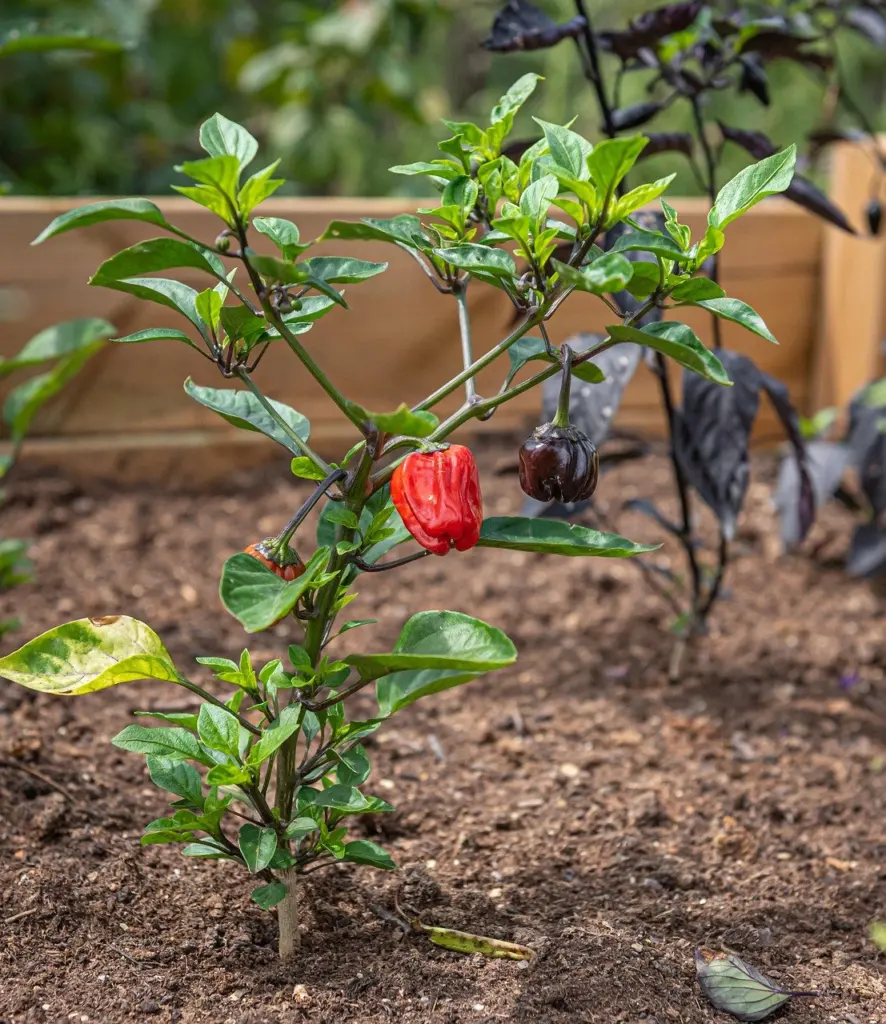
For narrow borders, Gardeners’ World suggests tall bulbs such as alliums, agapanthus or lilies, which add height without taking up much ground space. Plant them among low perennials so the border carries interest at two levels. Edibles with a compact habit, such as the chili plant below, fit the same logic: productive in a small pot or bed, and ornamental while fruiting.
Vertical growing and containers
Walls, trellis and climbers
Many people assume vertical gardening is costly or complicated. Gardeners’ World calls using vertical space one of the simplest ways to give small gardens a boost, through hanging baskets and planters, climbers on boundaries and tall slim plants. The options below differ in cost and effort.
- Hanging planters: an inexpensive way to add greenery to a boundary or shed wall.
- DIY green walls: easy-to-install panels fixed to walls or fences give a vertical display of herbs or salad leaves, so a fence becomes a kitchen garden.
- Obelisks: planted with climbers like sweet peas, they add height without growing too wide, which makes them useful in a border with no spare width.
- Trellis panels: according to Rooted Urban, jasmine, ivy, cucumbers and beans climb naturally with minimal support, and growing upward instead of outward solves the space problem very effectively.
- Climbing hydrangea: Lanier Landscapes describes it as manageable, unlike some rampant vines, though it is slow to establish. Choose it where you can wait for a permanent covering.
Containers and staging
Containers answer the worry that a planting scheme will be fixed forever. Leafstone notes that container gardening is a cinch to rearrange or move as needed, and that a wall planter provides a spot for plants without taking up valuable floor space. Gardeners’ World adds that containers on a planting stand with different levels create more planting space. Group them near the door or path so watering and harvesting stay easy.
Combining edibles, perennials and height
The strongest small yards do not separate edibles from ornamentals. Put a trained fruit tree or a bed of crops where the sun is best, use tall bulbs and narrow grasses to give perennial borders height, and let climbers carry the boundaries. Repeating a few plants around the space keeps the mix coherent. If the budget is tight, 10 Budget-Friendly Backyard Landscaping Ideas That Transform Your Space in 2026 covers lower-cost ways to build the framework, and Front Yard Rock Landscaping: Practical Ideas To Boost Curb Appeal In 2026 suits the other side of the house. More layouts are in the Garden Design category.
Frequently asked questions
| Question | Answer |
|---|---|
| Which apple form takes the least room? | Cordon apples take up the least area horizontally, according to Gardeners’ World, and they let you grow more varieties in the same space. |
| Will climbers take over a small yard? | Not all do. Climbing hydrangea is manageable rather than rampant, and sweet peas on an obelisk add height without growing too wide. Pick the climber for its habit, not just its flowers. |
| Can edibles and ornamentals share a trellis? | Yes. Trellis panels support ornamental climbers such as jasmine and ivy as well as cucumbers and beans, so one structure can hold both. |
| Should I choose containers or raised beds? | Choose containers when you want to rearrange or move plants. Choose raised beds when you have a fixed sunny site and want better drainage and warmer soil. |