Front yard desert landscaping ideas work better when plants come first: pick drought-tolerant species, space them for mature size, and water sparingly once established. A lawn swapped for bare gravel and a few spiky plants rarely delivers the low-upkeep yard people expect.
For layout thinking beyond the plants, see our garden design ideas, or browse the wider Garden Design category.
Desert yard myths that cost water and curb appeal
The most common mistake is treating a desert yard as a lawn swap: remove the grass, add rock and stop thinking about plants. A low-water front yard still depends on plant choice, soil and a small amount of well-placed water. The table sets three common assumptions beside what the evidence supports and what to do about each.
| Common assumption | What is supported | Design response |
|---|---|---|
| Desert plants never need water | Agave needs very little supplemental water once established, and desert willow needs very little once established but should be watered deeply and infrequently. | Plan on a managed establishment period, then cut back. Do not abandon irrigation. |
| Agave grows in any soil | Agave prefers well-drained soil and struggles in heavy clay. | Check drainage before planting agave. In clay, choose another spot or another plant. |
| Rock alone makes a yard low-water | Layered planting shades the soil, keeping roots cooler and reducing evaporation. | Combine trees, shrubs and low plants so the ground is shaded, not just covered. |
The establishment, soil and plant details come from a Phoenix landscape design guide to desert-friendly plants, and the layering point from an Arizona garden designer’s landscape notes.
Plants that suit a desert front yard
Agave, yucca, palo verde, desert willow and desert marigold all suit a desert front yard because each is described as drought-tolerant or low-water. A Las Vegas desert landscaping guide notes that desert marigold, yucca and agave are adapted to local conditions and require minimal water. The practical question is which of them fits your space and your tolerance for sharp leaves.
Agave and yucca for structure
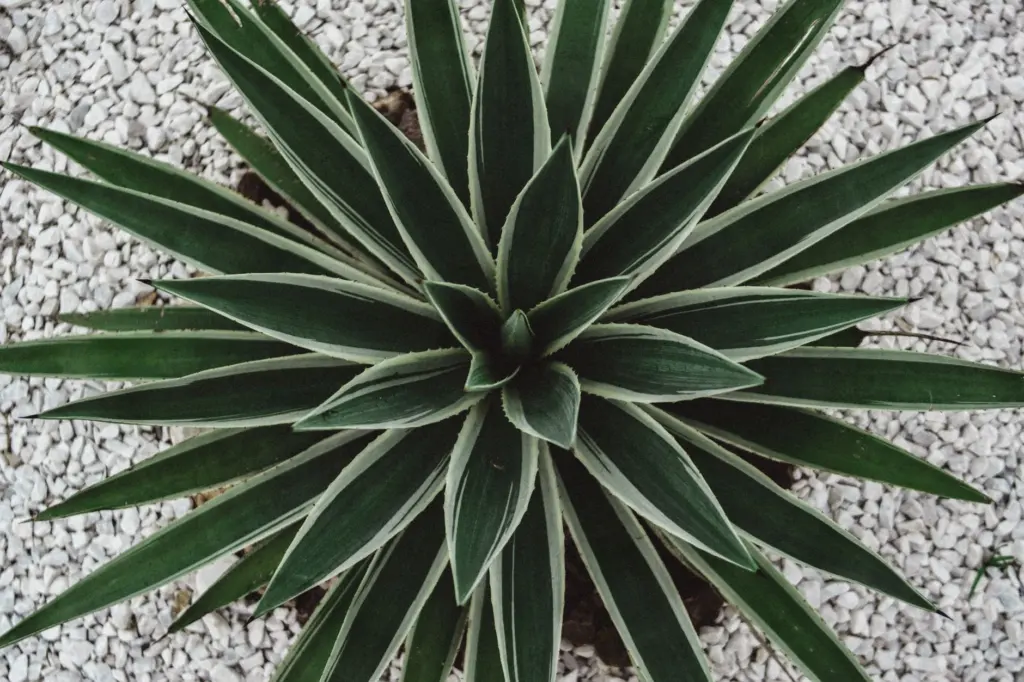
Agave is highly drought-tolerant, which is why it anchors so many Phoenix designs. It works as a focal point near the entry, but it needs room: some varieties reach up to 6 feet in diameter, so a small plant bought for a narrow bed can outgrow it.
Yucca is also drought-tolerant and needs little water after establishment. The genus is large, with over 40 species, and the size varies greatly, with some varieties growing over 20 feet tall, according to a yucca landscaping guide. Confirm the species on the nursery tag before planting it beside a window or walkway.
Red yucca is the easier choice near foot traffic. It is highly drought-tolerant and thrives in hot, sunny locations, and unlike true yuccas it has soft, arching leaves without sharp edges.
Trees and flowering shrubs
Palo verde and desert willow add height and seasonal interest. Palo verde requires minimal water, and desert willow is highly drought-tolerant, needing minimal water and withstanding intense summer heat. A tree also does a second job: its shade canopy can lower surrounding temperatures, reducing the need for excessive watering of nearby plants. That makes the tree placement a water-saving decision, not only a style one.
Desert marigold fills the lower layer. It is drought-tolerant and needs minimal maintenance, so it suits owners who want color without a routine.
Water need and mature size at a glance
| Plant | Water need once established | Mature size | Planning use |
|---|---|---|---|
| Agave | Water sparingly; very little supplemental water | Some varieties up to 6 feet in diameter | Entry focal point; allow full width and well-drained soil |
| Yucca | Not much water after establishment | Varies greatly; some varieties over 20 feet tall | Vertical accent; check the species before choosing a spot |
| Red yucca | Highly drought-tolerant; thrives in hot sun | Varies; confirm on the plant tag | Softer-leaved option beside paths |
| Palo verde | Minimal water | Varies; confirm on the plant tag | Shade tree to cool nearby plantings |
| Desert willow | Minimal water; deep, infrequent watering, then very little | Varies; confirm on the plant tag | Heat-tolerant flowering tree or large shrub |
| Desert marigold | Drought-tolerant | Varies; confirm on the plant tag | Low-maintenance color at the front of beds |
Water needs, sizes and uses draw on a Phoenix landscape design guide and a yucca landscaping guide; these guides are written for Arizona conditions, so confirm suitability with a local nursery if your yard is colder or wetter.
Designing a low-water layout
A low-water front yard is built from a few layout rules that work together. The plant list matters less than how the plants are grouped, spaced and shaded.
- Group by water need. Put plants with similar water needs together so one irrigation zone serves them without overwatering the thriftiest plants.
- Space for mature size. Consider the mature size of each plant when planning, since a 6-foot agave or a tall yucca planted too close to a path creates a maintenance problem later.
- Layer the planting. Trees, shrubs and low plants together shade the soil, keeping roots cooler and reducing evaporation.
- Check drainage first. Agave struggles in heavy clay, so test the soil before you commit to a bed.
- Use mulch and rock around plants. They help retain moisture in the soil, which reduces the need for frequent watering.
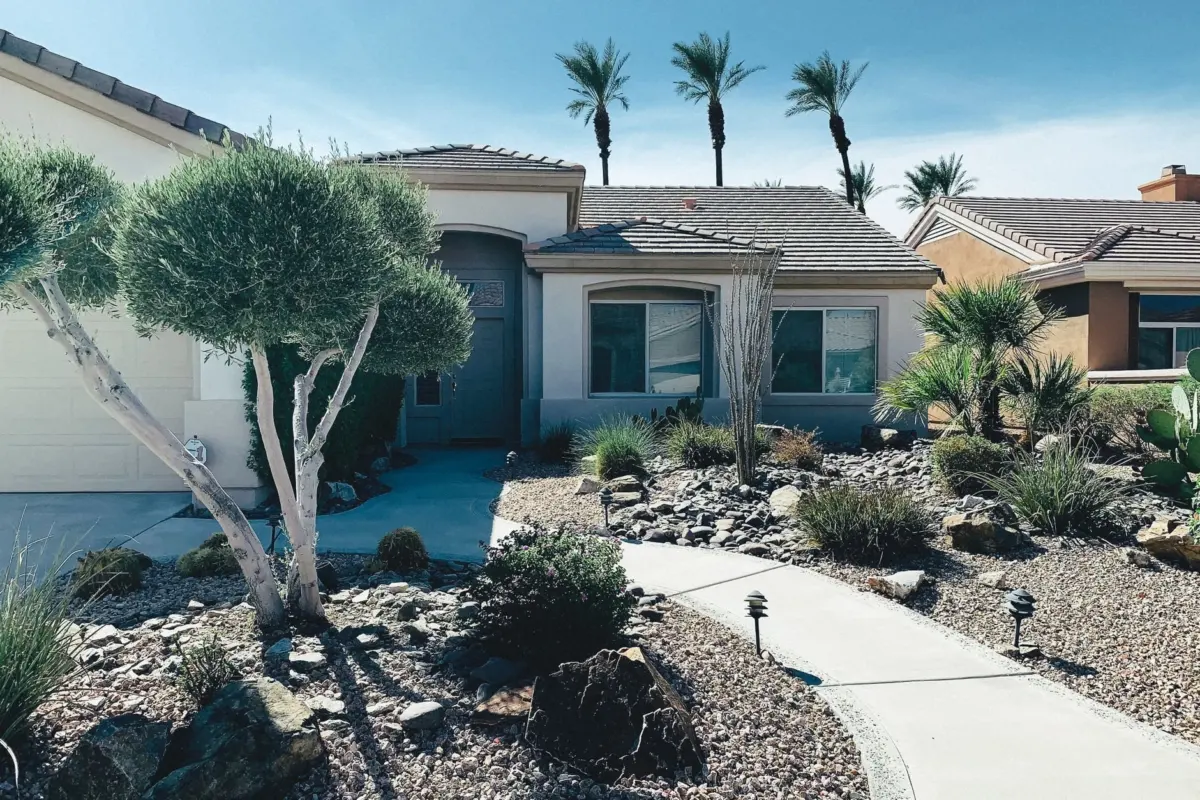
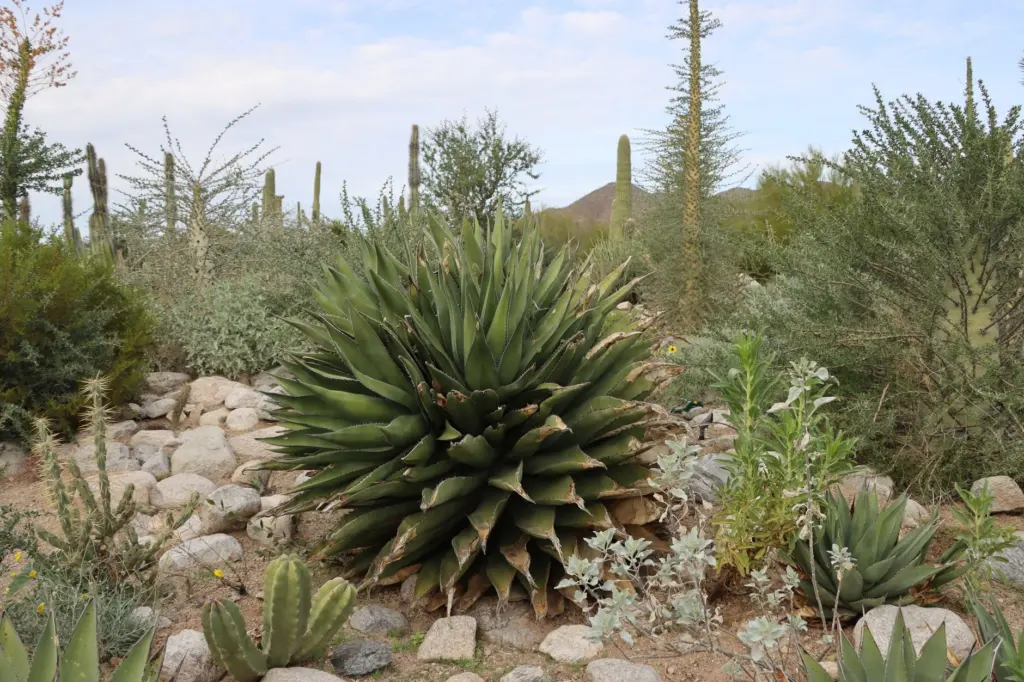
The photograph below shows the layering idea in practice: a flowering shrub and an agave share the same rocky ground, so plants of different heights sit together.
If you cannot do everything at once, install the structure first: drainage fixes, trees and large plants, then smaller plantings later. Our guide to 10 Budget-Friendly Backyard Landscaping Ideas That Transform Your Space in 2026 covers how to stage a landscape across seasons when funds are limited.
Groundcovers, rock and paths instead of grass
Replacing grass does not mean covering everything with the same material. The strongest front yards use living groundcover where there is room, rock and mulch around plant bases, and a clear path to the door.
Living groundcovers
Low plants can fill the gaps between larger specimens. An Arizona garden designer describes adding groundcovers such as ‘Outback Sunrise’ emu bush to a desert design in her landscape design notes. Use a groundcover where you want soil shaded, and keep it in the same water-need group as its neighbors.
Rock and mulch
Rock and mulch around plants retain moisture in the soil, and that reduces how often you need to water, as the Las Vegas landscaping guide explains. Treat them as a finishing layer over planted beds, not a replacement for the plants.
Paths and boulders
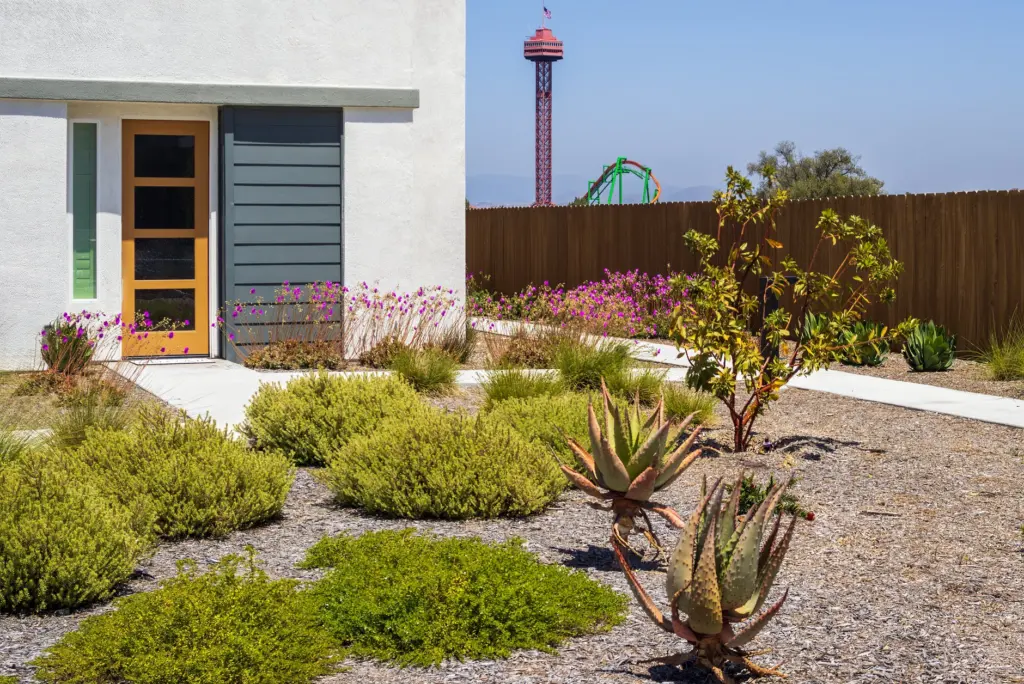
Hardscape gives a gravel yard its structure. A walkway defines the approach to the entry, and boulders and rock mulch tie into the planting. The photograph shows a concrete walkway running between gravel beds with pink flowering shrubs and agave; flagstone would suit the same layout if you prefer a more natural surface.
If you prefer a quieter, more restrained arrangement of stone and planting, the approach in Small Japanese Garden Ideas: Create A Serene Mini Retreat In Your Yard (2026) offers a contrasting model that can be adapted to a small entry bed.
Watering desert plants and drip irrigation
Established desert plants need little water, but the low figures apply after roots settle. The guides use the phrase “once established” for agave, yucca and desert willow, so treat the first period after planting as the time to watch plants closely and reduce watering as they settle.
Drip irrigation suits this pattern. It delivers water directly to plant roots, reducing water waste, and it lets you serve each plant group separately. Desert willow is a useful model for the schedule: water deeply but infrequently, then very little once established. Agave is similar, with sparing water and very little supplemental water once established.
For exact run times and seasonal adjustments, follow your local water utility’s guidance, since the right interval depends on climate, soil and exposure. Mulch and rock help here too, because they hold soil moisture and reduce the need for frequent watering.
Frequently asked questions
| Question | Answer |
|---|---|
| Which desert plant gives color across the seasons? | Desert marigold, an Arizona native, blooms from spring through fall and needs minimal maintenance. |
| When should I trim a yucca? | In spring, remove the dead leaves from a mature plant as the older leaves die. Wear gloves, because yucca leaves are sharp. |
| Is artificial turf a low-water alternative to grass? | It requires no watering and minimal maintenance, which is why some desert designers use it. It does not shade soil or support plants the way a layered planting does. |
| Is palo verde a good native choice in Arizona? | Yes. Palo verde is the state tree of Arizona and a top choice among native Arizona plants for landscaping. |