| Design choice | What it does | Planning use |
|---|---|---|
| Plants sized to the yard | Small plants get lost in a bigger landscape, while large plants may outgrow a smaller space | Pick plants by mature size, not by how they look in the pot. |
| Room to mature | Plants need enough room to reach their mature size | Mark each plant’s final footprint on the sketch before buying. |
| Low in front, taller near the house | Taller plants closer to the home give some privacy | Put the tallest planting along the house wall or window side. |
| Curved path | A curved walkway from driveway to door is more visually pleasing than a straight one | Draw the route as a gentle curve before choosing a material. |
| Path width | Walkways should be wide enough to accommodate two people | Check the width against two people walking together. |
| Mulched beds | Mulch suppresses weeds and retains moisture | Budget for mulch in every bed, including narrow strips. |
Design points come from Garden Design’s front yard guide and Garden Season’s front yard landscape ideas.
Front yard cottage garden ideas suit small spaces when low plants sit at the front, taller ones stand closer to the house and the path is wide enough for two people. Perennials and mulch keep upkeep modest.
If you are still deciding on an overall style for the property, our garden design ideas page compares the wider options. The rest of this guide stays on the front yard: what the cottage look means in practice, how to layer a small bed, and how to keep it manageable.
What the cottage style means for a small front yard
Your front yard is the first thing neighbors and visitors see, according to Garden Design, so a small cottage planting carries real weight at the entrance. Gardeners have adapted the easy-going cottage style into welcoming entryway gardens and street-side borders, which makes it a natural fit for the strip between sidewalk and door.
The appeal is what Garden Season calls the artful chaos of a cottage flower garden, set against the straight lines of a formal yard. That looseness has consequences for how you plan.
- A loose look needs a firm frame. Structural plants are essential to a well-designed foundation planting, and the same guide on cottage fronts makes that point directly. Without them, exuberant flowers read as untidy rather than intentional.
- Scale decides which plants earn a place. A narrow bed cannot absorb a plant that outgrows it, and a wide lawn swallows small ones. This matters more in a small yard because every mistake is visible from the street.
- The entrance is the priority. Spend the best plants and the most care where visitors approach, then let the planting relax toward the edges.
- Hard features set the tone. A path, fence or trellis tells the eye where to look, so the flowers can stay informal.
If the yard has an awkward corner rather than a straight frontage, Corner Landscaping Ideas For Your Front Yard: 12 Stylish, Low‑Maintenance Designs To Transform Awkward Spaces covers how to handle that shape. Once the frame is clear, the planting itself can be layered.
Layering plants from the house to the path
Layering means arranging plants by height so that each row shows over the one in front of it. Garden Season recommends low-growing plants in the front and taller plants closer to your home, which also gives some privacy. In a small yard that simple rule does most of the design work.
Back layer: structure and height
The back layer is the frame. Boxwoods hold their leaves, so they make a great backdrop to perennials and keep winter structure when flowers have gone. The same author pairs Knock-Out roses with boxwoods, a useful combination when you want roses without a bare-looking bed in cold months. A trellis adds vertical interest and stays attractive in winter, so it can stand in for height where a shrub would take up too much floor space.
Middle and front layers: flowers and edging
The middle layer is where classic cottage flowers belong. One cottage landscaping guide describes a yard full of sweet peas, cosmos, foxgloves and delphiniums as the look to aim for. Because plant height varies, check each perennial’s height, bloom time and bloom duration before assigning it a row, as the Hey Honeysuckle guide suggests. Foxgloves and delphiniums suit the back of the flower rows once their height is confirmed; do not assume a position from the name alone.
At the front edge, low-growing bedding plants such as petunias and primroses line a defined bed neatly. For longer plant lists with planting plans, see Cottage Garden Plants: 25 Charming Choices And Simple Plans To Plant In 2026.
Paths, fences and entrance features
Hard features fix the layout, so settle them before choosing plants. They also change how much of the yard you can plant.
Path shape, width and material
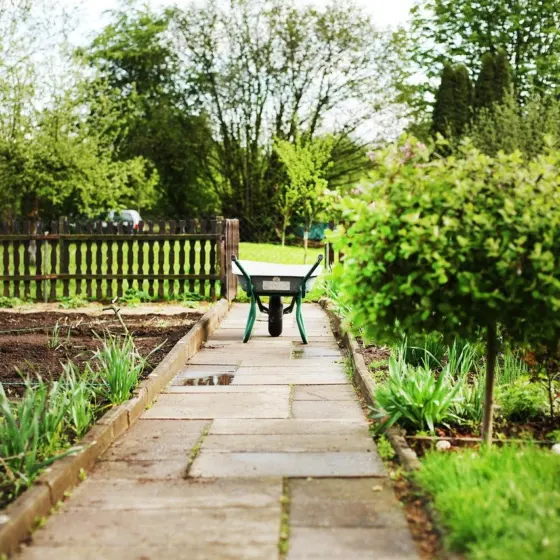
A curved walkway from driveway to door is more visually pleasing than a straight one, and a gentle bend also gives the planting beside it a longer, softer edge. Garden Design also asks whether walkways are wide enough to accommodate two people. In a small yard, that question limits how narrow you can go before the path feels cramped or visitors step on the flowers.
For surface, gravel and permeable pavers are both used in front yard designs. A gravel and paver pathway reads as more whimsical than a concrete sidewalk, and a stepping stone pathway sets a cottage garden up for ultimate charm. Choose gravel or pavers where you want an informal look; pick stepping stones where you want plants to grow right up to the route.
Picket fence and entry structures
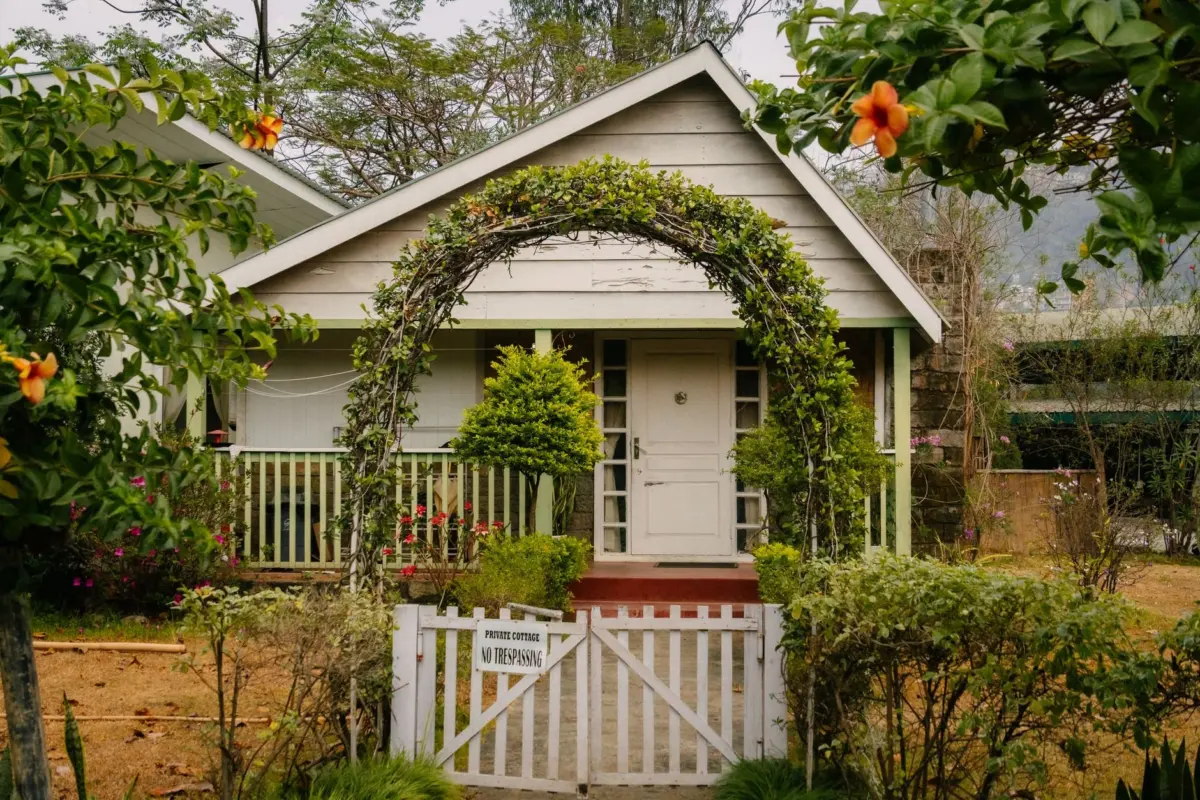
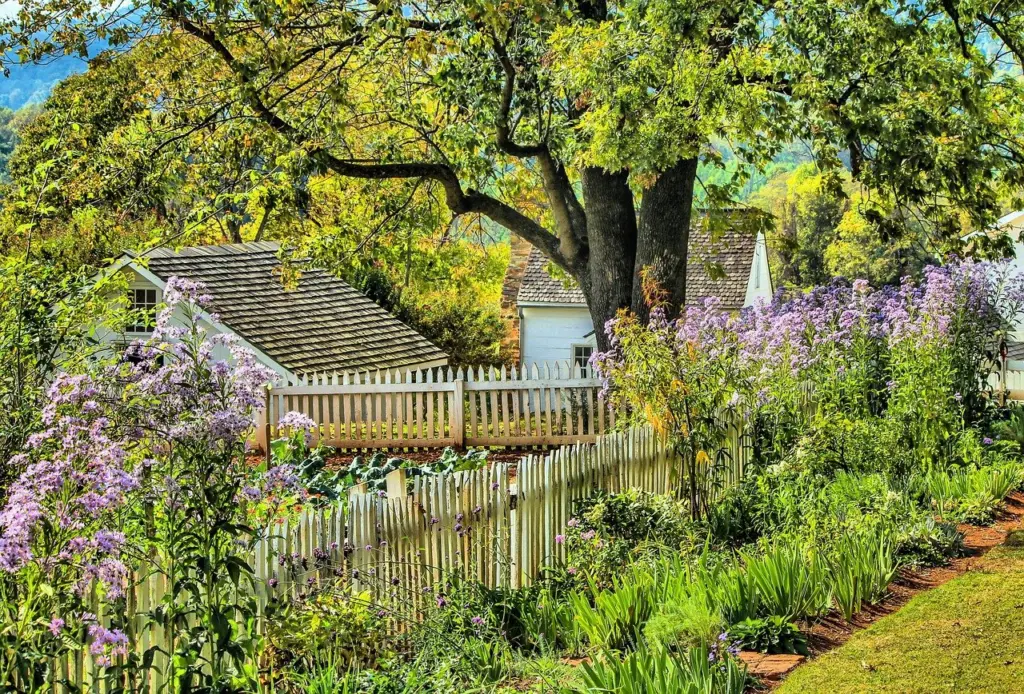
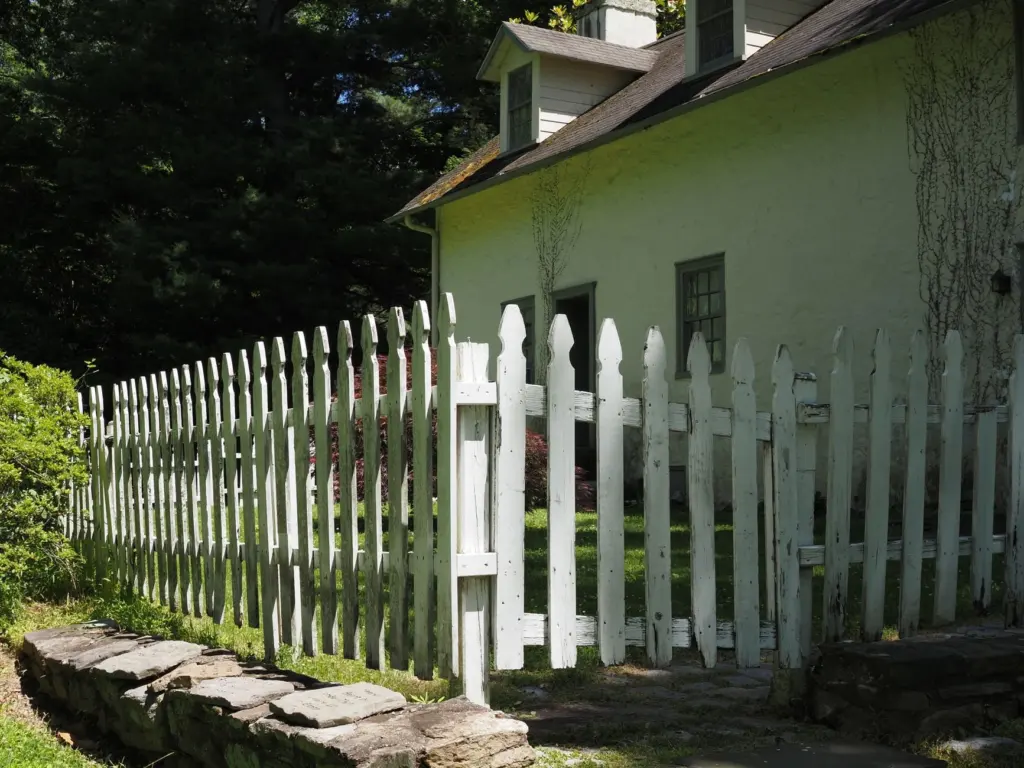
A picket fence marks the boundary without hiding the garden. One cottage landscaper notes that a white picket fence was jazzed up to add character, so a plain fence can be decorated to suit the planting. At the door, an arbor or trellis planted with a climbing rose creates a welcoming entrance, according to Garden Design. A bench is a lower-effort feature: it costs money initially but requires little upkeep.
A sample plan for a small front bed
Here is a working plan that follows the layers above, from the house toward the path. It uses relative heights, because the right sizes depend on the varieties you choose.
- Against the house: evergreen structure such as boxwood, with a climbing rose on a trellis or arbor near the door. This is the tallest and most permanent layer.
- Middle band: perennial cottage flowers such as foxgloves, delphiniums, sweet peas or cosmos, placed once their heights are checked. Mix bloom times so something is flowering for as long as possible.
- Front edge beside the path: low bedding plants such as petunias and primroses, or Knock-Out roses repeating the shrub rhythm at the back.
- Spacing: give every plant room to reach its mature size. Garden Design gives no fixed distance, so use the mature width listed for each variety and sketch it before planting.
Repeating a few plants across the bed gives the artful chaos some order. Try to keep the shrub list short and let the flowers vary.
Upkeep: what to expect
A traditional lawn takes a fair amount of time and resources to maintain, which is the main reason to replace front lawn with planted beds. Garden Design notes that a low-maintenance xeriscape or native garden is easier to manage than a vegetable plot or traditional lawn. A mixed cottage border is not the same as those styles, so treat that as a comparison with lawn, not a promise that flowers need no care.
Two choices reduce the work. First, choose perennial flowers that stay in place, which reduces the need to weed or replant. Second, mulch the beds; mulch suppresses weeds and retains moisture. Pick a bench, trellis or path over additional beds if you want features that look good with minimal effort.
Frequently asked questions
Does the front yard need full sun?
Sun exposure guides plant choice. Full sun lends itself to warm-season annuals or vegetables, so note how much light the bed receives before buying.
Can a cottage front yard be done on a budget?
Yes. Cottage landscaping can be done on a budget, and rock mulch or wood chips are a way to use what you have while making maintenance easier.
What should I do to the soil before planting?
Amend new planting areas to improve drainage and provide a hospitable growing medium for plants.
Does a picket fence suit every house?
Not necessarily. A classic picket fence, brick pathway and clipped boxwood hedging complement a Colonial home, so match the fence to the house style.