The best cheap raised garden bed ideas trade durability for price: mounded soil costs least, block and pine frames sit in the middle, and cedar or galvanized steel cost more but last longer.
Pick the frame by how long you want it to last, then fill it with fresh mix. For wider layouts that these beds can slot into, browse our garden design ideas.
What drives the cost of a raised bed
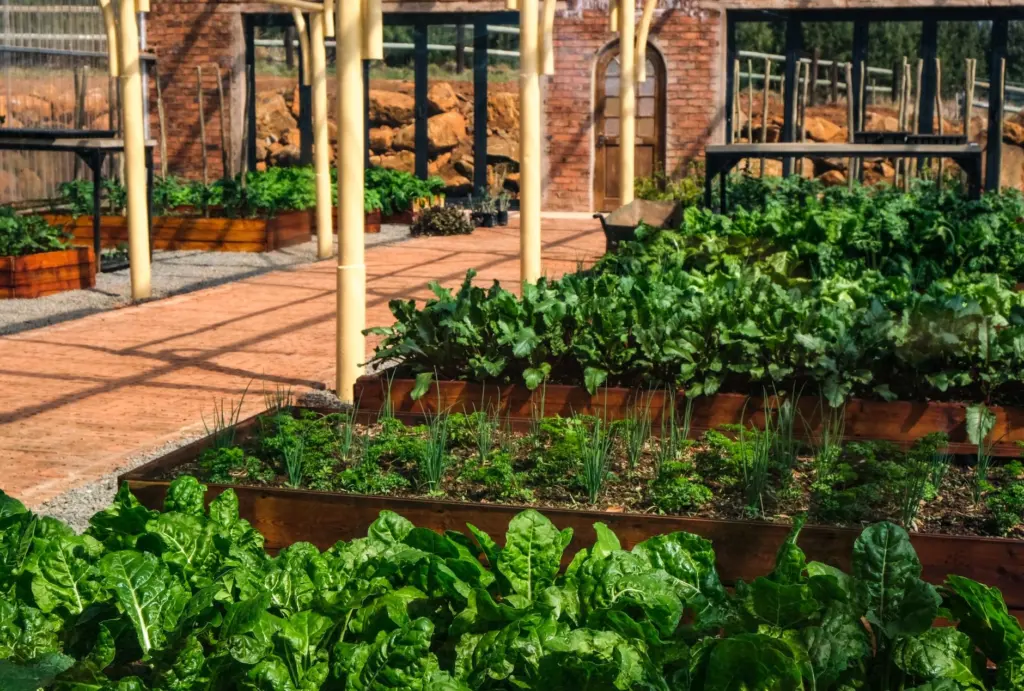
A raised bed has to hold back a lot of soil, and that weight is why a frame’s thickness and rot resistance set its true cost. According to An Oregon Cottage, 1-inch fence boards bow immediately under the weight of the soil, while cedar boards are best at 2 inches thick. The same source puts cedar’s expected life at about 10 years, against about 5-6 years for less expensive pine.
That gap changes the maths. A pine frame is cheaper on day one, but it is replaced sooner. Cedar and redwood are naturally rot resistant and long-lasting, though Driven by Decor notes they are costly. If you may move or redesign soon, a short-lived cheap frame is a sensible choice. If the bed will stay put, a longer-lasting material usually works out better per year.
Soil is the second cost driver, and it is covered below. First, here is how the main budget builds compare.
Budget builds compared by cost
| Build | What it costs | How long it lasts | Planning use |
|---|---|---|---|
| Mounded soil | Least expensive to set up: you only buy compost and perhaps soil | Edges break down with use and watering, so they are rebuilt every season | A low-risk way to test a bed position before spending on a frame |
| Cinder blocks | Relatively inexpensive, and free if you can find them | Lasts forever | Best when you can source blocks free; budget separately for covering the openings |
| Planter wall blocks with pine boards | Under $75 for 8 blocks, 4 eight-foot pine boards and 4 pieces of rebar | Pine boards last about 5-6 years | A quick build: under an hour with no power tools when the store cuts the boards |
| Pine boards | Less expensive than cedar | About 5-6 years | Suits a temporary or trial bed |
| Cedar boards | Costly, but naturally rot resistant | About 10 years | Worth the extra cost for a bed you plan to keep |
Figures come from An Oregon Cottage and Driven by Decor, and the costs are retail-blog figures rather than a price survey.
Read the table as a ladder. Mounded soil is the entry point, free or found blocks come next, and a pine or cedar frame is what you pay for when you want a tidy, lasting edge.
Build options, from cheapest up
Mounded soil
Simply mounding soil is the cheapest approach, and it needs no frame. Beds like this also warm up quicker in the spring. The trade-off is upkeep, because the edges erode with use and watering and need rebuilding each season. It suits gardeners who want to trial a spot for a year.
Cinder block and planter wall block beds
Cinder blocks need no carpentry and are long-lasting. They are cheapest when salvaged. The drawback is that open cores can harbor wasp nests and weeds unless covered, and covering them adds a lot to the cost. That makes blocks a better deal when free than when bought in volume.
For a bought, tidy version, the planter wall block bed in the table (blocks, pine boards and rebar) is a small purchase that goes together without power tools.
Pallet beds
Pallet wood suits builders who would rather reuse timber than buy boards. Check that the pallet wood is heat-treated rather than chemically treated before using it around food plants. If you cannot tell which treatment a pallet has had, leave it for decorative planting or choose another material.
Board frames
Boards give the most flexible shape. Choose thickness first, since thin boards fail under soil weight, then choose the species by how long you want the frame to last. Pine keeps the upfront bill down, and cedar is the choice for a bed you intend to keep.
Galvanized steel planters
Galvanized steel will not rot or rust. Driven by Decor says a galvanized planter can have a lifespan of 20+ years with minimal maintenance. That is the longest life of any option here, so it suits gardeners who prefer to buy once.
Which materials are safe
Safety comes down to what can leach into the soil. Cement blocks may leach fly ash contaminants, so Sprouting Fam recommends coating the cement with a polymer first or using a liner over it. If you grow vegetables in a block bed, do one of those two things.
Cedar has a low potential to leach, according to the same source, which makes it a reasonable wood for food beds despite the price. Galvanized steel avoids rot and rust altogether. Pallet wood is safe to consider only when it is heat-treated. Pressure-treated lumber raises its own questions, which are answered in the FAQ below.
Soil to fill a raised bed
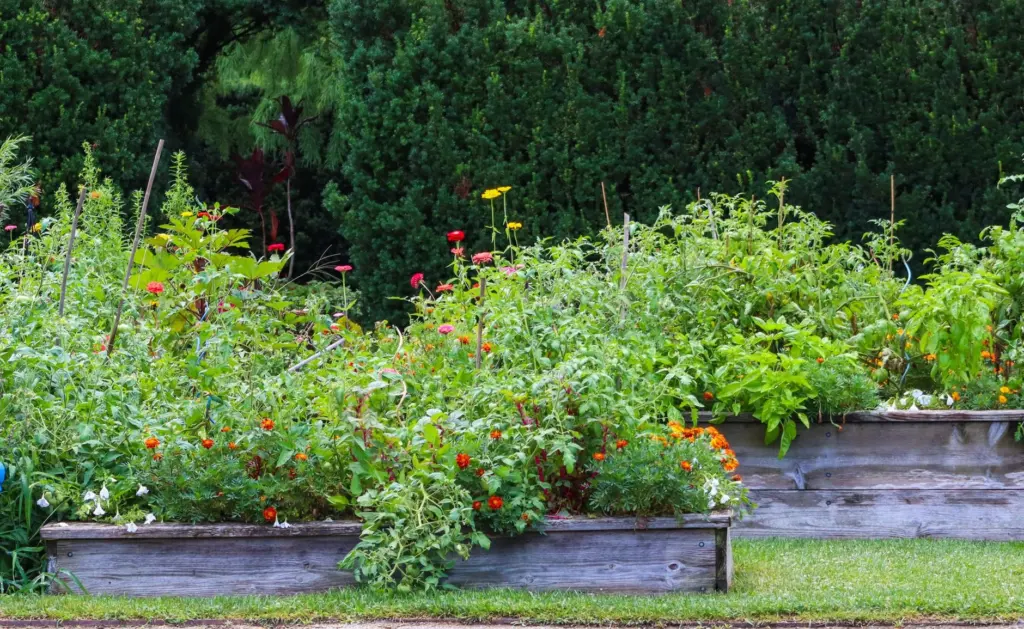
Fill a raised bed with a fresh, high-quality soil mix rather than digging up native ground. Frame It All notes that starting with a fresh mix sidesteps many of the weed seeds and soil-borne pests found in existing soil.
Filling is a real expense. A fabric-bed supplier, Thrive Garden, says to expect an additional $50-$150 depending on bed size and soil quality. A mounded bed keeps this cost down because you only buy compost and maybe soil. Beyond that, a sensible budget move is to build one bed first and add more after it has been planted for a season.
Sizing and placement
Keep a bed no more than four feet wide so you can reach the middle. An Oregon Cottage gives four feet as the maximum for most people in traditional raised beds, and Frame It All gives the same limit for easy reach. Treat that as a ceiling, not a target: a narrower bed is easier on tight paths.
Narrow beds also fit awkward spaces well. If a bed will sit in a front-yard corner, see Corner Landscaping Ideas For Your Front Yard: 12 Stylish, Low‑Maintenance Designs To Transform Awkward Spaces for ways to shape the area around it. For a small planting set apart as a tribute, Small Memorial Garden Ideas: Create A Meaningful Tribute In Any Small Space (2026 Guide) shows how a compact bed can anchor a quiet corner.
Frequently asked questions
Is pressure-treated wood a good choice for a vegetable bed?
It is best avoided if you can. The EPA banned arsenic in treated wood in 2003, but An Oregon Cottage points out that modern pressure-treated lumber is still treated with chemicals, and the author avoids it for food beds.
Do galvanized planters need drainage holes?
If the planter has a bottom, Driven by Decor advises drilling a few holes in it before filling so water can drain.
Are fabric beds cheaper than wooden ones?
Yes, on vendor-reported prices. Thrive Garden puts fabric beds at $30-$100 and wooden beds from $188. Its premium fabric beds ($70-$120) are said to last 5-10 years with minimal maintenance.