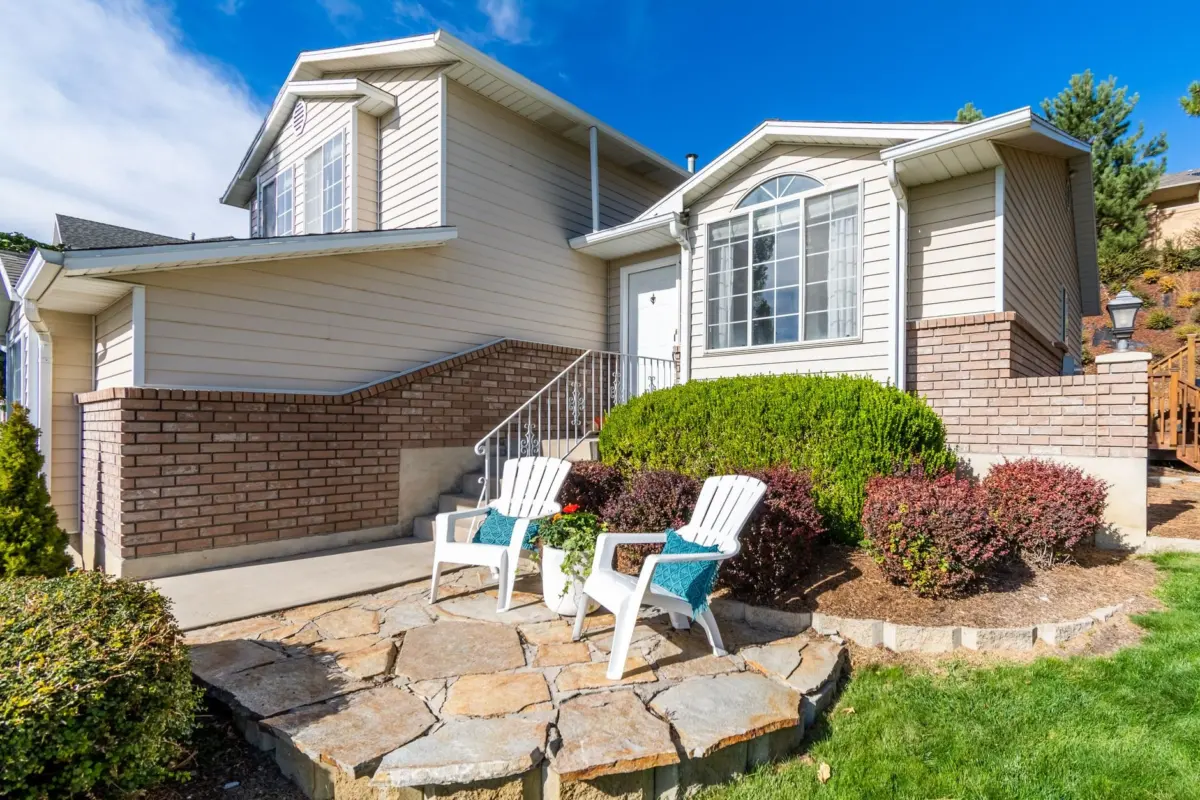
A front yard that looks tired usually needs a plan before it needs a shopping trip. The best landscaping ideas for front yard upgrades start with a scaled sketch, then low-cost mulch and bed edges, then structure, borders and paths.
For wider layout inspiration, browse our garden design ideas. If your lot has a grade, Sloped Front Yard Landscaping Ideas: 12 Stylish, Low-Maintenance Solutions For Any Grade covers that case.
Plan the front yard before you buy anything
Planning is the step most homeowners skip. NC State Extension calls the planning process possibly the most important aspect of residential landscaping, yet often neglected, and sets out a six-step process that runs from a base plan to installation. Colorado State Extension gives a practical starting point: sketch the layout to scale on graph paper, using 1 inch = 4 feet. A scaled sketch shows at a glance whether a bed, a walk and a specimen plant actually fit.
Several common beliefs about front yards also lead people astray. The table sets them against what extension guidance supports.
| Common belief | What the guidance supports | Planning use |
|---|---|---|
| A shrub line must run across the whole house front | It is no longer considered necessary or desirable to plant a line of shrubs all the way across the foundation | Group plants in fewer, larger masses and leave gaps of wall or lawn |
| More colour means more curb appeal | Entry gardens work best when the colour scheme is simple and predominantly green | Limit brightly coloured leaves and let one feature lead |
| Scattered single plants look natural | Most plants belong in borders rather than island beds or individual plants in the lawn | Draw continuous borders, which look more open and cut maintenance |
| Any walk will do | Entrance walks should ideally be at least 4½ feet wide, and wood or slate that turns slick when wet should be avoided | Measure the existing walk before choosing materials |
The table draws on Clemson’s foundation plantings factsheet and Colorado State Extension’s perennial gardening guide.
Ten upgrades ranked by budget and yard size
The list runs from the lowest outlay to the heaviest project. Prices vary by region and material, so get local quotes before committing to the later steps. Each item is developed in the sections that follow.
- Mulch the beds you already have. This is the cheapest visible change and suits every yard size.
- Curve the bed edge. A softer line along the lawn is a small digging job with a tidy result.
- Thin overgrown foundation shrubs. Removing crowded plants costs little and often improves the house front more than adding new ones.
- Lower the plants at the entrance. Swap tall plants beside the door for low ones.
- Add an evergreen backbone and one specimen. This gives the planting structure through winter.
- Prepare the soil for new beds. Compost-rich soil is the foundation for everything planted afterwards.
- Plant a perennial border. This gives colour and texture for modest cost once the soil is ready.
- Widen the entry walk. This is a hardscape job, so it costs more and suits owners ready to hire or build.
- Replace slick walk surfaces. Do this at the same time as the widening to avoid paying twice.
- Define the boundary with a fence or gate. This is usually the heaviest outlay and is best left until the planting is settled.
Yard size changes how many of these to attempt at once:
- Small yard: Pick a few moves and stop. NC State warns that a landscape with too many ideas in a small space lacks unity, so mulch, an edge and one specimen will do more than many small features.
- Typical suburban frontage: Work through the list in order and pause after the planting stages, so you can see how the yard reads from the street before paying for hardscape.
- Wide frontage: Favour long, continuous borders over scattered islands, which Clemson links to a more open look and lower maintenance.
Foundation plantings that frame the entrance
Foundation plantings should frame the door, not hide the wall. Clemson says evergreens and plants with strong winter forms give basic year-round structure, and that there should be only one striking specimen plant in most foundation plantings. Plants near the door should stay low, both to avoid a hemmed-in feeling and for security and visibility.
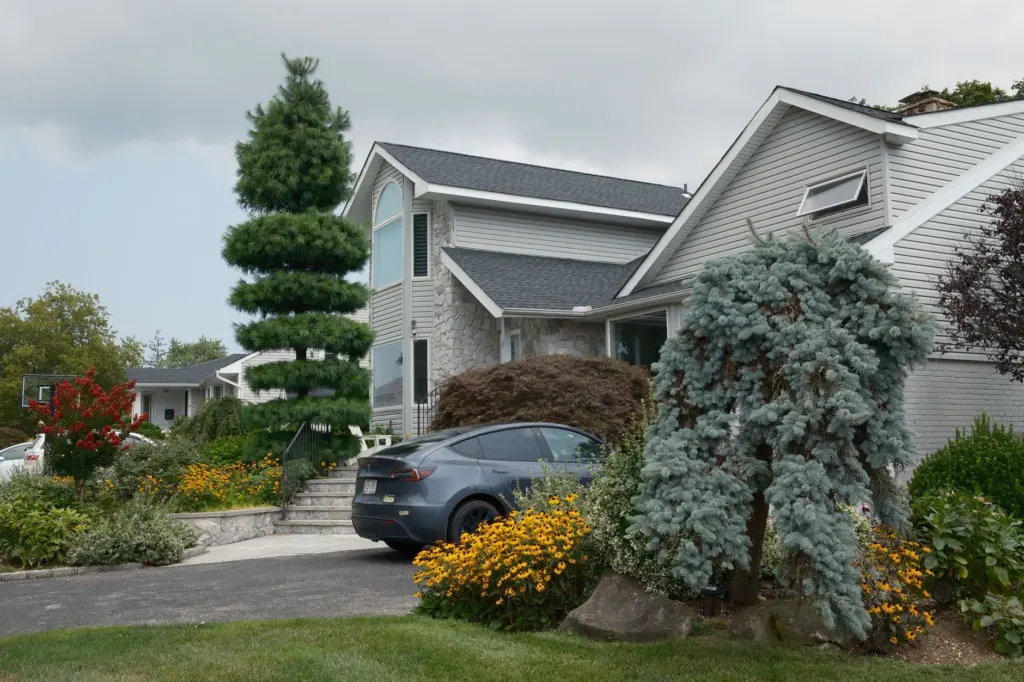
Colour is where most front yards overreach. Keep the palette predominantly green and let a single feature, such as a specimen shrub or one flowering accent, carry the interest. Clemson advises limiting brightly coloured leaves in entry gardens.
Check what you already have before adding anything. A Piedmont Master Gardeners project describes shrubs packed in very tightly, which is not unusual for a landscape that is almost 30 years old. If your foundation shrubs touch each other and the siding, removing a few is the cheapest upgrade available. For anything new, NC State recommends considering both the mature height and spread before including a plant in the landscape.
The same Piedmont project recorded a soil pH of 5.5 in the back yard and 6.0 in the front of an acidic clay site. The two ends of one property can differ, so test the soil in the front bed itself rather than assuming the back-yard result applies.
Perennial beds for colour and texture
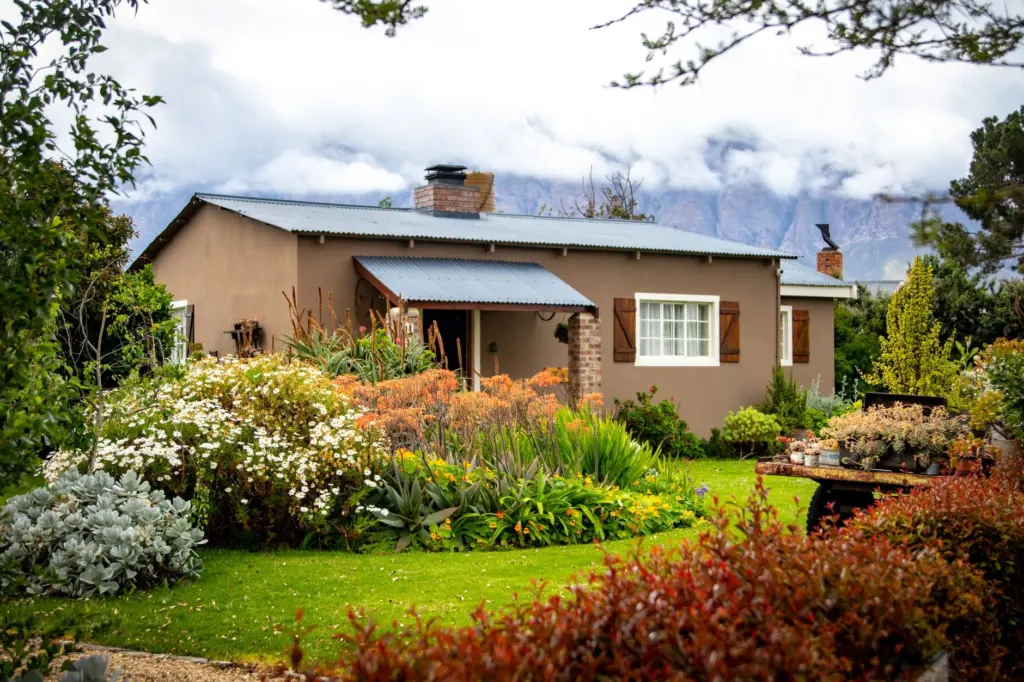
Perennial beds suit front yards that get the right light and have room for depth. Start with sun: Colorado State notes that many perennials require abundant sunshine, 8 hours or more during the longest days of summer, while ferns, bleeding heart and hostas are best suited to locations with less sunlight. A shaded front yard is therefore a reason to change the plant list, not to abandon the bed.
| Decision | Guidance | Planning use |
|---|---|---|
| Light | Many perennials need 8 hours or more of summer sun; ferns, bleeding heart and hostas suit less light or filtered shade | Observe the bed on a long summer day, then choose the plant list |
| Bed width | Beds 6 feet wide or wider look most pleasing when space is available | Make the bed deeper rather than adding more small beds |
| Grouping | Plants of the same variety in groups of three, five or seven increase the impact of colour or texture | Buy fewer varieties in larger groups |
| Spacing and height | Plan for mature height and spread, and leave adequate room for growth | Read plant tags for mature size and set tall plants at the back |
The figures come from Colorado State Extension’s perennial gardening guide and NC State’s landscape design chapter.
Prepare the soil before planting. Colorado State recommends incorporating organic matter (compost, sphagnum peat or well-aged manure) 12 inches deep, at about 3 cubic yards per 1,000 square feet. That is more effort than digging individual holes, but it is the step that lets a border fill in evenly.
Hardscape, mulch and cheap curb appeal
Curb appeal does not have to cost much, and cheap changes still pay off. NC State notes that good landscape design enhances the neighborhood and adds to the property’s value, so the benefit reaches beyond your own front door.
Mulch and bed edges
Mulch is the most affordable place to begin. Colorado State describes mulching as one way to reduce weed growth and conserve water. A home-design blog adds that mulch helps the ground stay warmer in winter and cooler in summer, and that for large areas buying from a landscape supply yard is much cheaper than buying bags. The same blog points out that a curved bed edge on the lawn side makes mowing easier, because the mower can follow the curve instead of stopping at a hard corner.
Paths and surfaces
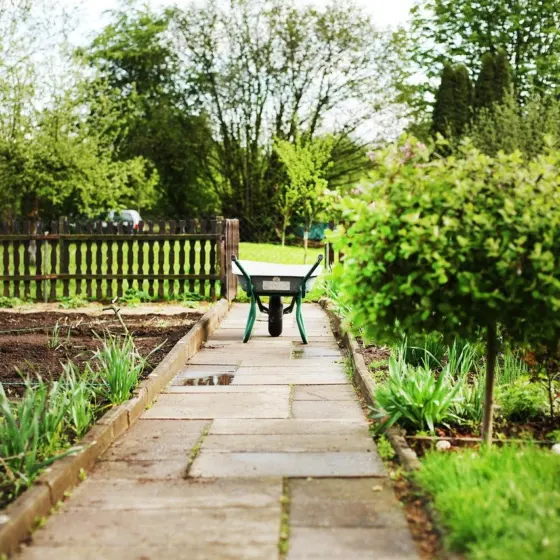
The path is the one hardscape element that carries daily use, so size it for people. Clemson advises entrance walks at least 4½ feet wide so two people can walk comfortably side by side, and says to avoid wood or slate surfaces that become slick when wet. If the current walk is narrow or slippery, fixing it should come before decorative extras.
Boundaries
Once the planting and path are settled, a boundary can finish the frontage. Our garden fence ideas compare styles and gates for yards that need definition or a clear entry point.
Frequently asked questions
| Question | Answer |
|---|---|
| How often should perennials be divided? | Colorado State says division of some perennials may be necessary after three to five growing seasons. Not every plant needs it. |
| How often should a new perennial bed be watered? | After the first month, Colorado State advises longer intervals of four to six days between watering for plants in full sun. |
| Which front-yard perennials may need staking? | Tall types such as delphinium, foxglove and hollyhock may need staking in windy sites, so keep them to sheltered spots or support them. |
| Does front yard landscaping add property value? | Yes. NC State says landscape design adds to the property’s value along with benefiting the family and neighborhood. |