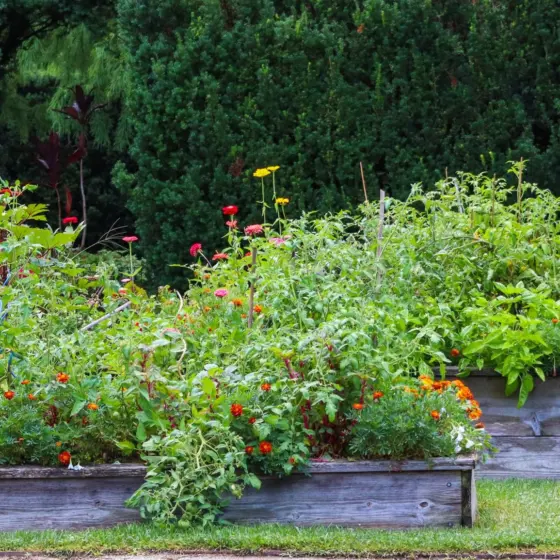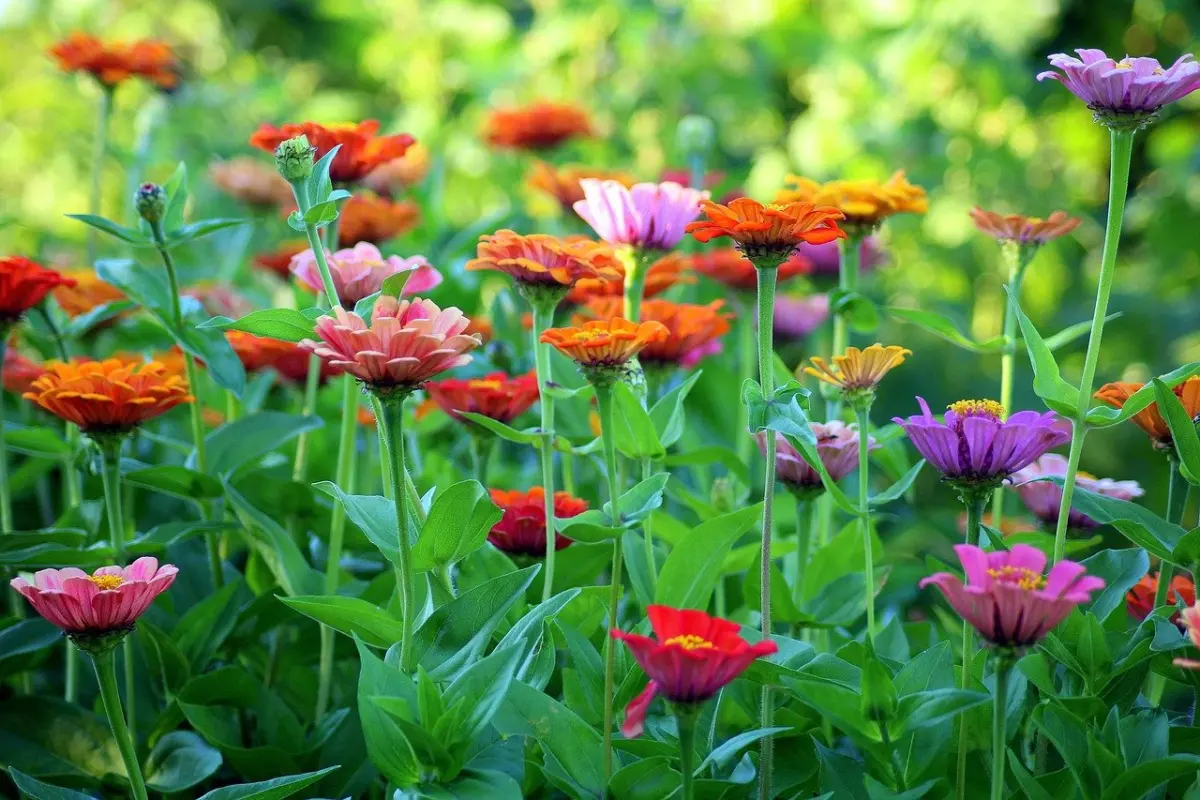
Here is how to grow zinnias: sow in full sun once frost danger has passed and the soil has warmed, give plants room for airflow, water at the base, and deadhead faded flowers.
Those four habits cover most of the work. They are the same ones that keep plants healthy as well as flowering, and they sit alongside the soil, light and timing advice in our gardening for beginners guide.
Why zinnias need warmth, sun and airflow
Zinnias are annuals, and three conditions drive how well they perform. Heat decides when they can go outside, light decides whether they flower, and dry, moving air decides how much disease they pick up late in summer.
Farmer Bailey’s zinnia growing guide describes the plants as frost sensitive and says to wait until the threat of frost has passed and the soil has warmed. It adds that nights should be consistently above 55F. Sunlight is the second factor: a Better Homes & Gardens guide says zinnias need at least 6 to 8 hours of sun per day to bloom.
The third factor is moisture on the leaves. The same guide warns that zinnias can develop powdery mildew if their leaves stay wet, which is why watering method and spacing matter as much as feeding. The timing, siting and spacing sections below all follow from these three conditions.
When to plant zinnia seeds
Plant zinnia seeds relative to your last spring frost, not a fixed calendar date. Outdoors, wait for warm soil. Indoors, start seed about a month before the last frost.
| Stage | Timing or condition | Planning use |
|---|---|---|
| Direct sowing outdoors | After the frost threat passes and the soil warms; nights consistently above 55F | Wait for the weather rather than the date on the packet |
| Indoor start | About 4 weeks before the last spring frost | Gives the earliest blooms |
| Germination | 5 to 7 days with the mix near 70F | Keep trays somewhere warm |
| Transplanting out | About 1 week after the last frost | A short buffer after frost passes |
| First flowers | About 60-80 days after planting | Work backwards to see when color starts |
| Zone 5 example | Start Apr 15, germinate by Apr 22, transplant out May 20 | Shift these dates to match your own last frost |
Timing figures come from WhenToPlant’s zinnia schedule, with the frost, soil-warmth and bloom-time figures from Farmer Bailey.

Direct sowing in the garden
Direct sowing suits most beginners because zinnias are quick and the seed is large enough to handle. The Better Homes & Gardens guide says to sow when the weather has warmed and temperatures are consistently above 70F, and the same source gives flowering at about 60 to 70 days after planting. Other guides quote a slightly longer window, so treat bloom time as a range and expect it to stretch in a cool summer. If you are planning several crops by frost date, When To Plant Tomato Plants: The Simple Timing Guide To Maximize Yield In Any Zone (2026) covers timing by zone for tomatoes.
Starting seed indoors
Starting indoors is worth the effort if your summers are short or you want flowers earlier. WhenToPlant gives a soil temperature of 60F as the minimum and 70F as best, with 12 hours of light a day. The Better Homes & Gardens guide allows a wider indoor window of 4 to 6 weeks before the last frost, so a start date within that range is reasonable. Starting much earlier only produces larger seedlings that have to wait for outdoor warmth.
Choosing varieties and seed
Choose by mature height and by where the plants will grow. Farmer Bailey lists Z. elegans, Z. haageana and Z. peruviana as the zinnia species in the Asteraceae family, all grown as annuals. In practice, most seed packets sold for garden beds are named varieties of these species, so the packet tells you more than the species name does.
Height is the choice that affects layout. According to The Tattered Pew, dwarf container varieties typically reach around 12-18 inches, which makes them the sensible pick for pots and the front of a border. For taller varieties, read the mature height on the packet before deciding where to plant, because it determines both spacing and what ends up hidden behind what.
Spacing is the other reason to read the packet. The Better Homes & Gardens guide says to check the seed packet instructions for correct spacing, and Farmer Bailey likewise says spacing depends on variety.
Site and soil
Put zinnias where they get full sun and drainage is good. Farmer Bailey recommends full sun and well-drained, fertile soil, with a neutral to slightly acidic pH for best results.
Full sun matters for more than flower count. A spot that gets close to the minimum of 6 to 8 hours leaves leaves damp for longer after dew or rain, and that works against the mildew prevention covered below. Open ground with free air movement beats a sheltered corner. In heavy or waterlogged ground, improve drainage before sowing, since the supported soil target is well drained and fertile.
Sowing and spacing step by step
- Prepare the bed. Choose the sunny, well-drained spot and loosen the surface so seed can sit in fine, fertile soil.
- Wait for warmth. Sow after frost danger has passed and the soil has warmed, using the thresholds in the timing table above.
- Cover lightly. A Better Homes & Gardens tip, republished on AOL, says to cover seed with no more than 1/4 inch of earth, so resist the urge to bury it deeper.
- Set the spacing. Farmer Bailey gives a minimum of 8-12 inches depending on variety, while the Better Homes & Gardens guide says most zinnias should be spaced about 9 to 12 inches apart. Use the wider end for bigger varieties and humid climates, and the packet figure when it differs.
- Water at the base. Direct water to the soil rather than over the foliage, from the first watering onward.
Spacing is partly a disease measure. Farmer Bailey says that increasing airflow between plants helps slow powdery mildew, so crowding seedlings to fill a bed faster tends to cost you later in the season.
Watering and feeding
Water deeply and steadily at the soil line, and feed lightly. The Better Homes & Gardens guide puts the target at about 1 inch of water per week, with soil-line watering to keep leaves dry, and recommends light, low-nitrogen feeding.
Heavy nitrogen is the usual mistake in a flower bed, because it favors leafy growth over blooms. A light feed is enough when the soil is already fertile, as Farmer Bailey recommends.
Preventing and slowing powdery mildew
Prevent powdery mildew on zinnias by keeping foliage dry and giving the plants air. Farmer Bailey says that increasing airflow between plants and keeping foliage dry when irrigating can help slow the spread. WhenToPlant puts the zinnia-specific rule simply: water at the base.
Expect the problem late rather than early. Farmer Bailey notes that powdery mildew and alternaria leaf spot tend to appear later in the season. That timing means prevention is built in at planting through spacing and siting, not left until the white coating shows up. It also means the supported steps slow the spread rather than guarantee a clean plant, so a few affected leaves in late summer are not a reason to give up on the bed.
- Space generously. Use the packet distance, and the wider end of the range if the bed is humid or sheltered.
- Water at the soil line. Wet leaves are the trigger the guides identify.
- Choose open ground. Free air movement dries foliage faster after rain.
Getting more blooms
Deadhead every faded flower, pinch young plants once, and keep cutting. Farmer Bailey advises deadheading all flowers as they fade to promote continuous production, and the Better Homes & Gardens guide says it encourages zinnias to branch and bloom more.
Pinching shapes the plant early. Farmer Bailey recommends one pinch when plants are about a foot tall, taking them to three or four leaf sets. When you deadhead or cut, WhenToPlant says to cut just above a leaf node, since that encourages more branching and blooms.
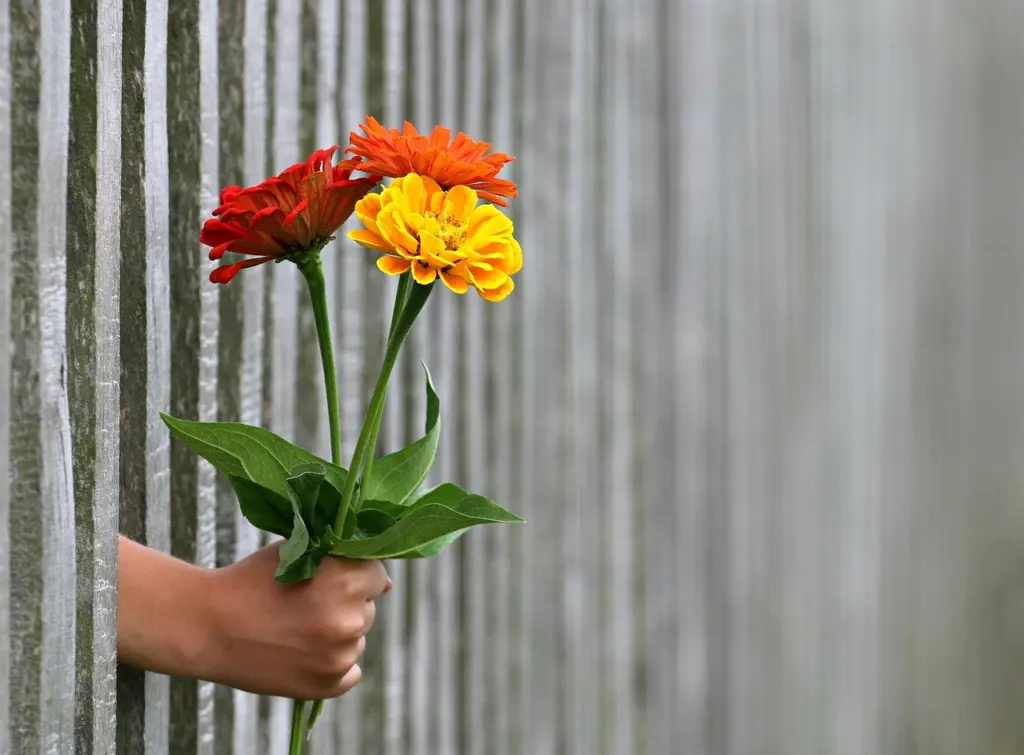
Cutting for the house counts as maintenance. Farmer Bailey describes zinnias as a cut-and-come-again plant, with many stems over a long flowering window. Cut regularly and the plant keeps producing instead of setting seed. If you want winter color indoors as well, How To Grow A Christmas Cactus: Easy Care Tips For Bigger Blooms In 2026 covers a very different, houseplant approach to blooms.
Frequently asked questions
Do zinnias come back every year?
No. Farmer Bailey lists the zinnia species Z. elegans, Z. haageana and Z. peruviana as annuals, so plan to sow fresh seed each spring.
Is it better to start zinnias indoors or sow them outside?
Sowing outside is simpler, while an indoor start gives earlier flowers. WhenToPlant says to start indoors about 4 weeks before the last spring frost for the earliest blooms.
How long do zinnias take to flower?
Farmer Bailey says to expect the first flowers approximately 60-80 days after planting, so the date you plant sets the start of the show.
Can zinnias grow in pots?
Yes, with a suitable variety. The Tattered Pew points to dwarf container varieties of around 12-18 inches, and they still need at least 6-8 hours of full sunlight daily.