How to grow succulents comes down to free-draining gritty compost, bright light and watering only after the compost has fully dried. The main condition: cool, dim months need far less water than summer.
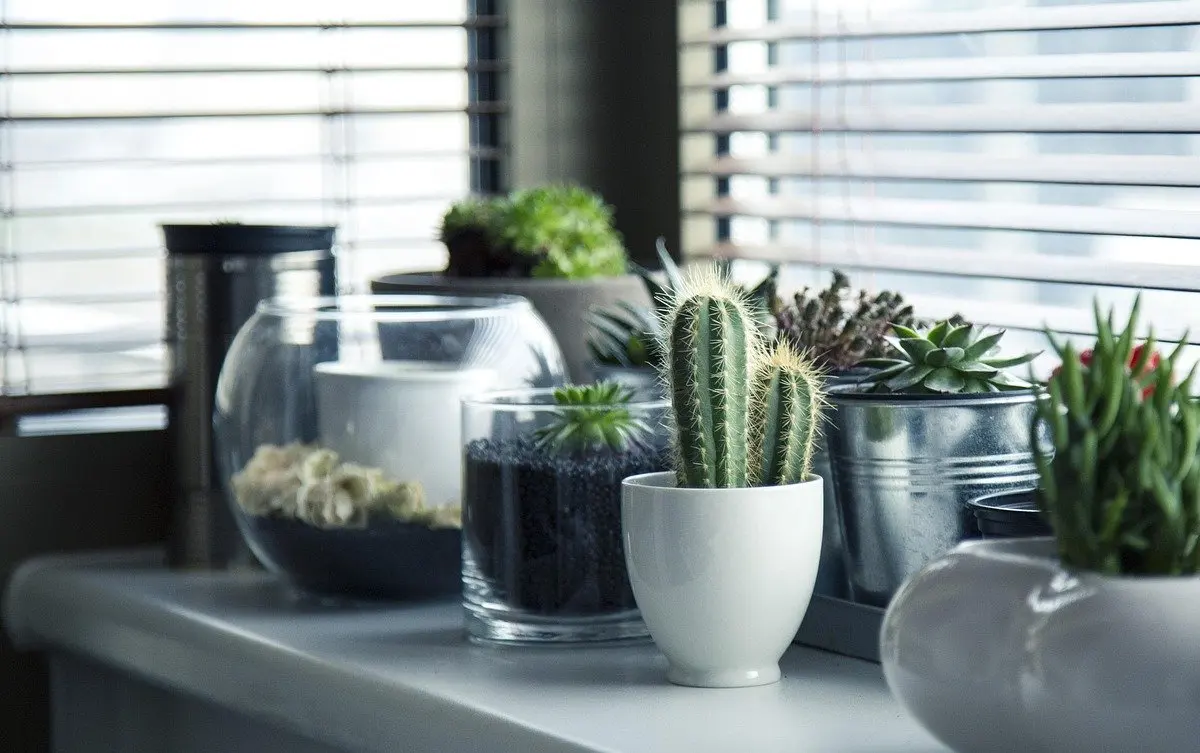
Whether you keep echeveria, jade plant or aloe on a windowsill, the same logic applies. If you are new to plants generally, start with our guide to gardening for beginners, then come back here for the succulent specifics.
Why succulents rot before they thirst
Succulents store water in their leaves and stems, so the usual failure is too much moisture rather than too little. Gardeners’ World notes that they are prone to root and basal rot in moist conditions. A garden-centre guide to jade plants explains the mechanism: when roots sit in over-saturated soil, they are deprived of oxygen.
That cause shapes the order of the steps below. Compost and pot choice come first because they decide how fast excess water leaves. Light comes next because it sets how fast the plant uses water. Watering comes last, and the final section pairs common symptoms with fixes.
Compost and pots
Choosing the compost mix
The Royal Horticultural Society advises planting cacti and succulents in free-draining, gritty, peat-free compost. For a home-made cactus mix, its recipe starts from John Innes No 2 and adds grit or fine gravel up to 30 per cent by volume. Treat that figure as an upper limit rather than a target. The right amount is whatever lets water run through quickly.
For a few pots, a ready-made cactus mix is the simplest route. Regular potting soil is the wrong substitute: it retains too much moisture for succulents and their cuttings.
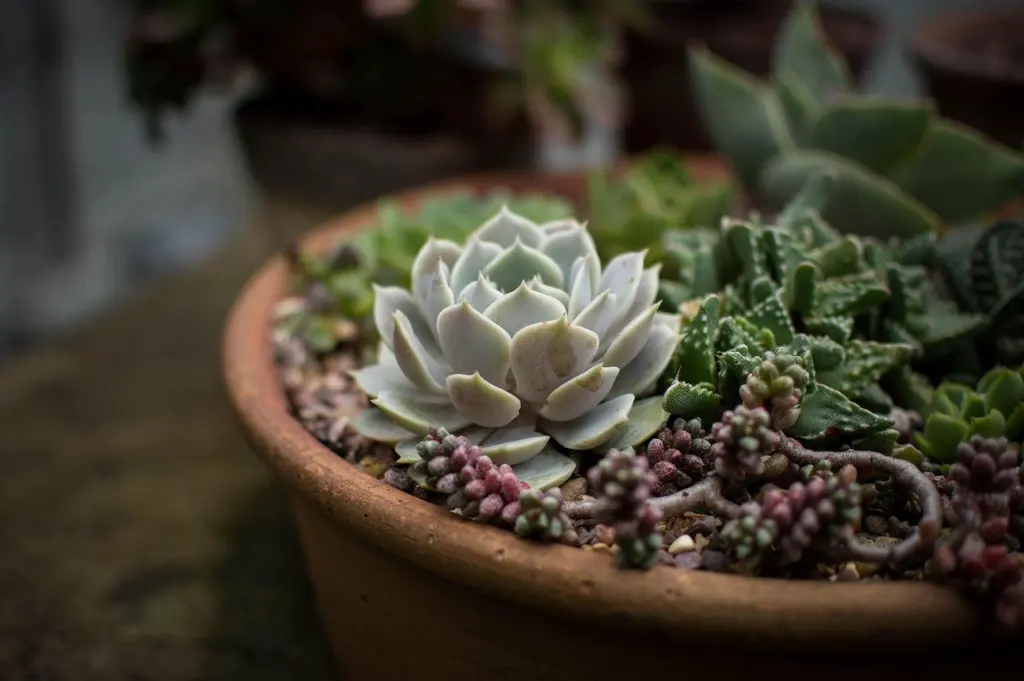
Terracotta and other pots
Terracotta can dry out the compost, which is why Gardeners’ World says to avoid terracotta pots while a cutting or offset is young. For established plants, terracotta is a judgement call. It suits a gardener who tends to overwater, because the pot speeds up drying. It suits a gardener who forgets to water less well.
Light by type
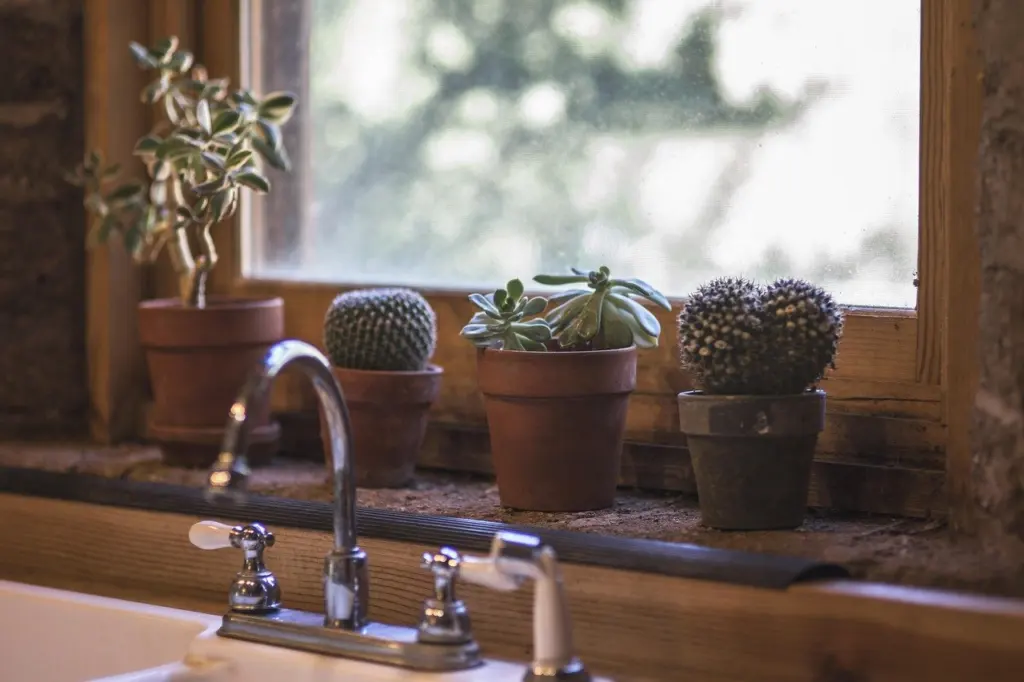
Most cacti and succulents like bright light, and the RHS suggests a sunny windowsill all year round. Gardeners’ World puts a floor under that: at least three hours of sunshine per day. A shaded sill that never catches direct sun will not meet that floor. The needs differ by type:
- Windowsill succulents and desert cacti: bright light on a sunny sill, as above. This is the default for echeveria and aloe.
- Jade plant: at least 4 hours of full sun per day, with temperatures around 65-75°F, according to a garden-centre guide. The same guide warns that jade is harmful if ingested, so keep it away from children and pets.
- Rainforest-type cacti: these tolerate more shade, so the RHS suggests an east or west facing window, or a south facing one behind a net curtain.
- Hardy outdoor succulents: the RHS recommends full sun and shelter from rain, especially in winter.
If no window gives enough light, a grow light is the alternative to try. It is the option named for new cuttings in a propagation guide.
Watering by season
Indoor succulents need watering far less often than most houseplants, and the interval stretches as light and warmth drop. The intervals below are the most frequent you should water. They are not a calendar to follow regardless of the compost’s condition.
| Situation | Watering approach | Planning use |
|---|---|---|
| Indoor succulents, April to October | About every 4 weeks | Use as the shortest gap in the growing season, and wait longer if the compost is still damp. |
| Indoor succulents, rest of the year | About every 6 weeks | Switch to this gap as light fades in autumn. |
| Rooms below 12°C | Once every two months | Suits unheated bright rooms and cool porches. |
| Winter rest, night temperature 8-10°C (46-50°F) | Avoid watering, but not so long that plants shrivel | Give just enough to stop excessive drying. |
| Rainforest-type cacti | More frequent watering than desert types | Pair with semi-shade, not a baking south sill. |
Intervals are from Gardeners’ World, and the winter rest and rainforest-type guidance is from the RHS.
Checking before you water
Gardeners’ World says to rehydrate a succulent only once its compost has been fully dry for at least a week. Leaves give a second check. A leaf that feels firm when squeezed does not need water, and one that feels soft, in dry compost, does, per the jade plant guide.
The same guide says jade needs water less often in winter and spring than in summer and fall. If tap water is salty, it suggests distilled water for jade.
Propagating leaves and offsets
Spring and summer are the best seasons to propagate, because succulents are actively growing. Jade plants (crassula) and sedum propagate from leaf cuttings. Haworthia, Gasteria and aloe produce offsets from the base of the stem, slightly beneath the soil, as Gardeners’ World describes.
- Take the piece: remove a leaf or separate an offset from the parent.
- Dry the cut end: leave it for 2-3 days, which prevents future root rot.
- Set it on succulent soil: use a well-draining mix, never regular potting soil.
- Give bright indirect light: use a sunny windowsill or grow light, and keep new cuttings out of strong direct sun, which can scorch the leaves.
Diagnosing a struggling succulent
When a succulent is failing, match the symptom to the cause before changing anything. Most of these fixes are subtractive: less water, less moisture-holding compost, less harsh sun.
- Very soft, brown leaves: a garden-centre guide says the plant has likely succumbed to root rot. Stop watering and make sure the compost drains freely before the plant is watered again.
- Soft leaves but dry compost: the plant is thirsty rather than rotting. Water it, then return to the interval in the table above.
- Shrivelling in winter: the RHS says to avoid watering during the winter rest because it promotes weak growth, but not to let plants shrivel. Give only enough water to stop excessive drying.
- Scorched cuttings: direct sun is the likely cause, so move them to brighter indirect light.
- Repeated rot despite careful watering: check the mix. Regular potting soil holds too much moisture, so move the plant to gritty, free-draining compost.
Related garden jobs
Succulents are mostly a windowsill job, while shrubs and vegetables follow outdoor calendars. For shrub care, How To Prune Hydrangeas Like A Pro: Timing, Techniques, And Tips (2026 Guide) covers timing and technique. For food crops, When Is The Best Time To Plant Potatoes? A Practical Guide For Every Climate (2026) explains how climate sets the planting date.
Frequently asked questions
Can I use ordinary potting soil for succulents?
No. Regular potting soil retains too much moisture for succulents and their cuttings, so use a gritty, free-draining mix or a ready-made cactus mix, as advised by the RHS.
Do succulents need a grow light?
Not if a window gives enough sun. Gardeners’ World says succulents need at least three hours of sunshine per day. A grow light is the substitute for a dim room, and a guide to propagating succulents lists one for new cuttings.
Are jade plants safe around pets and children?
No. A jade plant guide says jade can be harmful if ingested, so keep it away from anything that chews.
Should succulents be watered during winter?
Barely. During the winter rest, give only enough water to stop plants shrivelling, and let the compost dry out between waterings.