You cut your hydrangea back in spring and got no flowers. Here is how to prune hydrangea without repeating that: old-wood types go after flowering; new-wood types go in late winter or early spring.
The rule depends on where each type sets its buds. For wider plant-care basics, see our guide to gardening for beginners.
Old wood versus new wood
The most common misconception is that all hydrangeas share one pruning date. The RHS pruning guide says hydrangeas flower from mid- to late summer on the previous year’s growth, and that most pruning is carried out in late winter or early spring. Those two statements pull against each other for some types. A grower’s guide from Proven Winners warns that cutting at the wrong point can remove all of the season’s blooms.
“Old wood” is last year’s stems, which carry the flower buds on types that bloom on previous growth. “New wood” is stems grown this season, so the buds form after pruning and a cut before growth starts cannot remove them. Extension guidance from the University of Georgia sorts the common types this way.
| Type | Blooms on | When to prune | Planning use |
|---|---|---|---|
| Bigleaf (H. macrophylla) and mountain (H. serrata) | Old wood; buds set late summer or early fall | After flowering | Keep cuts light, since last year’s stems carry next year’s buds. |
| Oakleaf (H. quercifolia) | Old wood | Immediately after flowering | Prune straight after the display fades so next year’s buds stay. |
| Panicle | New wood; cone-shaped clusters | Late winter or early spring, before new growth begins | Suits an annual shaping cut. |
| Smooth | New wood; large white heads | Late winter or early spring, before new growth begins | Suits an annual cut and renewal. |
Timing and bloom habit above come from University of Georgia Extension and Buncombe County Extension.
The practical split is simple. Old-wood types reward patience and restraint, because a cut at the wrong time costs a season of flowers. New-wood types reward a decisive annual cut, because the plant makes fresh flowering stems every year.
Working out which type you have
You can usually identify a hydrangea from its flowers and its bud timing, and the identification matters before any cut.
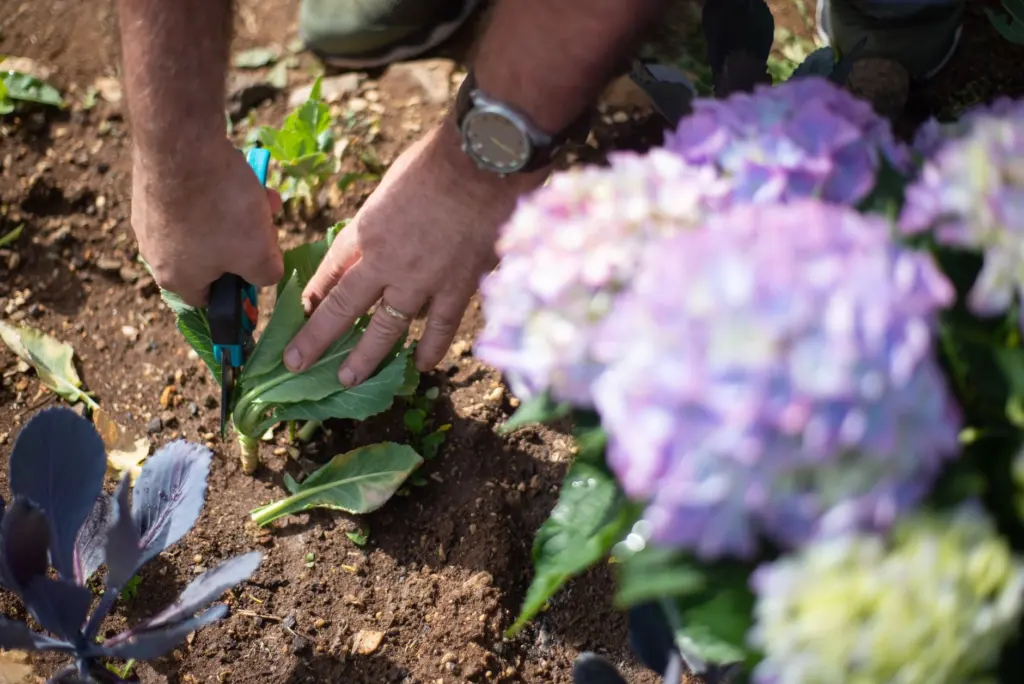
- Flower shape. University of Georgia Extension describes bigleaf hydrangeas by their large, round flower clusters, panicle hydrangeas by cone-shaped clusters, and smooth hydrangeas by large, white flower heads.
- Bud timing. Bigleaf buds are set in late summer or early fall for the following year, according to the Georgia extension guide. Smooth hydrangeas do not form buds until spring, per the plant-breeder pruning guidance, so a winter cut cannot remove them.
- When you are unsure. Limit yourself to non-structural trimming for a season and note where the flower heads form. A wrong structural cut on an old-wood type costs the whole season’s blooms.

Timing by season and climate
Late winter to early spring: new-wood types
Panicle and smooth hydrangeas can be pruned in late winter or early spring, before new growth begins, according to University of Georgia Extension. A Western North Carolina example from Buncombe County Extension puts that window at February to early March. Treat it as a regional example rather than a fixed date, and let the point at which your plant starts growing set your own schedule.
After flowering: old-wood types
Bigleaf, mountain and oakleaf hydrangeas bloom on old wood, so Buncombe County Extension advises pruning after flowering. For oakleaf hydrangeas the University of Georgia guide says to prune immediately after flowering to avoid removing next year’s buds. Doing it straight away gives the plant the longest period to set new buds.
Fall: usually wait
Fall is the wrong time for shaping bigleaf and oakleaf types. Bigleaf buds are already set from late summer or early fall, so a fall cut takes away next summer’s flowers. The RHS advises leaving spent mophead flower heads on the plant over winter to give some frost protection, and removing them in early spring. Panicle and smooth types have a supported window of late winter or early spring, so fall shaping gains them nothing. The exception is damage: Buncombe County Extension says dead, diseased and damaged limbs can be removed at any time.
Colder climates
Plant-breeder guidance says new-wood types are especially suitable for colder climates, where there is no chance of winter harming their buds because the buds form later. If winters in your area regularly damage stems, choosing a smooth or panicle type avoids losing a whole flowering year to cold, and leaving old heads on a mophead through winter follows the RHS frost advice above. For bloom timing, Buncombe County Extension reports that in Western North Carolina most hydrangeas bloom from June to August, a reminder that your local flowering period sets the “after flowering” window.
How hard to cut back
Heavy cutting is the second big misconception, and the answer depends on the wood type.
- “Cut it hard to keep it small” (old-wood types). University of Georgia Extension warns that excessive pruning, especially on bigleaf and oakleaf hydrangeas, can diminish next year’s flowering. The RHS says extensive cutting back in one go is likely to reduce flowering for the next couple of summers. For an overgrown plant, the RHS suggests staggering drastic pruning over three or four years, reducing the size gradually.
- “New-wood types can take anything.” They tolerate more, but not unlimited cutting. A grower’s guide says it is safe to take as much as one-third off a hydrangea that blooms on new wood, for example up to 2 ft from a 6 ft plant. That is a ceiling, not a target.
- “Panicle hydrangeas need a hard cut every year.” The RHS describes cutting last year’s stems back each spring to a pair of healthy buds for a permanent framework on panicle and smooth types. Its hard-pruning option leaves a framework of no more than 25cm (10in), or about 60cm (2ft) if you want a taller shrub. An Extension reply on a panicle hydrangea advises reducing branches by about four or five inches to keep height similar, and warns against cutting back severely, certainly not to the ground, because young growth stays weak for a while.
- “Smooth hydrangeas need rejuvenation each year.” Buncombe County Extension says smooth and panicle types benefit from being cut back to six inches off the ground. Use that as an occasional renewal for tired plants, and use a lighter trim when you want to keep height.
Pruners and clean cuts
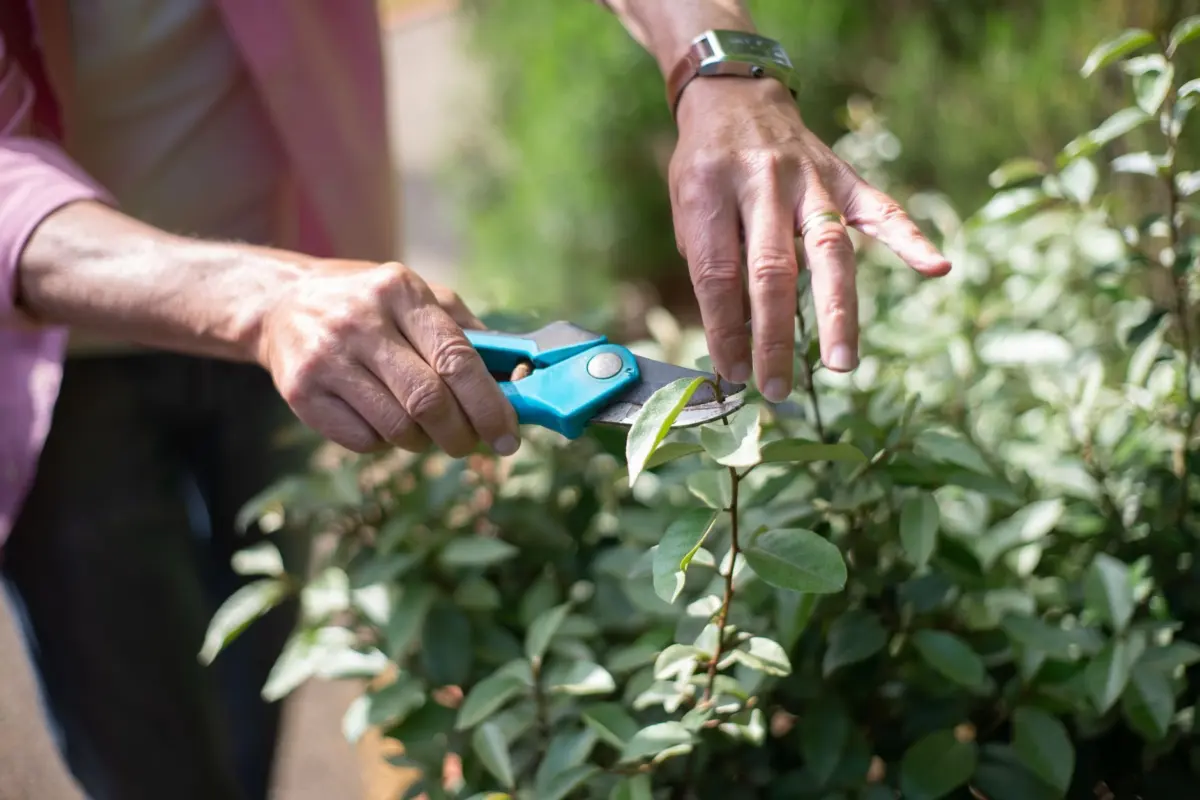
Sharp, clean pruning shears make precise cuts and minimise damage to the plant, according to the University of Georgia guide. The same guide recommends sterilising tools with rubbing alcohol or a bleach solution to prevent the spread of disease.
- Sterilise the pruners before you start.
- Confirm the type and whether it is the right season for a structural cut.
- Cut just above a healthy pair of buds, the cut point the RHS describes for new-wood types.
- Stop when you reach the limit for your type from the section above.
More plant care
Pruning is one task among many in a beginner garden. If you are planning annuals, our notes on how to grow sunflowers cover a very different growing routine, and How To Grow Succulents: Easy Steps To Thriving Plants In 2026 covers plants that need far less attention.
Frequently asked questions
| Question | Answer |
|---|---|
| What should I do with frost-damaged shoots? | The RHS advises pruning affected shoots back to just above the first undamaged pair of buds, cutting into healthy wood. |
| What happens if I cut every stem to the base? | The RHS says a full renovation removes that summer’s flowers, because the new stems will not bloom until the following year. It is a last resort for neglected plants. |
| Do climbing hydrangeas follow the same calendar? | No. The RHS says to cut back over-long shoots on climbing types immediately after flowering in summer, rather than in late winter. |