How to winterize a pool starts with testing water and planning timing. The owner tests water, balances chemicals, and removes debris. The owner protects equipment and adds winter chemicals. The owner installs a cover and checks for problems through winter. This guide lists clear steps. The guide helps the owner avoid freeze damage, algae growth, and costly repairs.
Key Takeaways
- Winterize a pool by timing the process according to local climate and pool type to prevent freeze damage effectively.
- Test, balance, and shock pool water at least two days before closing to maintain optimal chemical levels and kill algae.
- Thoroughly clean the pool, backwash the filter, and drain equipment to avoid clogs and freeze damage during winter.
- Winterize pool equipment by draining pumps, filters, and plumbing lines, and use pool-grade antifreeze if needed.
- Add winterizing chemicals such as algaecide, chlorine tablets, and enzyme treatments after balancing water to prevent algae growth and organic buildup.
- Secure a well-fitted pool cover and monitor it regularly for damage or standing water to protect the pool throughout winter.
When To Winterize Your Pool: Timing By Climate And Pool Type
Owners decide when to winterize a pool by local climate and pool type. In cold climates, the owner closes when nightly temperatures stay near 40°F for several days. In mild climates, the owner closes after the swimming season ends or before the first freeze. Indoor pools do not need full winterizing but they need lower maintenance. Vinyl, concrete, and fiberglass pools need slightly different steps. The owner chooses timing to avoid freeze damage and to allow proper chemical action before the cover goes on. They plan at least one week for pre-closing treatment.
Prepare Your Water: Test, Balance, And Shock Before Closing
The owner tests water two to three days before closing. They measure pH, total alkalinity, and calcium hardness. The owner adjusts pH to 7.4–7.6 and sets alkalinity to 80–120 ppm. They raise calcium if levels fall below recommended ranges for their pool type. The owner adds a chlorine shock to remove organic matter and any active algae. They run the pump for at least eight hours after shock. The owner retests and confirms chemical levels are stable before moving to cleaning and equipment work.
Clean, Drain, And Protect Equipment
The owner cleans the pool and drains specific items to protect equipment. They follow simple steps below to avoid freeze damage and clogs.
Backwash, Clean, And Remove Debris From The Pool
The owner removes leaves and debris by skimming and using a pool vacuum. They brush all walls and steps to remove algae and dirt. The owner backwashes the filter until the water runs clear. They clean the skimmer baskets and pump strainer. The owner lowers the water level according to the cover and winter tools they use. They ensure all water leaves floor drains and low points after vacuuming. The owner repeats cleaning if storms occur shortly before closing.
Winterize Pump, Filter, Heater, Skimmers, And Plumbing Lines
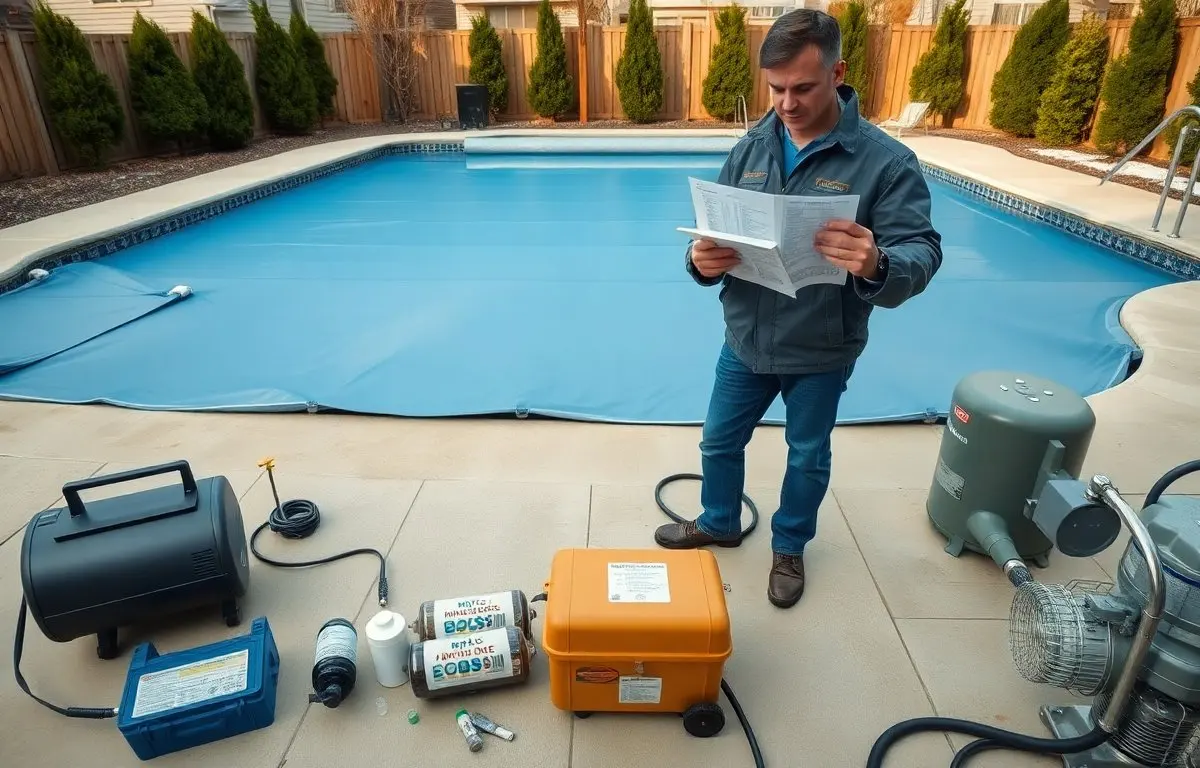
The owner shuts off power to pool equipment. They drain the pump and filter housings and open air relief valves. The owner removes drain plugs and stores them inside. They follow manufacturer steps to winterize the heater or call a technician for gas heaters. The owner blows out plumbing lines with a shop vac or air compressor and inserts pool-grade antifreeze where needed. They install winter plugs in skimmers and lower lines below freeze level if possible. The owner inspects for cracks and schedules repairs before the freeze.
Add Winterizing Chemicals And Algaecide: What To Use And When
The owner adds winterizing chemicals after water balancing and cleaning. They add a non-chlorine algae killer or a winter algaecide according to label directions. The owner adds a long-lasting chlorine dose or a chlorine tablet in a floater if local rules allow. They add a metal sequestrant when source water contains metals. The owner adds a winterizing enzyme to break down organics. They follow product labels for dose and wait time. The owner records product names and amounts for spring reopening.
Install And Secure Your Cover, Plus Seasonal Monitoring Tips
The owner installs the cover after chemical levels stabilize and the water level sits where recommended. They use a tight-fitting solid cover or a mesh cover based on local debris and water management needs. The owner anchor straps evenly and add cover pumps to remove rain and melted snow. They check the cover every two to four weeks for tears and for standing water. The owner skims off leaves and clears gutters from cover drains. They test water and inspect equipment minimally each month. The owner keeps a log of checks and acts quickly on signs of damage or algae.