| Phase | Timing and values | Planning use |
|---|---|---|
| Choose a type | Hardneck needs a cold period; softneck suits mild winters and hot summers | Decide before buying planting stock, because the type sets how well your winter suits the crop |
| Plant | Late September through mid-October in Maryland (zone 6b, 800 ft); a few weeks before the first frost | Count back from your own first fall frost date so roots form before winter |
| Set depth and spacing | About 2-3 inches deep, pointed end up, 6 inches apart in rows | Mark rows before separating the bulbs so cloves go in quickly |
| Overwinter | Loose soil and mulch over the cloves; straw or leaves plus row cover if planting late | Have mulch ready on planting day |
| Harvest | Early summer, when the outer green leaves dry out | Watch the leaves rather than the calendar |
| Cure and store | About 2 weeks of drying; softneck keeps up to 6-12 months if stored correctly | Clear hanging space before the harvest begins |
The planting window comes from an Ask Extension answer for Maryland, and the remaining values come from the Live Life From Scratch garlic guide.
How to grow garlic comes down to one climate-based choice and one autumn planting: set cloves pointed end up, about 2-3 inches deep, a few weeks before the first frost, then harvest in early summer.
Garlic is a long crop that overwinters in the ground, so it rewards planning more than daily care. Gardeners new to growing food can pair this guide with how to start a garden for beginners for general bed preparation.
Choosing hardneck or softneck garlic for your climate
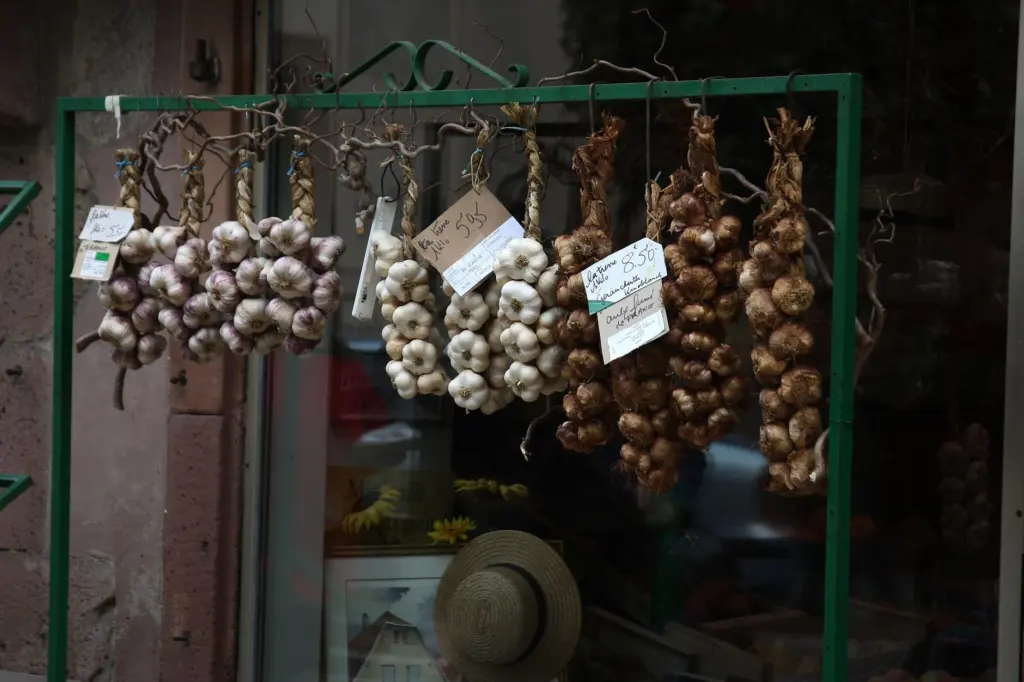
Garlic (Allium sativum) comes in two main types, and winter temperature should decide between them. Hardneck garlic thrives in colder climates and, according to Live Life From Scratch, even needs a cold period to develop properly. Softneck varieties do better in milder climates with mild winters and hot summers.
| Trait | Hardneck garlic | Softneck garlic |
|---|---|---|
| Climate | Colder climates; needs a cold period | Mild winters and hot summers |
| Cloves per bulb | Usually 4-12, in a single ring around the central stem | Around 8-20 |
| Flavour | More pungent, stronger taste | Milder by comparison |
| Storage | Shorter shelf life | Longer shelf life; up to 6-12 months if stored correctly |
| Handling | Stem is cut above the neck before storing | Soft, flexible stems suit braiding |
These comparisons are drawn from the Live Life From Scratch garlic guide.
Who each type suits
Choose hardneck if your winters are properly cold and you value flavour over storage time. Fewer, larger cloves around a central stem also make for easier peeling. Choose softneck if winters are mild, if you want bulbs to keep for months, or if you plan to braid the crop. The cold requirement is the practical limit. A hardneck variety in a frost-free garden may not develop properly, while a softneck is the safer pick there.
Planting garlic cloves in autumn
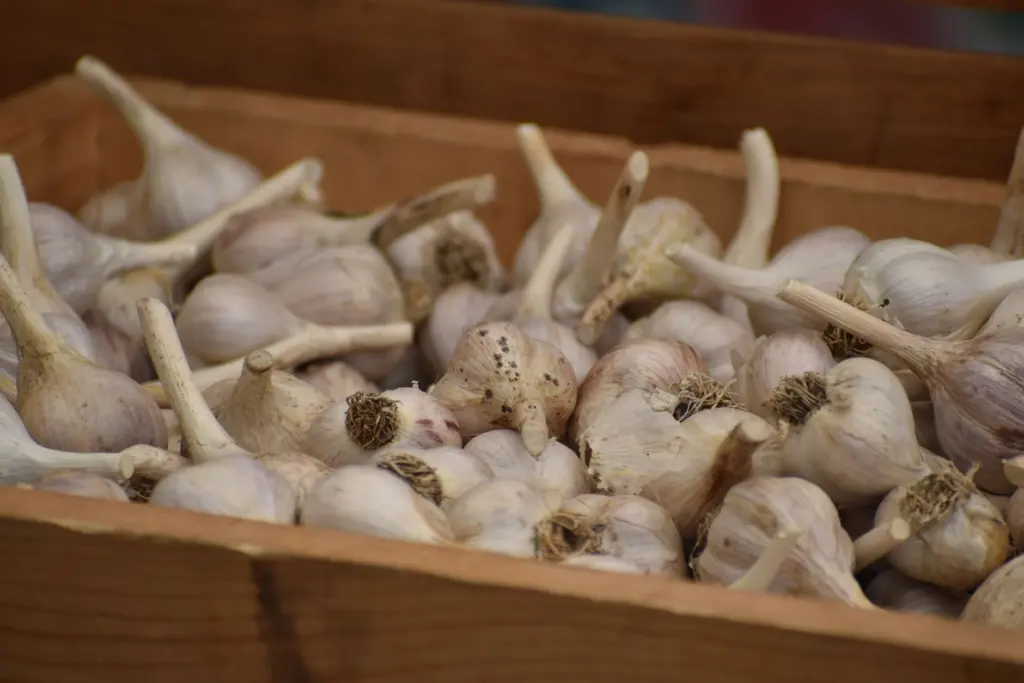
Autumn planting is what makes an early summer harvest possible. The Ask Extension answer explains that a good harvest in early summer depends on strong root establishment of the planted cloves in fall. That makes the planting date the single most important decision after variety.
Timing against your first frost
For a Maryland garden at 800 ft in zone 6b, the extension answer recommends planting from late September through mid-October. Live Life From Scratch gives the general rule as planting a few weeks before the first frost, which in its example means late September or early October. Use the rule rather than the dates if you garden elsewhere, and count back from your own average first frost. Planting this way leaves time for roots to settle before the ground gets cold.
Site and soil
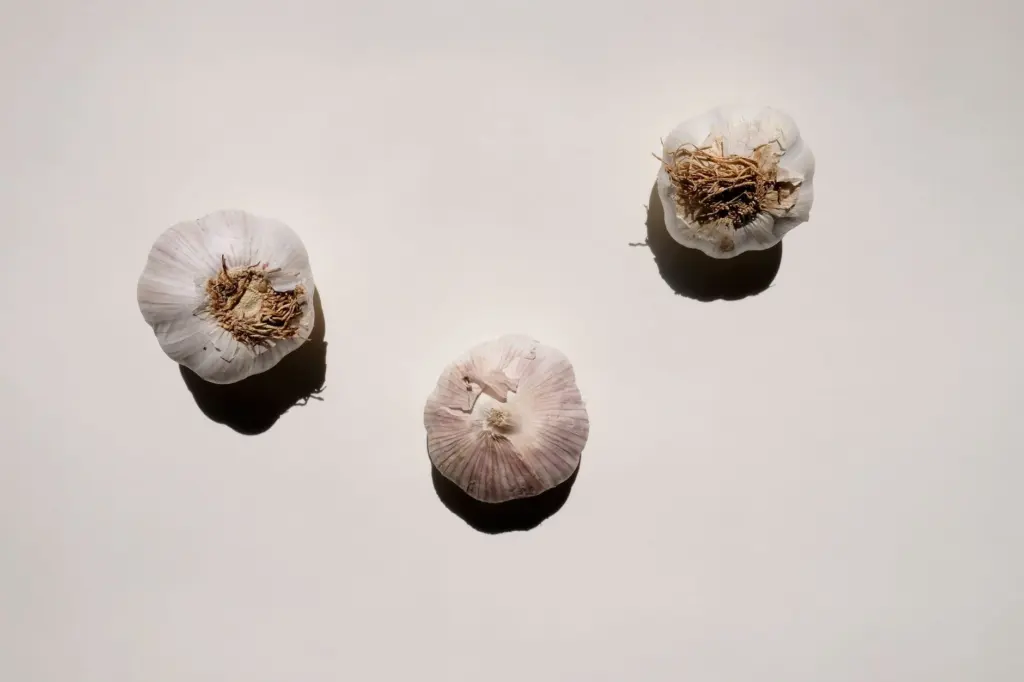
Pick a spot with full sun and well-drained soil, as described by Live Life From Scratch. A bed that stays soggy through winter is a poor match, because the cloves sit in it for months.
How to plant garlic cloves, step by step
- Separate the bulb. Break it into individual cloves just before planting and keep the largest for the ground.
- Mark the rows. Allow 6 inches between cloves in each row so the roots do not compete.
- Set each clove pointed end up. Plant about 2-3 inches deep, with the pointed tip facing the sky.
- Cover and mulch. Fill in with loose soil and add mulch over the planting.
Overwintering: mulch and winter protection
Garlic spends the cold months as roots and a little top growth, so the job over winter is to protect the bed. Straw mulch laid over the loose soil is the standard covering described by Live Life From Scratch, and the same idea applies to leaves.
The extension answer addresses the case where planting runs late. It suggests covering the soil with straw or tree leaves and covering the bed with a row cover. Treat this as a rescue measure for cloves that have had little time to root, not a replacement for planting within the recommended window. Hardneck types need the winter chill, so mulch is there to steady the soil, not to keep the bed warm.
Spring care and scapes
When growth resumes, the bed needs steady moisture and attention to any flower stalks. Live Life From Scratch advises that the best time to remove a scape is when the bud is forming. Cut it then so the plant puts its energy into the bulb. Garlic scapes appear on plants that send up a flower stalk, so check the bed regularly in late spring rather than assuming every plant is the same.
Garlic growing in containers
A deep pot on a patio can work for garlic if it provides the same conditions as a bed. That means full sun, well-drained soil and cloves set pointed end up at the usual depth, with the same spacing between them. Because the pot is exposed, give it a layer of straw mulch through winter and choose a type that suits your winters. A hardneck still needs its cold period, so a sheltered spot that stays above freezing is a poor choice for it.
Harvesting garlic
Garlic is ready when the foliage tells you, not on a fixed date. Live Life From Scratch advises harvesting when the two or three outer green leaves dry out. Lift the bulbs gently rather than pulling them by the stems, and move them straight to a place for drying. Harvest too early and the bulbs are small, while waiting far beyond the leaf signal risks over-mature bulbs, so check the plants every few days once yellowing starts.
Curing and storing garlic
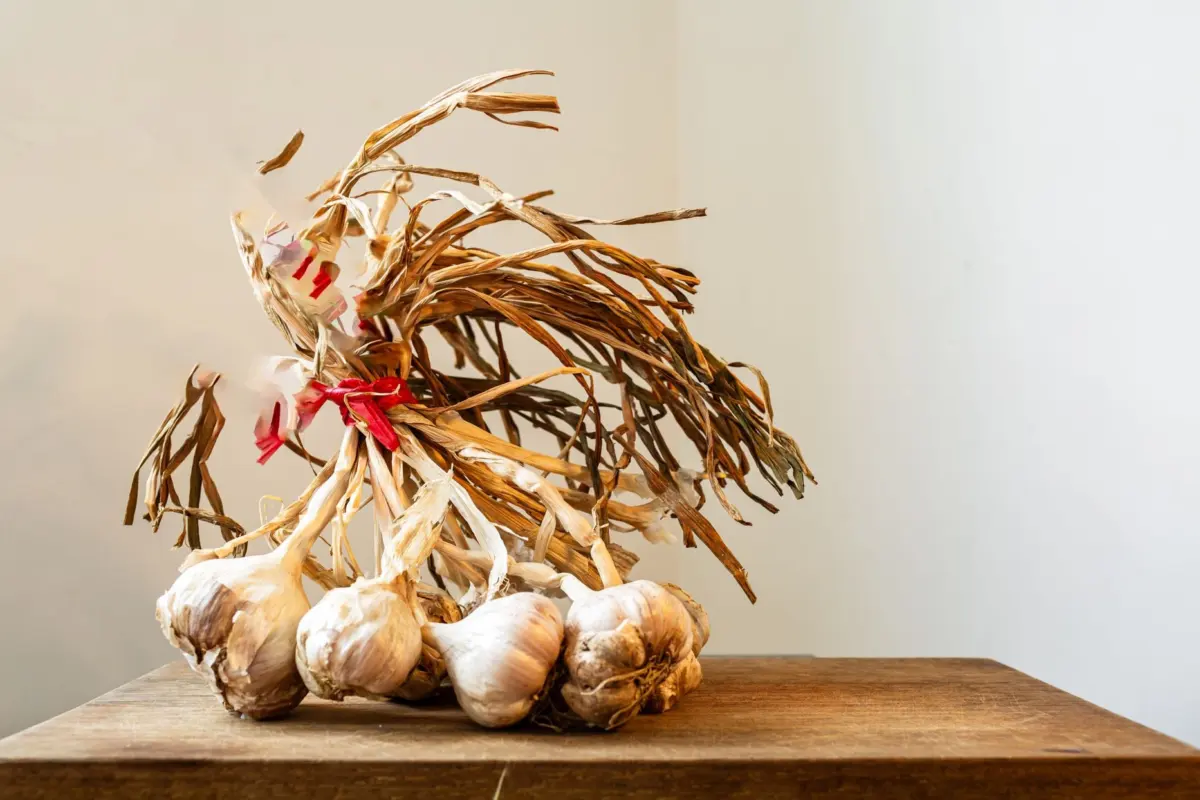
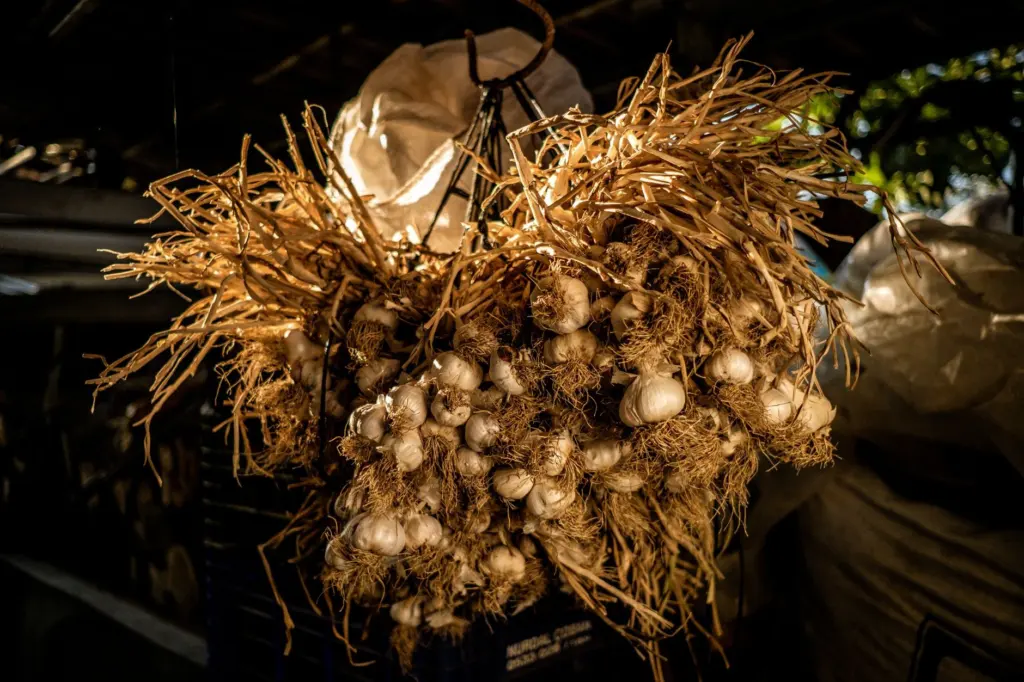
Curing is the drying step that turns fresh bulbs into storable ones. In the Live Life From Scratch account, the grower removed the outer leaves, dried the bulbs for about 2 weeks and then braided them. That suits softneck garlic, whose flexible stems braid well.
Hardneck garlic is handled differently. Cut off the stem just above the neck and store the bulb in a hanging wire basket or a mesh bag. Softneck bulbs may last up to 6-12 months when stored correctly, so eat hardneck bulbs first and keep softneck for later in the year.
Troubleshooting common problems
- Planting got delayed. Mulch the bed with straw or leaves and add a row cover, as the extension answer suggests.
- Hardneck is struggling in a mild climate. Cold is the likely missing ingredient, so switch to softneck next season.
- Stored bulbs are not lasting. Hardneck has the shorter shelf life, so softneck is the better storage crop.
- Bulbs look small. Check whether scapes were left on the plants past the bud stage.
Garlic holds its bed from autumn into early summer. Gardeners planning the warm-season beds can read how to grow tomatoes and how to grow cucumbers for the next crops.
Frequently asked questions
How long does garlic take from planting to harvest?
Garlic planted in autumn is harvested in early summer. In one grower’s account, October planting led to yellowing outer leaves at the beginning of July. Use the dried outer leaves as the signal rather than counting days.
How much water does garlic need?
Live Life From Scratch describes about an inch of water per week in well-draining, loamy soil.
Does removing scapes make a difference?
According to Live Life From Scratch, removing the scape makes bulbs 20-30% bigger, so it is worth doing when the bud forms.